
Household Storage Containers Take Frequent Bumps and Scrapes – Why Won’t IML In‑Mold Labels Get Scratched?
Household Storage Containers Take Frequent Bumps and Scrapes – Why Won't IML In‑Mold Labels Get Scratched?
Household storage containers are probably the most "abused" plastic products in any home.
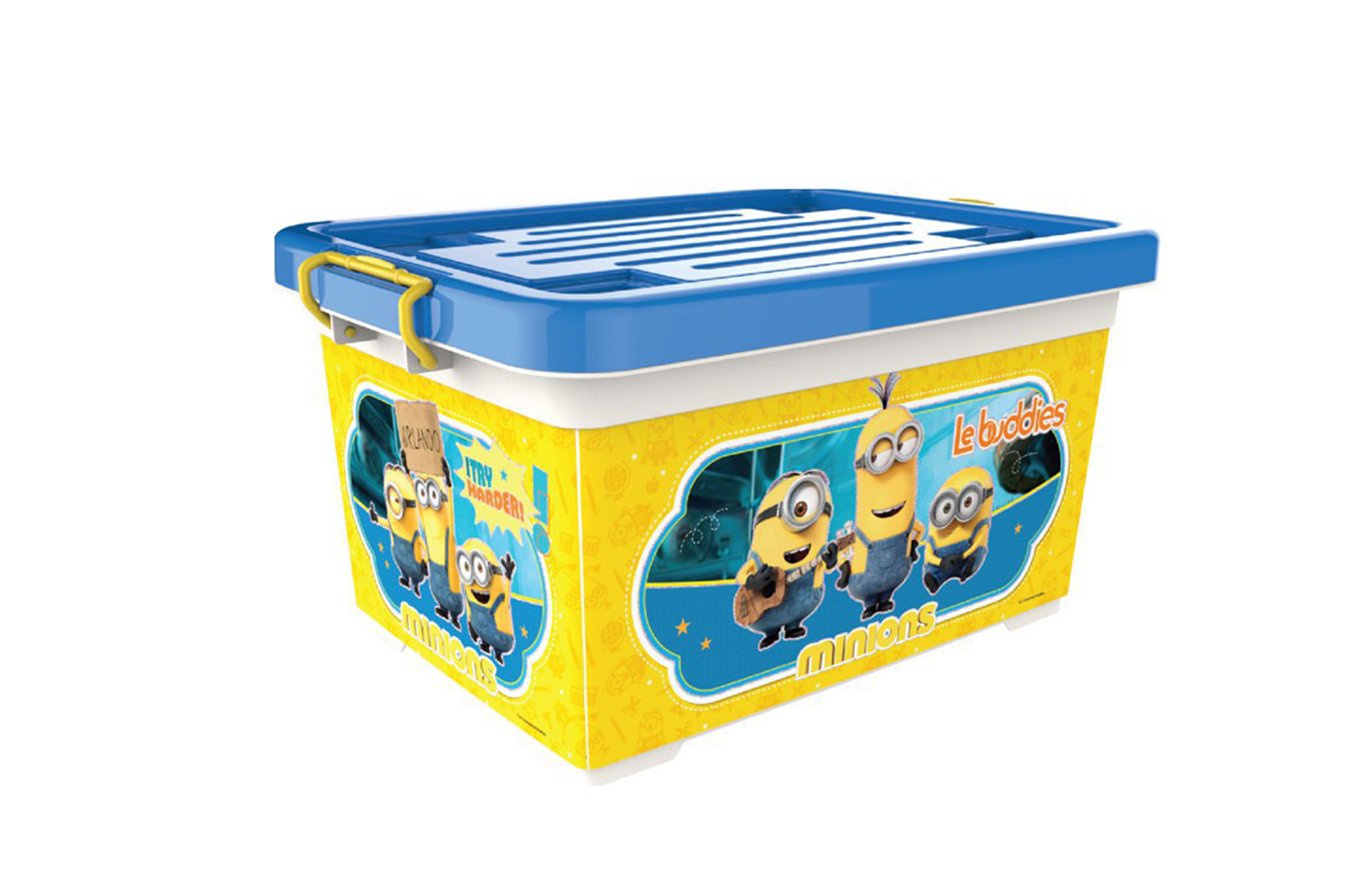
The toy box gets dragged around by children, the tool box rubs against concrete floors, and the seasonal‑clothing box is repeatedly pulled in and out of deep cabinets – bumps, scratches, and wear are part of everyday life. After a few months, the labels on ordinary containers start curling at the edges or the graphics become blurry, making the whole box look far older than it is.
But if the storage container uses IML (In‑Mold Labeling) labels, the situation is completely different – even after a year or two, the label still looks brand new, with crisp graphics and vivid colours, as if it just left the factory.
Why? The answer lies in IML's embedded molding structure.
📖 Table of Contents
1. Why Do Traditional Labels Wear Out So Quickly?
Before discussing IML, let's look at why most storage container labels on the market fail easily.
Pressure‑sensitive stickers are the most common. The graphics are printed directly on the sticker surface, and the sticker is adhered to the container with adhesive. During daily use, friction directly wears the printed surface; moisture weakens the adhesive, causing the sticker edges to lift; over time, the ink fades and the graphics become indistinct.
Screen printing is another common method – ink is printed directly onto the container surface with no protective layer. When the container is dragged, the ink directly contacts the abrasive surface – the graphics can be worn away in just a few months. Screen printing also suffers from adhesion problems, and the ink can peel off in large patches.
Ordinary heat transfer printing also leaves the ink exposed on the outermost layer. During frequent stacking and handling, the label surface directly bears mechanical stress, making the graphics easy to scratch or rub off.
Whether stickers, screen printing, or heat transfer, they all share the same problem: the decorative layer is exposed on the outermost surface, taking the full brunt of physical wear. With prolonged use, they inevitably become scratched, faded, and worn.
2. The Three‑Layer Structure of IML: Hiding the Graphics
IML's scratch‑resistance secret lies in its three‑layer structure.
First layer: Hardened transparent film on the surface
The outermost layer of an IML label is a hardened transparent film (typically PET). This is the graphics' "bulletproof vest". It directly faces the outside world, absorbing all scratches and friction.
Second layer: Printed graphics layer in the middle
The ink pattern is printed on the back of the film – not exposed on the surface. The ink never directly contacts air, UV rays, or abrasive surfaces.
Third layer: Plastic substrate on the back (fused with the container)
During injection molding, the label fuses with the molten plastic container, becoming an inseparable part. The label is not "stuck on" – it is "grown into" the container.
┌─────────────────────────────────┐
│   Hardened transparent film      │  ← Directly contacts the outside; wear‑resistant
│   (protective layer)             │
├─────────────────────────────────┤
│   Printed ink layer (graphics)   │  ← Sandwiched in the middle; never touches the outside
├─────────────────────────────────┤
│   Plastic substrate (fused with  │  ← Fuses during molding; never peels off
│   the container)                  │
└─────────────────────────────────┘
3. Why IML Labels Resist Scratches
Once you understand IML's three‑layer structure, the scratch‑resistance principle becomes clear.
3.1 Physical Isolation – Ink Never Contacts the Outside
With stickers and screen printing, the ink is exposed on the surface – every friction directly wears the graphic. But in IML, the ink is sandwiched between the film and the plastic – scratches hit the hardened film first, not the ink.
This is like putting a tempered‑glass screen protector on a phone – the protector breaks, but the screen stays intact. IML's hardened film is the "screen protector" for the graphics.
3.2 Hardened Protective Layer – It Gets Shinier with Use
The transparent surface film of IML is specially hardened, with a pencil hardness of 2H–3H, effectively resisting fingernail scratches and everyday impacts.
Interestingly, IML surfaces actually "get shinier with use". The mild friction from daily handling does not wear the surface down; instead, it polishes the protective layer, making it even glossier.
Waterproof, oil‑proof, moisture‑proof, acid‑ and alkali‑resistant
IML labels also resist water, oil, mould, moisture, abrasion, and mild chemicals. When placed in damp areas like basements, balconies, or kitchens, the labels will not lift or develop mildew.
4. Real‑World Performance in Common Storage Scenarios
| Use Scenario | Traditional Stickers / Screen Printing | IML In‑Mold Labels |
|---|---|---|
| Children dragging toy boxes | Stickers scratched and curled | Surface unchanged |
| Tool boxes rubbing against concrete | Screen‑printed graphics worn off | Protective layer shows minor marks; graphics intact |
| Seasonal‑clothing boxes repeatedly pulled out | Label edges lifting | Label remains flush with container, no movement |
| Damp environments (kitchen/balcony) | Stickers become mouldy and peel | Waterproof and moisture‑proof; good as new |
| Stacking and handling | Labels dented under pressure | Hardened film resists pressure; graphics undamaged |
| Long‑term use (1‑2 years) | Graphics faded and blurry | Colours remain vivid as new |
IML labels also offer durability beyond scratch resistance. Unlike traditional labels that may peel or fade over time, IML labels are molded directly into the plastic product, improving resistance to wear, moisture, and extreme temperatures, making them more durable and long‑lasting.
5. FAQ
The graphics will not be scratched. The ink is sandwiched between the hardened transparent film and the plastic substrate – scratches hit the protective layer first, not the ink. In fact, mild everyday friction may even make the surface "shinier with use".
Ordinary stickers have the graphics exposed on the surface, making them prone to scratching, fading, and edge lifting. IML graphics are hidden beneath the film and fused with the container – they will not peel, lift, or fade.
Under normal household conditions, IML labels last as long as the container itself – until the container is thrown away. Colours remain vivid and do not fade easily.
Yes. IML labels are waterproof, oil‑proof, mould‑proof, and moisture‑proof. In humid environments, they will not bubble or develop mildew.
Absolutely. IML labels are fully integrated into the product and will not peel off – even if a child chews on the container, there is no risk of swallowing a loose label. They also contain no harmful chemicals and are safe for children.
IML has a higher upfront mold investment, but the label material cost is comparable to pressure‑sensitive labels and lower than screen printing with 6–8 colours or more. When durability and brand image improvement are factored in, the long‑term cost‑effectiveness is greater.
Contact Us
Name*
Telephone*
Region*
Please fill in your request*


