
Side-Entry vs Top-Entry – How to Choose the Two Label-Picking Solutions for Paint Can IML?
Side-Entry vs Top-Entry – How to Choose the Two Label-Picking Solutions for Paint Can IML?
In IML (In-Mold Labeling) production for paint cans, choosing the right robot label-picking solution is a key decision that balances efficiency, cost, and equipment compatibility.
The two mainstream solutions currently available – Side-Entry and Top-Entry – each have their own focus and are suited to different production scenarios.
Table of Contents
1. Quick Comparison of the Two Solutions
| Feature | Side-Entry | Top-Entry |
|---|---|---|
| Operation Method | The robot enters and exits from the side of the mold to pick labels, place labels, and remove products. | The robot enters vertically from above the mold to place labels and remove products. |
| Core Advantages | Short cycle time, high stability. Shorter motion path, less in-mold time, enabling a 20-second injection cycle. | Flexible, economical, and widely adaptable. Can be retrofitted using existing 3-axis servo robots, suitable for products with simple shapes and fewer cavities. |
| Typical Cycle Time | Approximately 15-20 seconds | Longer; suitable for injection cycles above 6 seconds |
| Equipment Cost | Relatively higher (dedicated side-entry robot) | Relatively lower (can use retrofitted general-purpose robots) |
| Suitable Scenarios | High-volume, standardized 20L paint can production | Small-batch, multi-variety production or scenarios with limited equipment investment |
2. Side-Entry: The "Stable Quick-Draw" for Efficiency First
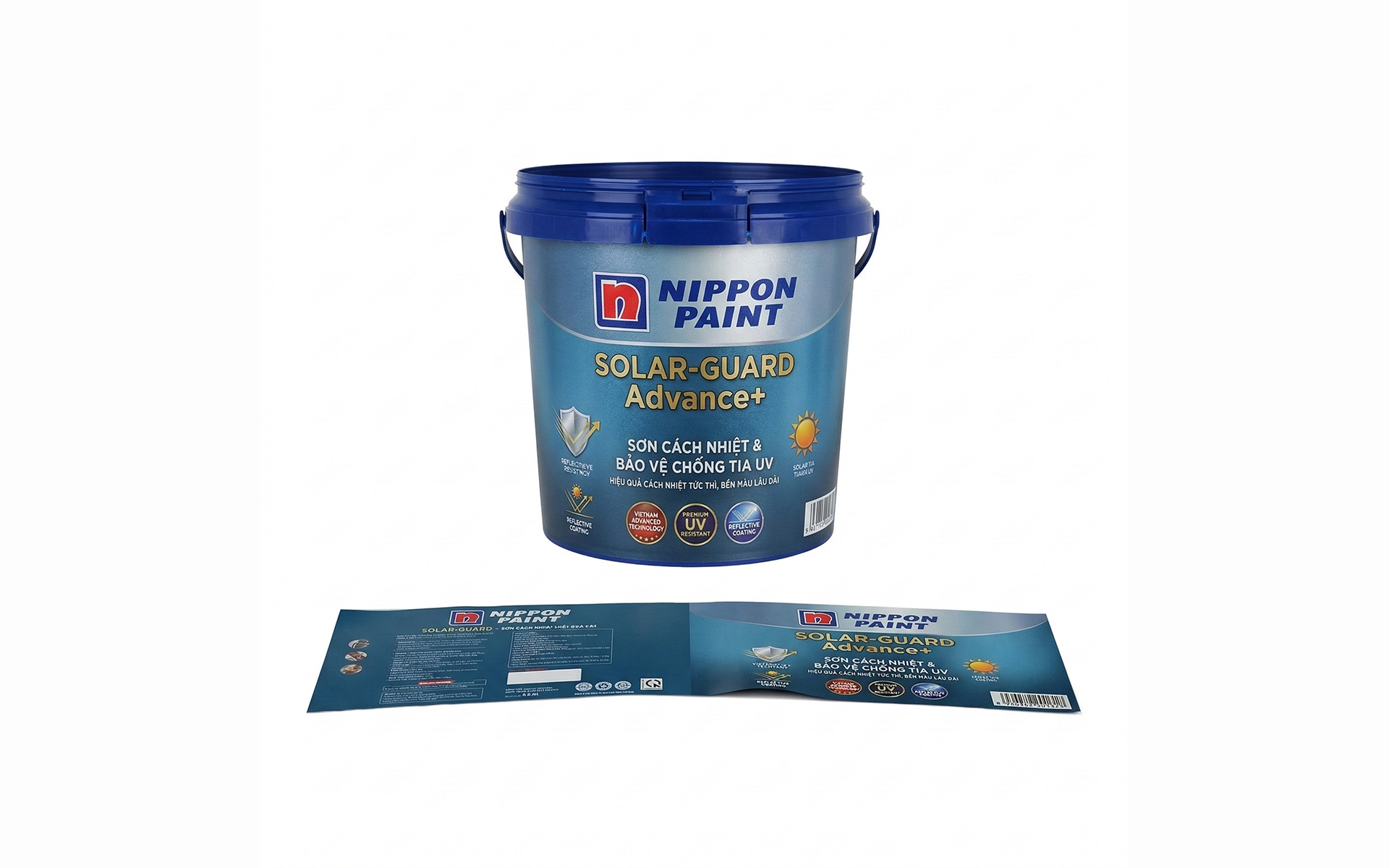
The side-entry solution is currently the mainstream choice for 20L paint can IML production, with its core advantages lying in extreme efficiency and stability.
Shorter cycle time, higher output: Side-entry robots have a shorter motion path, significantly reducing in-mold time and stabilizing the injection cycle at around 20 seconds. Some high-end configurations can even achieve 15 seconds.
Greater stability: With a shorter and more direct motion path, the system operates more stably, reducing the risk of failures caused by complex movements.
Ingeniously resolves equipment contradictions: 20L cans are deep-cavity products. Using smaller-tonnage injection machines often faces insufficient mold opening stroke, while larger-tonnage machines are costly. The side-entry solution, through designs like the "two-step method," cleverly resolves this contradiction, allowing manufacturers to use 450-700 ton medium-tonnage injection machines for efficient production.
3. Top-Entry: The Flexible and Economical "All-Rounder"
The top-entry solution excels in flexibility and cost-effectiveness, offering an alternative for specific scenarios.
Lower entry cost: This solution can be retrofitted using existing 3-axis servo robots, maximizing the use of current equipment and reducing initial investment.
Good adaptability: The top-entry system is suitable for products with fewer cavities, larger individual products, and relatively simple shapes. It provides a reliable solution when extreme speed is not required.
Flexible configuration: Some suppliers offer 3-axis servo-controlled top-entry robots specifically designed for deep-cavity products like 20L paint cans.
4. How to Choose?
In general, the choice depends on your production scale, product characteristics, and investment budget:
- If you pursue ultimate production efficiency, have stable high-volume orders, and want to achieve high-speed production with medium-tonnage injection machines, the Side-Entry solution is the ideal choice.
- If your product variety is high, batch sizes are small, or you want to control initial equipment investment, the Top-Entry solution offers a more flexible and economical entry point.
Both solutions are highly mature, and there are many established system integrators in the market offering turnkey solutions. It is recommended to have in-depth discussions with equipment suppliers, taking into account specific injection machine parameters, mold design, and production targets for a comprehensive evaluation.
Contact Us
Name*
Telephone*
Region*
Please fill in your request*


