
The "Hardcore" Challenge of Deep-Cavity Molds – Why Do Paint Can IML Molds Need to Be "Strong"?
The "Hardcore" Challenge of Deep-Cavity Molds – Why Do Paint Can IML Molds Need to Be "Strong"?
In the production of IML (In-Mold Labeling) paint cans, the mold is the core that determines everything. If the injection molding machine is the heart of the production line, the mold is its skeleton – it determines product precision, production efficiency, and the lifespan of the entire line.
Paint can molds are not ordinary injection molds. They are deep-cavity molds, use plastics with low melt flow index, and endure far higher pressures during injection than standard products. If the mold is not "strong" enough, the consequences range from extended cycle times and unstable quality to mold cracking and full production line shutdowns.
So, what exactly makes a "strong" paint can IML mold?
Table of Contents
1. Why Must Paint Can IML Molds Be "Strong"?
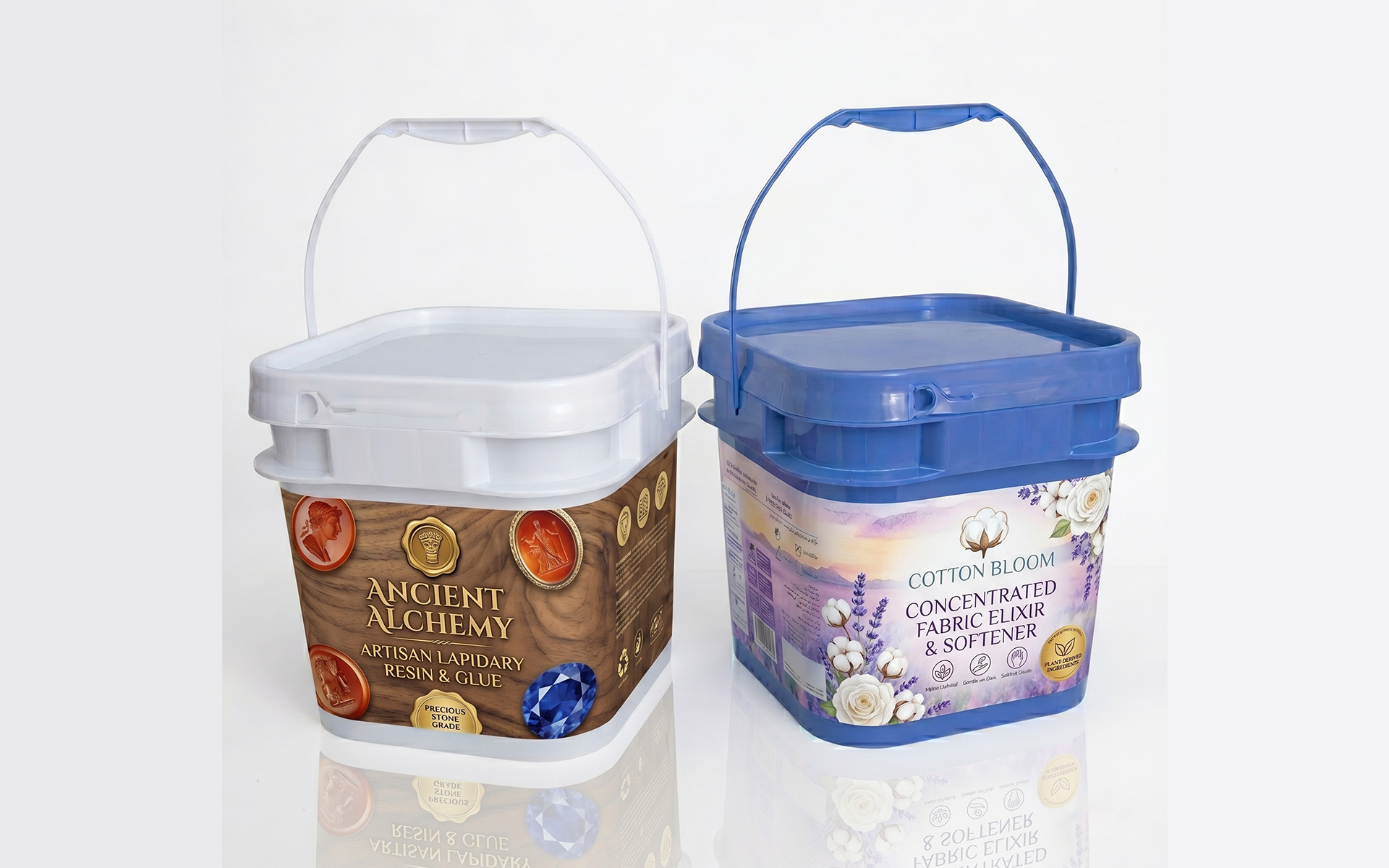
To understand why the mold must be "strong," we first need to understand the three "hardcore" challenges faced in paint can IML molding.
Challenge One: Deep-Cavity Structure
Paint cans are typical deep-cavity products – tall bodies, thick walls, deep cavities. During injection molding, the molten plastic must travel a longer path to fill the cavity, creating high flow resistance and demanding exceptional mold strength and rigidity.
Challenge Two: Low Melt Flow Index Plastic
Paint cans typically use plastics with MFI 8 or even lower (MFI – Melt Flow Index – the lower the number, the poorer the flowability). Low-flow plastics require higher injection pressure to push the melt through the cavity. This means the mold must withstand significantly higher internal pressure during every injection cycle.
Challenge Three: Additional Demands of the IML Process
The IML process requires precise label placement onto the mold wall before injection, and the label must remain perfectly still during molding. This imposes higher requirements on the mold's positioning accuracy, adsorption system, and motion coordination. Ordinary molds simply cannot handle these demands.
In one sentence: Deep cavity + low-flow plastic + IML process = high pressure, high demands, high wear. If the mold is not strong enough, it simply won't hold up.
2. The "Strong" Skeleton – How to Choose Mold Steel?
The "strength" of a mold starts with its steel. A high-quality paint can IML mold must use proven, high-performance mold steels.
2.1 Steel Selection Overview
Industry-recognized preferred steel grades for paint can IML molds include:
| Steel Grade | Key Characteristics | Suitable Applications |
|---|---|---|
| P20 | Pre-hardened steel, good machinability, excellent toughness | Mold bases, plates |
| 718H | High hardness, high polishability, good wear resistance | Cavities, cores |
| H13 | Strong thermal fatigue resistance, suitable for high-speed injection | Cores, hot runner components |
| DIN 1.2316 | Good corrosion resistance, ideal for high-gloss surfaces | Cavity surfaces |
In actual production, P20 and 718H are the most commonly used substrate materials, often paired with beryllium copper inserts for critical heat dissipation areas. A high-quality IML paint can mold can achieve a service life of over 1 million injection cycles.
2.2 Why Can't Cheap Steel Be Used?
If inferior steel is chosen to reduce costs, the problems compound:
- The mold deforms under high pressure, causing uneven wall thickness
- The mold surface wears faster, reducing label positioning accuracy
- Poor cooling extends the molding cycle
- Eventually, the mold cracks and fails prematurely
A cheap mold is often the most expensive one.
3. The "Strong" Cooling – How to Design the Cooling System?
In the injection molding cycle, cooling time often accounts for over 70% of the total cycle. For thick-walled paint cans, cooling efficiency directly determines production efficiency and product quality.
A "strong" mold must excel in its cooling system design.
3.1 Beryllium Copper Inserts + Cooling Rods
Beryllium copper has thermal conductivity approximately 3-4 times better than standard mold steel. By inserting beryllium copper at the rim (the edge of the can opening) and bottom – the areas with the highest heat concentration – heat can be extracted extremely quickly.
Even more critical is cooling rod technology. Industry-leading designs place cooling rods as close as 6mm from the cavity surface. This high-conductivity, close-proximity design can shorten the molding cycle by over 30%.
3.2 Cooling Channel Optimization
Beyond beryllium copper inserts, the mold's cooling channel design is equally important:
- Larger cooling channel diameters and more channels to increase coolant flow
- Independent cooling circuits for different areas (rim, bottom, rib sections)
- Use of refrigerants as heat exchange media for faster thermal response
An excellent cooling system can compress the IML cycle time for a 20L paint can from over 30 seconds down to 14.8 seconds.
4. The "Strong" Circulation – How to Configure the Hot Runner System?
Paint cans use low melt flow index plastics with poor flowability. If the gate is too small, the melt simply cannot fill the cavity properly.
4.1 Valve Gate Hot Runner – Large Flow, No Gate Marks
Paint can IML molds commonly use valve gate hot runner systems. Compared to open hot runners, valve gates offer clear advantages:
- Larger gates with greater flow capacity, enabling smooth molding of low-flow plastics
- No gate marks, resulting in a more attractive product appearance
- Reduced cavity pressure, lowering stress on the mold
- Can synchronize with the injection machine for pre-plasticization, further shortening the cycle time
4.2 Gate Positioning – Keep Away from the Label Area
In the IML process, the label is fixed to the mold wall. If the gate faces the label directly, the high-speed, high-temperature melt will impact the label, causing displacement or damage. Therefore, gate positions must be offset from the label area, ensuring the melt enters the cavity from the side or bottom.
5. The "Strong" Payoff – Quality, Efficiency, and Longevity
A "strong" IML paint can mold delivers tangible returns:
Quality assurance: Uniform wall thickness, passing strength tests, seal tests, stacking tests, and drop tests. The label and can body are integrally molded – never peeling, never fading.
Efficiency gains: The IML cycle for a 20L paint can can be compressed to 14.8 seconds, producing approximately 240 units per hour – nearly 1,500 more products per day compared to traditional processes.
Extended longevity: With quality steel, sound design, and adequate cooling, mold life can exceed 1 million cycles. A "strong" mold can last over ten years without failure.
6. FAQ
Because paint can molds are deep-cavity molds using plastics with low melt flow index (MFI 8 or below), requiring higher injection pressures. Combined with the additional precision demands of the IML process, the stress and wear on the mold are far greater than on standard molds.
P20 is a pre-hardened steel with good machinability, suitable for mold bases and plates; 718H offers higher hardness and better polishability, ideal for cavities and cores; H13 has strong thermal fatigue resistance, suitable for high-speed injection and hot runner components. In practice, they are often used in combination – P20 or 718H for the substrate, with beryllium copper inserts in critical areas.
Beryllium copper has thermal conductivity 3-4 times higher than standard mold steel. By inserting it in heat-intensive areas (such as the rim and bottom), heat is rapidly conducted away, significantly reducing cooling time. Industry-leading cooling rod technology can shorten the cooling cycle by over 30%.
Ordinary hot runners (open type) cannot actively close the gate, often causing stringing and gate marks. Valve gate hot runners use pneumatic or spring mechanisms to control gate opening and closing, offering larger gates, greater flow capacity, and no gate marks – resulting in a cleaner appearance.
With high-quality steel such as P20/718H, combined with proper cooling and hot runner design, an IML mold can achieve over 1 million injection cycles. With normal maintenance, it can last 8-10 years.
The upfront investment is indeed higher than for ordinary molds, but the total cost is lower. A high-quality mold offers longer life, fewer breakdowns, shorter cycle times, and higher product yields – the savings quickly offset the initial cost gap. A cheap mold is often the most expensive one.
Contact Us
Name*
Telephone*
Region*
Please fill in your request*


