
From 5L to 78L – IML Paint Cans Have Great Potential for "Larger" Sizes
From 5L to 78L – IML Paint Cans Have Great Potential for "Larger" Sizes
If your impression of IML (In-Mold Labeling) technology is still limited to "small" packaging like yogurt cups and ice cream tubs, you might be missing a "larger" transformation happening in the industrial packaging sector.
IML is expanding into larger-capacity paint cans. From 1L, 2L, 5L, 10L to 20L, equipment manufacturers such as Dakumar have mature production line cases. Even more striking is that UK-based Emmer Ltd. has launched a 78L IML decorative pail – claimed to be the world's largest-volume IML pail. Larger IML pails mean greater technical challenges and even bigger market potential.
Table of Contents
1. IML Paint Can Size Spectrum: From 1L to 78L
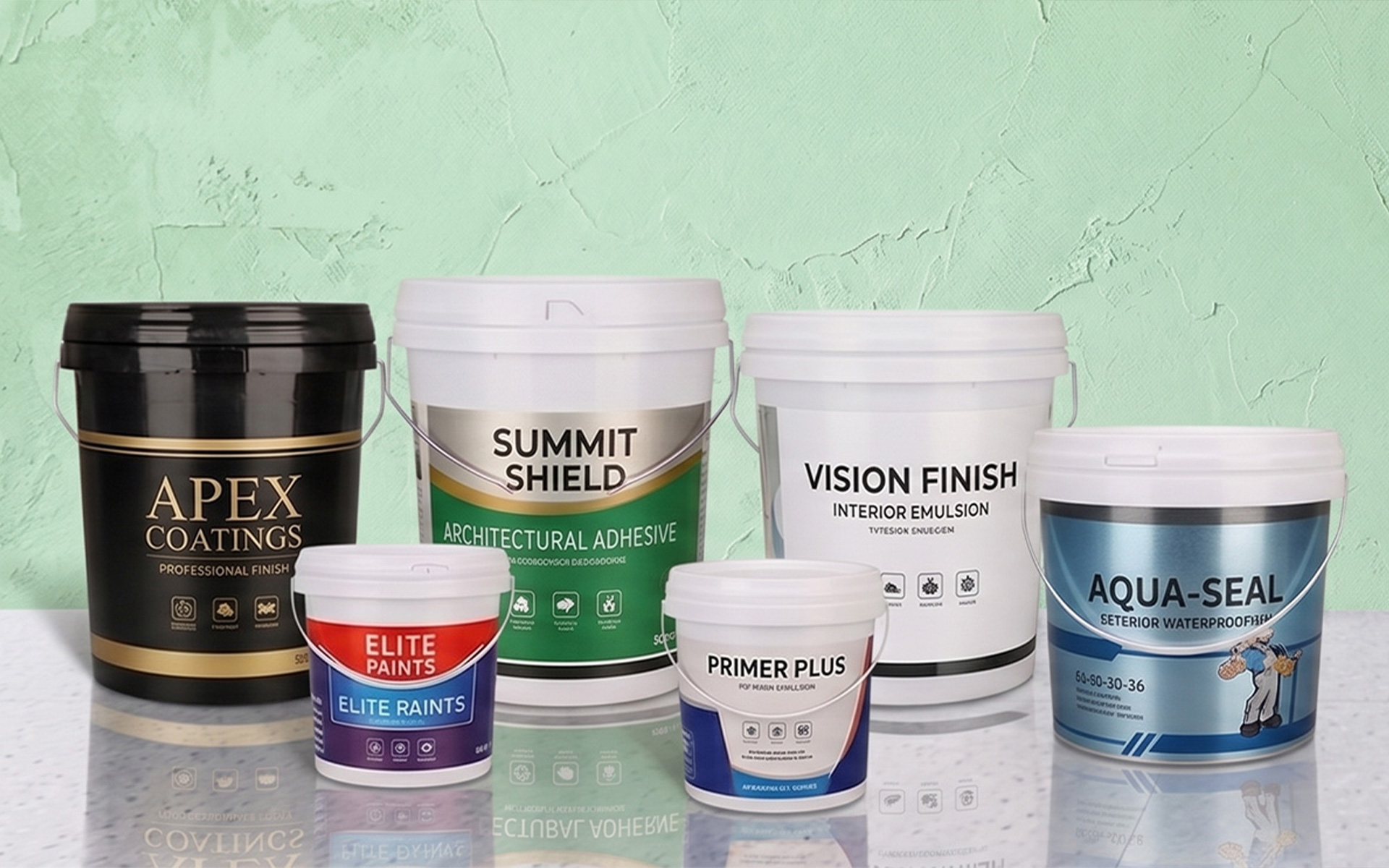
IML technology on paint cans now covers a full size spectrum from small to large.
Small sizes (1L-5L): This is IML's most mature size range for paint cans. Equipment manufacturers such as Dakumar offer complete production line solutions for 1L, 2L, 4L, and 5L. Small-size pails have relatively mature IML processes with high production efficiency and stable yield rates.
Medium sizes (10L-20L): This is the "mainstay" size range in industrial packaging. Dakumar has delivered paint pail production lines ranging from 5L, 8L, 10L to 20L. The 20L size is the most widely adopted standard size for IML paint pails and is the star of the "15 seconds per pail" efficiency achievement.
Large sizes (20L and above): Above 20L, IML is expanding into even larger capacities. 35L, 60L, and even 78L – the upper limits of IML technology are being continuously pushed.
This expansion of the size spectrum means IML technology can now cover the full range of scenarios – from small home-use cans to large industrial pails.
2. The "World Record" 78L: Emmer's Agricultural IML Pail
In 2024, UK packaging company Emmer Ltd. launched a 78L IML decorative pail, setting a world record for the largest-volume IML pail.
Why 78L?
Emmer's 78L pails are primarily designed for the agricultural market. Farmers need large-capacity containers for storing products such as animal feed – larger pails mean they can stay in the field for longer periods, reducing the number of trips to refill.
Demanding requirements for labels
Agricultural environments mean long-term outdoor exposure – sunlight, rain, temperature fluctuations, and mechanical impacts – the label must withstand all these "tortures." Emmer's founder Jerry Mulders stated clearly: "These pails and labels need to be durable enough to withstand harsh outdoor conditions, come rain or shine."
How does IML meet these requirements?
IML supplier MCC Verstraete significantly enhances the durability of IML labels through combinations of specialty inks and protective varnishes. At the same time, IML labels are made of the same material as the pail body – no adhesive contamination – and do not require label separation during recycling.
An interesting detail: Just how large is the label on a 78L pail? MCC used a vivid analogy – "large enough to decorate the head of a horse."
3. Larger Capacity, Higher Difficulty – Technical Challenges of Large-Size IML Pails
The larger the IML pail, the higher the technical difficulty. This is not simply a matter of "scaling up the label."
Challenge 1: Pressure on deep-cavity molds
Large-capacity pails are deep-cavity products – tall bodies, thick walls, deep cavities. During injection, the molten plastic must travel a longer path to fill the cavity, demanding exceptional mold strength and rigidity. When using smaller-tonnage injection machines, insufficient mold opening stroke can also become an issue.
Challenge 2: Positioning accuracy of large-size labels
The label on a 78L pail is enormous. The robot must precisely place this large label onto the inner wall of the mold – with positioning accuracy requirements of ±0.2mm. The larger the label, the more difficult electrostatic adsorption becomes – increased label weight requires stronger electrostatic forces to securely hold it against the mold wall.
Challenge 3: Complexity of material selection
Emmer's 78L pail uses HDPE (High-Density Polyethylene) material. HDPE's injection characteristics differ from PP, and its behavior in the IML process also varies. Material selection for large-size pails must balance strength, moldability, and IML compatibility.
Challenge 4: The trade-off between cooling efficiency and cycle time
Large-size pails have thick walls, resulting in longer cooling times. If the cooling system is not properly designed, the molding cycle will be significantly extended, directly impacting production efficiency and cost-effectiveness.
4. Why Do "Larger" Sizes Have Great Potential? – The Market Value of Large-Capacity IML Pails
Despite the higher technical difficulty, large-capacity IML pails offer enormous market value.
Essential demand in agricultural and industrial scenarios
Large-capacity pails are widely needed in agriculture (feed storage), industry (chemicals, lubricants), and construction (paints, adhesives). These scenarios demand packaging with high durability, brand presentation, and recyclability – and IML happens to deliver all three simultaneously.
A "super canvas" for brand display
The larger the pail, the larger the label area, and the bigger the brand display "canvas." The label on a 78L pail is large enough to showcase high-resolution brand graphics, product information, and usage scenarios – in an agricultural supply store or an industrial warehouse, this kind of "super canvas" is itself the best advertising space.
Natural advantages in environmental compliance
IML pails' mono-material design (label and pail body of the same material) applies equally to large-size pails – no label separation required during recycling, no adhesive contamination. As more regions worldwide implement Extended Producer Responsibility (EPR) regulations, the environmental advantages of large-capacity IML pails are shifting from a "nice-to-have" to a "must-have."
Cost advantages through economies of scale
Large-capacity pails have high per-unit value. While the upfront investment in IML molds and equipment is substantial, the cost per pail is relatively lower when amortized. For high-volume production of large-size pails, the brand premium and environmental compliance value that IML brings often easily covers the initial process costs.
5. FAQ
The world's largest known IML pail is the 78L pail launched by UK-based Emmer Ltd. Previously, the largest was 60L. As technology advances, even larger sizes may be possible in the future.
There are four main differences: ① Deep-cavity molds demand higher strength and rigidity; ② Large-size labels are more difficult to position and adsorb; ③ Longer cooling times require more sophisticated cooling system design; ④ Material selection must balance strength, moldability, and IML compatibility.
Emmer's 78L pails are primarily designed for the agricultural market, for storing products such as animal feed. The large capacity allows farmers to keep them in the field for longer periods, reducing refill trips.
Yes. IML suppliers can significantly enhance label weather resistance through combinations of specialty inks and protective varnishes, enabling them to withstand harsh outdoor conditions including sunlight, rain, and temperature fluctuations.
The mold and equipment investment for large-size IML pails is higher, but the per-unit value is also higher. For high-volume production, the brand premium and environmental compliance value that IML brings often covers the initial cost differences. A comprehensive cost evaluation should be based on pail size, production volume, and design requirements.
Yes. IML labels and the pail body use the same material (PP or HDPE). During recycling, no label separation is required – the entire pail can be directly shredded and repelletized. With no adhesive contamination, the purity and quality of the recycled material are assured.
Contact Us
Name*
Telephone*
Region*
Please fill in your request*


