
6 Seconds per Cup – How IML Makes Cold Drink Cup Production "Lightning Fast"?
6 Seconds per Cup – How IML Makes Cold Drink Cup Production "Lightning Fast"?
On a scorching summer day, the cooling sensation of a cold drink vanishes in an instant. But few people know that the production of the cup itself may take even less time than it takes to finish the drink.
Cold drink cups are typical thin-wall injection molded products. With wall thicknesses typically ranging from 0.37-0.6mm, they require less material, have shorter flow paths, and cool rapidly. In the "every-second-counts" plastic packaging industry, production efficiency for cold drink cups is pushed to the extreme.
IML (In-Mold Labeling) technology is making this "speed" truly remarkable.
Table of Contents
1. The "Speed Gene" of Cold Drink Cups – Why Can the Injection Cycle Be So Short?
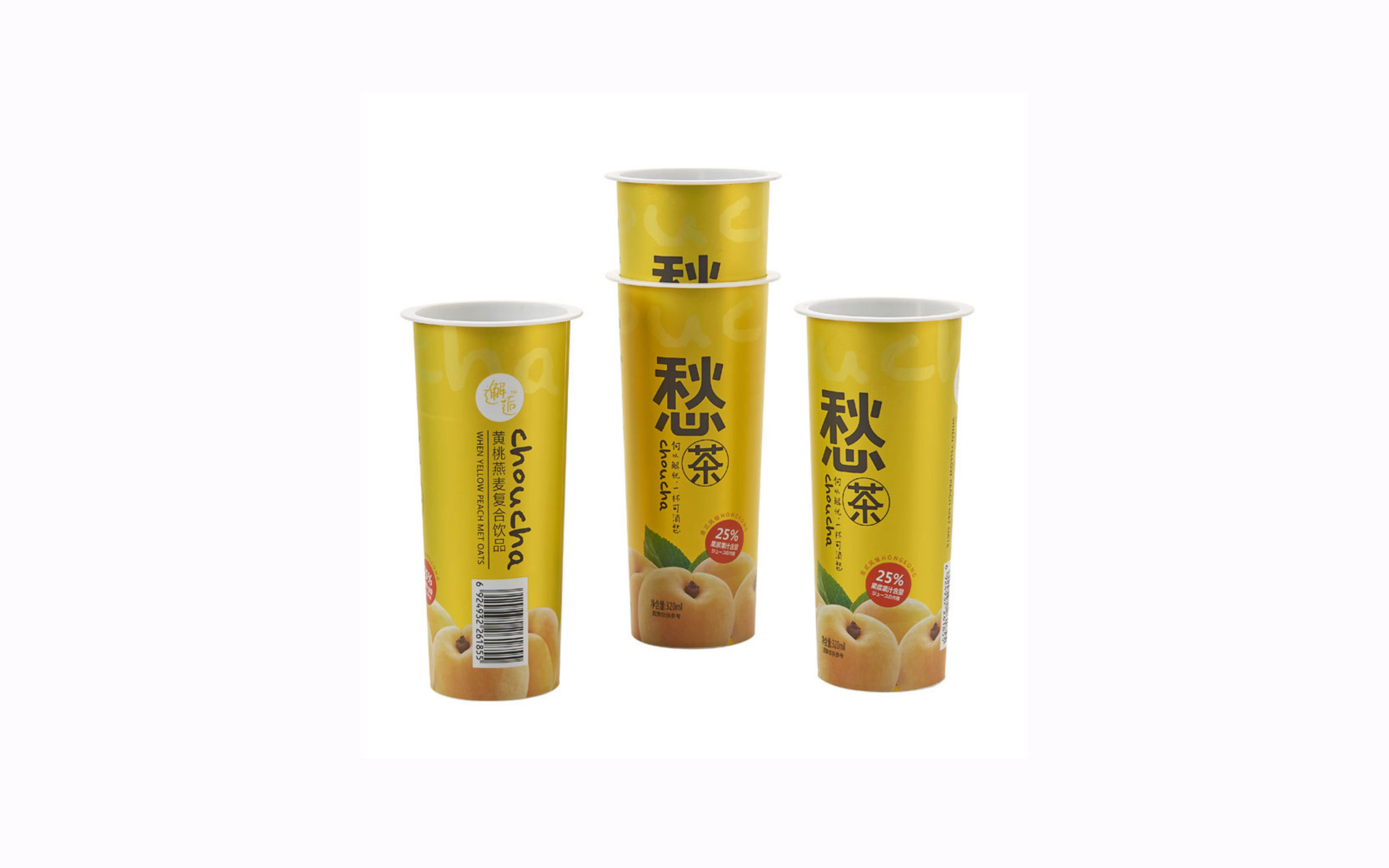
The injection molding cycle for cold drink cups is not something that can be shortened arbitrarily – it consists of four stages:
Mold closing → Injection → Holding pressure and cooling → Mold opening and part removal
Among these, cooling time typically accounts for over 70% of the total cycle. Cold drink cups have extremely thin walls (typically less than 0.6mm), so the heat from the molten plastic can be rapidly carried away by the mold cooling system, compressing cooling time to the absolute minimum. This is the "speed gene" that enables ultra-short injection cycles for cold drink cups.
Industry data shows that IML injection molding cycles typically range from 3-6 seconds. For 500ml to 750ml milk tea cups, a 6-second cycle has become a mature solution.
Taking it a step further, the IML thin-wall cup demonstrated by ARBURG at the 2023 German plastics exhibition achieved a cycle time of just 3.95 seconds, with a wall thickness of only 0.37mm and a part weight of just 10.4 grams.
2. The "Golden Triangle" Behind 6 Seconds
The secret to achieving a 6-second cycle for IML cold drink cups lies in the precise coordination of three elements:
High-Speed Injection Molding Machine
Cold drink cups are produced on dedicated high-speed injection molding machines, such as Dakumar DKM188, Yizumi PAC450K, and similar models. These machines are equipped with low-inertia, high-precision injection technology that effectively shortens injection time. Maximum injection speeds can reach 800mm/s.
Precision Molds
IML cold drink cup molds typically use multi-cavity designs – 2-cavity, 4-cavity, 6-cavity, or even 8-cavity configurations. The more cavities, the more cups produced in a single shot, and the shorter the cycle time per cup. With an 8-cavity mold, for example, one injection produces 8 cups at once.
Automated IML System
The IML system combines labeling and injection molding into one step, eliminating the traditional post-molding labeling process. When the mold opens, the robot simultaneously removes finished parts and places new labels, seamlessly integrating with the injection cycle.
| Product Type | Cavities | Injection Machine | Cycle Time |
|---|---|---|---|
| 450ml beverage cup | 2-cavity | DKM188 | 6 seconds |
| 750ml thin-wall container | 4+4 stack mold | PAC450K | 6.5 seconds |
| IML thin-wall cup | 4-cavity | ALLROUNDER 720A | 3.95 seconds |
| Milk tea cup | 8-cavity | DKM-360DFS | 5.5 seconds |
3. The Material "Accelerator" – How Nucleating Technology Reduces Cycle Time by 20%?
If equipment is the "hardware" of IML cold drink cup speed, then material is the "software" – both are indispensable.
The mainstream material for cold drink cups is polypropylene (PP). However, different PP materials vary significantly in injection cycle performance. Conventional PP has a slow crystallization rate, requiring longer cooling times, making cycle compression difficult.
PP materials using nucleating technology have completely changed this situation.
Borstar Nucleation Technology (BNT) from Borouge significantly accelerates the crystallization speed of PP by introducing uniform nucleation sites within the material. The faster the crystallization, the quicker the material transitions from melt to solid state – and cooling time naturally shortens.
Actual effect: Nucleating technology can reduce injection molding cycle time by 10%-20%. For a 6-second cycle, a 20% reduction means saving 1.2 seconds – in the production of hundreds of thousands of cold drink cups per day, this 1.2 seconds translates into an astonishing increase in output.
PP materials with nucleating technology have already made it possible to achieve IML thin-wall cup cycles below 6 seconds. Currently, IML milk tea cups using nucleated PP can achieve a stable cycle of 5.5 seconds.
4. "Fast" Does Not Mean "Rough" – Quality Assurance at High Speed
"6 seconds per cup" sounds fast, but speed cannot come at the expense of quality.
Quality assurance for IML cold drink cups in high-speed production comes from several factors:
Integrated Molding, No Post-Processing Concerns
IML fuses the label with the cup body during injection molding, eliminating the traditional labeling issues of "curling, bubbling, and peeling." No matter how fast the speed, the label will not "fall behind."
Robotic Precision Assurance
High-speed IML systems are equipped with high-precision side-entry robots with exceptional repeat positioning accuracy for label picking, placement, and part removal, ensuring consistent label positioning on every cup.
Automated Quality Inspection
IML production lines typically integrate automatic stacking, conveying, and packaging systems. From raw material to finished product, the entire process is fully automated, minimizing human interference with quality.
5. FAQ
The current industry record is 3.95 seconds (ARBURG 4-cavity IML thin-wall cup). For 500ml-750ml milk tea cups, 6 seconds is a mature and stable solution. With 8-cavity molds and nucleated PP material, the cycle can be stabilized at 5.5 seconds.
The core reason is the extremely thin wall thickness (typically 0.37-0.6mm), which allows heat from the molten plastic to be rapidly removed by the mold cooling system, drastically shortening cooling time. Additionally, IML eliminates post-molding labeling processes, further improving overall efficiency.
Yes. The IML system uses electrostatic adsorption to hold the label firmly against the mold wall – the label does not move during injection. High-speed robots have excellent repeat positioning accuracy, ensuring consistent label placement on every cup.
Nucleating technology introduces uniform nucleation sites within the PP material, accelerating the crystallization rate of the plastic. Faster crystallization means shorter cooling time, which naturally shortens the injection cycle. Cycle time can be reduced by 10%-20%.
Yes. IML combines labeling and injection molding into one step, with the label and cup body integrally molded. The entire production process is fully automated – from label picking and placement to injection, removal, stacking, and conveying – every step is performed by machines, ensuring consistent quality.
The industry's advanced level can achieve 0.37mm. Common cold drink cup wall thicknesses range from 0.4-0.6mm. Thin walls not only shorten the cycle but also reduce material usage and lower costs.
Contact Us
Name*
Telephone*
Region*
Please fill in your request*


