
Lamination & Coating Technologies in In-Mold Labeling: Adhesive Layer Application and Multilayer Structures
Lamination & Coating Technologies in In-Mold Labeling: Adhesive Layer Application and Multilayer Structures
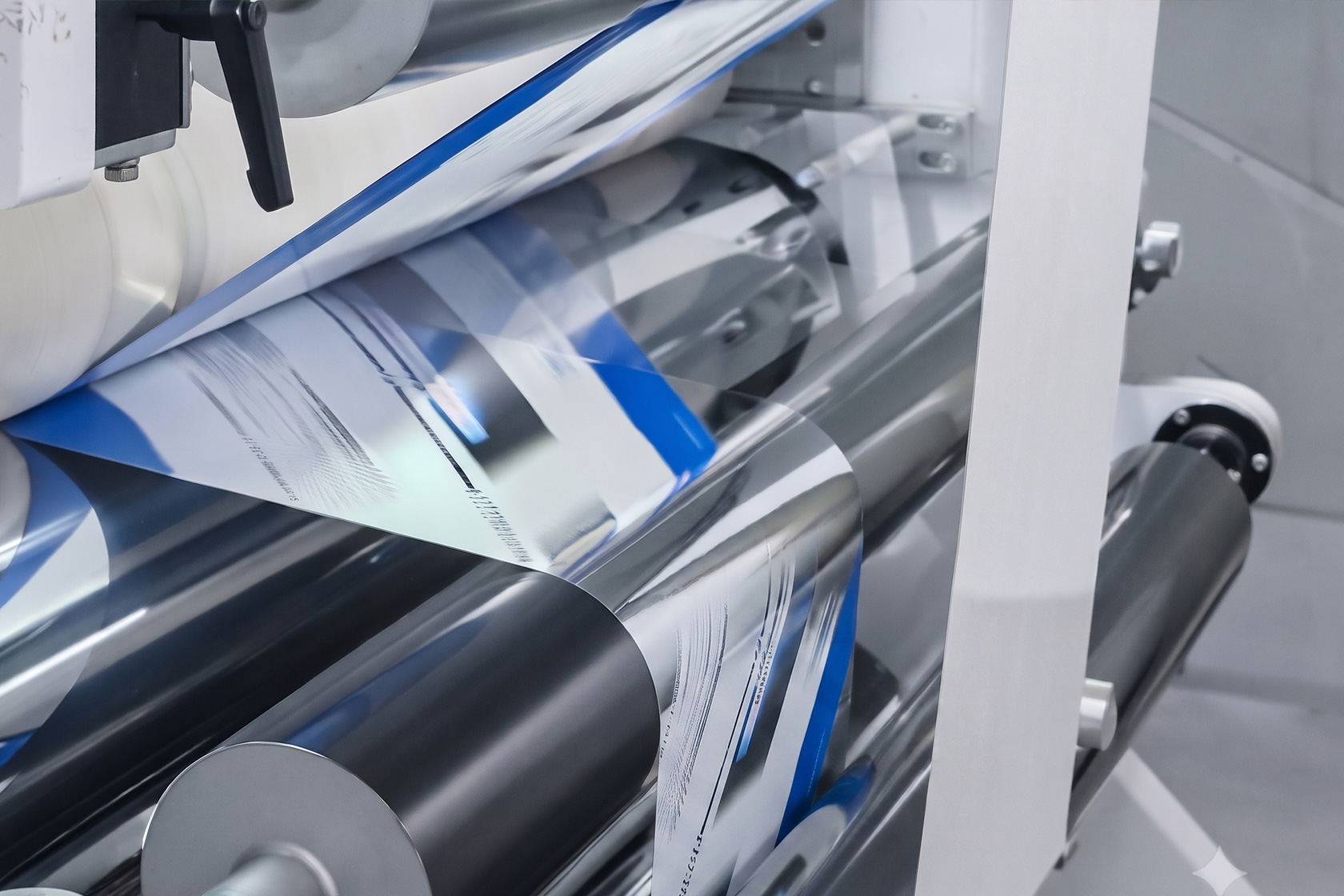
In the manufacturing process of in-mold labels (IML), “lamination” or “coating” broadly refers to how multiple material layers are combined to form a finished label. This includes both the application and structuring of the adhesive layer (the core technology that enables label‑to‑container fusion) and the lamination of multilayer films. This article systematically introduces the classification, core processes, and quality control of lamination and coating technologies for IML.
1. Why Are Lamination and Coating Critical for IML?
Unlike ordinary pressure‑sensitive labels, an in‑mold label is not a single film but a composite of three layers: printing layer (top layer) , middle layer (support layer) , and adhesive layer (bottom layer) . Among these:
The printing layer carries graphics and must have good heat resistance and printability.
The middle layer provides stiffness and dimensional stability to prevent deformation during high‑temperature molding.
The adhesive layer is the key to label‑container integration – it melts under the high temperature inside the mold and firmly bonds the label to the plastic container surface.
The quality of how these three layers are combined directly determines the stability of the IML label during molding and the quality of the final product.
2. The Adhesive Layer: Core of the Lamination/Coating Process
2.1 Functions of the Adhesive Layer
The adhesive layer is the bottommost layer of the label, directly contacting the molten plastic. Its main functions include:
High‑temperature melt bonding: Rapidly melts at in‑mold high temperatures (160-240°C), wets the container surface and the label substrate, and solidifies on cooling to form a strong bond.
Air venting (bubble prevention) : For large labels, venting channels must be designed to prevent trapped air from causing bubbles.
Antistatic and slip properties: Ensures that labels do not stick together or cause static‑related failures during printing, die‑cutting, stacking, and robotic pick‑and‑place.
2.2 Two Structures of the Adhesive Layer
Depending on label area and application requirements, the adhesive layer can be designed with two surface structures:
| Structure Type | Feature | Suitable Applications | Venting Method |
|---|---|---|---|
| Plain (non‑embossed) | Continuous, smooth adhesive coating | Small labels (< 50 cm²), e.g., bottle cap tops, small can lids | Natural venting; air escapes through the interface with the parison |
| Embossed (mesh/dot pattern) | Adhesive applied as grid or dots, leaving venting channels | Large labels (e.g., wrap‑around bottle labels, large tub fronts) | Air escapes through the embossed channels – effectively prevents bubbles |
The embossed pattern is created by a dedicated embossing roller process that forms raised and recessed areas on the adhesive surface. The depth and density of the venting channels can be precisely controlled based on label area and injection pressure. Typical embossing densities range from 60 to 200 lines per inch, with adhesive coating weights of 1–10 g/m² (dry basis).
Extended functionality: Besides venting, the adhesive layer also provides antistatic properties (prevents double‑feeding during printing) and slip properties (ensures smooth label separation), both of which are critical for fully automatic IML production.
3. Coating and Lamination Processes for the Adhesive Layer
3.1 Hot‑Melt Coating
The adhesive layer for IML is applied using hot‑melt coating: thermoplastic hot‑melt adhesive is heated to a molten state, uniformly coated onto the back of the printed film, and then cooled to solidify.
Characteristics: Solvent‑free, 100% solids, environmentally friendly (no VOCs).
Process control: Coating weight, uniformity, and embossing depth must be precisely controlled.
Key parameters: Coating weight (1–10 g/m²), melt temperature, cooling rate.
3.2 Anilox / Gravure Coating and Embossing
The embossed structure is mainly achieved by anilox roller coating or gravure coating:
Anilox coating: A metal roller with engraved cells transfers a metered amount of adhesive onto the film while simultaneously impressing a mesh pattern onto the coating – combining “coating” and “embossing” in one step.
Offline embossing: Adhesive is first coated (plain) onto the film, then a separate embossing roller impresses the mesh pattern into the adhesive layer.
3.3 Co‑extrusion Lamination
Some high‑end IML labels are manufactured using co‑extrusion: different resin pellets are fed into separate extruders, and under heat and pressure they merge in a single die to produce a multilayer film. The film may then be biaxially or mono‑axially stretched to improve strength and stiffness, which benefits printing and molding.
Compared to traditional offline coating/lamination, co‑extrusion offers:
No additional adhesives between layers – the layers bond by melt fusion, providing more stable interlayer adhesion.
Precise thickness control of each layer, suitable for high‑volume production.
Fewer steps (no separate coating and drying), making the process more efficient.
3.4 Extrusion Coating (Extrusion Lamination)
In extrusion coating, the hot‑melt adhesive is directly extruded as a molten film through a slot die and then nipped together with the printed label face stock. The extruded layer can be designed as a single layer or a multilayer structure to meet different fusion and anti‑blocking requirements.
Extrusion lamination: Suitable for IML labels that require a thicker adhesive layer.
Primer coating: A primer may be applied between the extruded layer and the substrate to improve interlayer adhesion.
4. Multilayer Structure Lamination
Beyond the coating and embossing of the adhesive layer itself, “lamination” also refers to the laminating process between multiple film layers.
4.1 Solvent‑Based Dry Lamination
A solvent‑based adhesive bonds the printed top film to functional layers (e.g., middle layer, barrier layer). After coating, the solvent is evaporated in a drying oven, and the layers are pressed together.
Suitable for: Multilayer structures requiring high bond strength.
Drawback: VOC emissions; environmental pressure is high.
4.2 Solvent‑Free Lamination
Two‑component, solvent‑free adhesive is mixed inline, coated onto one substrate, and then laminated to the other substrate under pressure, followed by curing.
Advantages: No VOC emissions, energy‑efficient.
Suitable for: Food‑packaging IML labels with strict environmental requirements.
4.3 Extrusion Lamination (Multilayer)
Multiple functional resins (e.g., PP, PE, barrier resin EVOH) are co‑extruded through several extruders into one or more layers, directly laminated with the printed layer.
Advantages: Can achieve high‑barrier properties (moisture, oxygen) – ideal for food packaging that demands extended shelf life.
4.4 Coating Lamination (Direct Coating)
A functional coating (e.g., hot‑melt adhesive, antistatic coating, primer) is applied directly onto the base film without the need for another film layer. After coating, the layer is dried or cured.
Advantages: Simple process, low cost – suitable for single‑function layers (adhesive, protective coating, etc.).
Application note: Coating lamination is the most widely used method for applying the IML adhesive layer. Multilayer lamination (dry, solvent‑free, extrusion) is typically used for high‑performance, multi‑function IML labels (e.g., high‑barrier or metallized labels).
5. Complete Manufacturing Flow for IML Lamination/Coating
Taking all the above technologies together, a typical IML label manufacturing process includes the following key steps:
Film co‑extrusion / extrusion: Produce the multilayer base film.
Biaxial / mono‑axial stretching: Improve strength and dimensional stability; some materials (e.g., YUPO synthetic paper) become micro‑voided through stretching.
Surface treatment: Corona treatment or primer coating to improve ink adhesion on the printing side.
Printing: Print graphics on the top layer using offset, gravure, flexo, etc.
Adhesive coating and embossing: Apply hot‑melt adhesive to the back side and emboss a mesh pattern – the critical step in IML lamination/coating.
Slitting and packaging: Slit the laminated web into finished labels (rolls or sheets).
6. Common Defects in Lamination/Coating and Troubleshooting
| Defect | Possible Causes | Solutions |
|---|---|---|
| Label curl | Mismatch in shrinkage between coating/varnish and film; moisture absorption | Use coatings matched to film shrinkage; control humidity |
| Bubbles (within coating) | Poor venting design; air entrapment during coating | Optimize embossing density/depth; check coating parameters |
| Double‑feeding / sticking | Insufficient antistatic or slip properties; incomplete post‑curing | Adjust antistatic and slip agent levels |
| Poor ink/coating adhesion | Low film surface energy (<38 dynes/cm); improper corona or primer | Increase corona power; apply primer |
| Interlayer delamination | Insufficient adhesive; contamination at interface | Increase adhesive quantity or optimize lamination temperature/pressure; clean production environment |
In injection and blow molding, defects originating from lamination/coating can also lead to ink wash‑off, label shifting, poor fusion, and other problems after molding.
7. Motek’s Lamination & Coating Solutions
Motek provides professional technical support for IML label manufacturers:
Custom adhesive coating: Design embossed or plain hot‑melt adhesive coatings based on label size, substrate type, and molding process – optimizing venting and fusion strength.
Multilayer co‑extruded films: Provide integrated films with printing layer + support layer + adhesive layer in one co‑extrusion – stable interlayer adhesion without separate dry/solvent‑free lamination, simplifying production.
Primer / surface treatment: Supply specialty primers and corona treatment recommendations to ensure ink‑to‑film adhesion.
Antistatic and slip tuning: Customize antistatic and slip performance to ensure smooth label handling during printing and robotic pick‑and‑place.
8. Future Trends
Solvent‑free / water‑based coating: Environmental regulations are driving replacement of solvent‑based coatings with solvent‑free and water‑based systems.
Co‑extrusion technology advancement: Co‑extruded film structures are increasingly optimized, offering more stable interlayer adhesion and reducing separate lamination steps.
Integrated functional coatings: Antistatic, barrier (EVOH), conductive (RFID antenna) functions are being integrated into the lamination/coating structure, enabling multi‑function labels.
Ultra‑thin laminates: Total label thickness is trending downward (50-70 μm) to reduce cost and improve molding precision.
9. Conclusion
Lamination and coating technologies for in‑mold labels cover the entire spectrum from adhesive layer coating and embossing to multilayer film extrusion and lamination. Understanding the principles and selection criteria of these technologies is essential for manufacturers to choose appropriate materials, optimize processes, and ensure product quality.
Motek offers comprehensive solutions for IML label manufacturing. For technology recommendations tailored to your product needs, please contact the Motek technical team.
Contact Us
Name*
Telephone*
Region*
Please fill in your request*


