
In-Mold Labeling vs. Traditional Labeling: Comprehensive Advantage Analysis
In-Mold Labeling vs. Traditional Labeling: Comprehensive Advantage Analysis
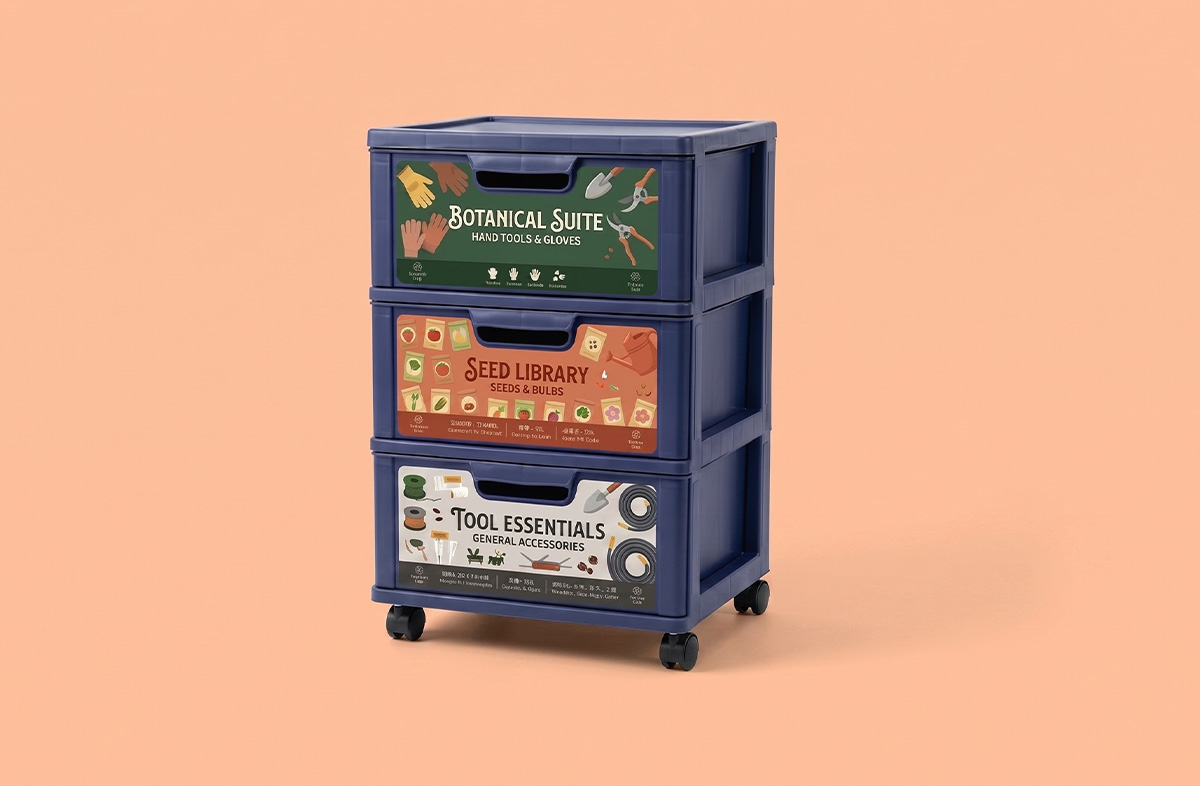
In the field of plastic container packaging, labels not only carry brand identity, product information, and regulatory content but also directly influence consumer purchasing decisions. Currently, the mainstream labeling technologies include in-mold labeling (IML) , pressure-sensitive labeling (PSL) , and shrink sleeve labeling (Sleeve) . Each process has its own characteristics, but IML – with its unique advantages of one‑step molding, durability, and environmental friendliness – is increasingly replacing traditional processes in high‑end and high‑volume applications.
This article provides a comprehensive comparison of IML versus pressure‑sensitive and shrink sleeve labels across multiple dimensions: process principle, appearance quality, durability, production efficiency, cost structure, and environmental recyclability.
1. Process Principle Comparison
| Process | Basic Principle | Labeling Timing | Additional Glue Required? |
|---|---|---|---|
| IML | Label pre‑placed in mold, fuses simultaneously with container molding via heat‑seal adhesion | During molding | No (label has built‑in adhesive layer) |
| Pressure‑Sensitive (PSL) | Label with pre‑coated pressure‑sensitive adhesive is applied to finished container surface under pressure | After molding (offline or inline) | No (label has built‑in adhesive) |
| Shrink Sleeve | Printed sleeve is placed over container, then heated to shrink tightly around container contour | After molding (offline) | No |
Key difference: IML completely integrates the labeling step into the molding process, eliminating downstream labeling equipment; both PSL and shrink sleeve require separate labeling or sleeving machines and labor.
2. Appearance and Surface Quality Comparison
| Aspect | IML | Pressure‑Sensitive | Shrink Sleeve |
|---|---|---|---|
| Label‑container integration | Coplanar, smooth edge, almost no tactile boundary | Obvious edge protrusion, label edge can be felt | Sleeve covers entire container, with seam at bottom or side |
| Achievable effects | 360° wrap‑around, transparent/no‑label look, glossy/matte/textured, partial cut‑out | Mainly flat surfaces, poor curved surface conformity, prone to wrinkles | Full wrap, suitable for shaped containers, but seam affects aesthetics |
| Print resolution | High (flexo/gravure up to 175 lpi or more) | High (similarly fine printing) | Medium‑high (slightly lower due to stretching distortion) |
| Transparent/no‑label effect | Excellent (clear BOPP label blends with clear container) | Fair (adhesive layer remains visible on clear labels) | Good (but may distort after shrinking) |
| Special decoration | Can combine with mold texture for tactile feel, metallic sheen, etc. | Requires additional lamination or foil stamping | Large‑area metallic printing possible |
IML advantage: No label edge feel, enables “no‑label” premium appearance; combined with mold texture gives unique tactile and gloss effects.
3. Durability Comparison
| Property | IML | Pressure‑Sensitive | Shrink Sleeve |
|---|---|---|---|
| Water/moisture resistance | Excellent (label and container one piece, water cannot penetrate edges) | Fair (edges prone to water ingress, causing lifting or peeling) | Good (but open at both ends, water can still enter) |
| Oil/chemical resistance | Excellent (same‑material fusion, no gaps) | Fair (adhesive may be attacked by oil or solvents) | Fair (inks may be dissolved by chemicals) |
| High/low temperature resistance | Stable from –20°C to 80°C (PP/PE materials) | Adhesive becomes brittle and peels at low temperature; softens and shifts at high temperature | Shrink film becomes hard and cracks at low temperature; may continue shrinking/deforming at high temperature |
| Scratch resistance | Good (label surface as wear‑resistant as container) | Fair (label edges easily lifted by scratching) | Good (but once pierced, tends to tear widely) |
| UV resistance | Depends on inks, generally good | Depends on inks and lamination | Inks exposed, faster fading |
| Service life | Same as container life | 2–5 years (edge lifting then peeling) | 2–4 years (film may age and become brittle) |
IML advantage: IML performs most stably in wet, submerged, oily, freezing, or high‑temperature environments, making it especially suitable for personal care, frozen food, motor oil, and agrochemical packaging.
4. Production Efficiency & Automation Comparison
| Metric | IML | Pressure‑Sensitive | Shrink Sleeve |
|---|---|---|---|
| Number of process steps | Single step (molding + labeling in one) | Two steps (molding → labeling) | Two steps (molding → sleeving + shrinking) |
| Equipment integration | High (IML robot integrated with molding machine) | Low (requires separate labeler and conveyor) | Low (requires sleeving machine and shrink tunnel) |
| Production speed | Blow IML: 5–12 sec/cycle; Injection IML: 3–8 sec/cycle | 200–600 units/min (high‑speed rotary labeler) | 100–400 units/min |
| Changeover time | Longer (need to change label magazines, adjust robot) | Shorter (quick label roll change) | Medium (change sleeve roll and adjust) |
| Reject rate | Low (approx. 1–3%) | Medium (label skew, bubbles, approx. 2–5%) | Higher (uneven shrinkage, seam shift, approx. 3–8%) |
| Labor dependency | Low (fully automatic, one operator can tend multiple machines) | Medium (need to replenish label rolls, troubleshoot) | Medium (need to monitor shrink temperature and sleeve position) |
IML advantage: Although the cycle time may be slightly longer, it eliminates separate labeling lines and conveyors, resulting in more compact overall line throughput and lower reject rates.
5. Cost Structure Comparison
The following are approximate cost comparisons for a typical medium‑scale production (5 million containers/year). Actual figures vary by region, equipment brand, and label complexity.
| Cost Item | IML | Pressure‑Sensitive | Shrink Sleeve |
|---|---|---|---|
| Label material cost | Medium‑high (3‑layer composite, coated adhesive) | Medium (face stock + liner + pressure‑sensitive adhesive) | Lower (film + printing ink, no liner) |
| Equipment investment | Higher (IML robot, special mold, vacuum/electrostatic system) | Medium (labeler) | Medium (sleeving machine + shrink tunnel) |
| Tooling/mold cost | Higher (mold requires vacuum holes or electrostatic system) | Low (no special mold requirements) | Low (standard blow/injection mold works) |
| Energy consumption | Low (no extra labeling energy) | Medium (labeler, conveyor, drying) | High (shrink tunnel requires continuous heating) |
| Labor cost | Low (high automation) | Medium (requires operator) | Medium (requires monitoring) |
| Total unit cost | Medium (advantage grows with volume) | Medium‑low (advantage for small batches) | Low (very low cost for large‑volume printed sleeves) |
IML cost characteristics:
Higher initial mold and automation investment, but unit cost drops significantly with higher volumes.
Eliminates post‑mold labor, energy, and floor space costs – total cost often lower than PSL at volumes above several million units per year.
Label material itself slightly more expensive than PSL, but no liner waste (PSL liner accounts for 20–30% of material cost).
6. Environmental Sustainability Comparison
| Metric | IML | Pressure‑Sensitive | Shrink Sleeve |
|---|---|---|---|
| Material homogeneity | Can be 100% same material (PP/PE label with PP/PE container) | Heterogeneous (label face + adhesive + liner, usually different from container) | Usually heterogeneous (PET/OPS/PVC film vs. PE/PP container) |
| Recyclability | Excellent (can be directly ground and re‑pelletized as a whole, no separation needed) | Poor (requires label and liner separation; liner is waste) | Poor (different density from container, requires sink‑float separation) |
| Recycling cost | Low (no additional step) | High (mechanical or chemical separation needed) | Medium (density separation needed) |
| VOC emissions | None (solvent‑free hot‑melt adhesive) | Some (pressure‑sensitive adhesives contain small amounts of solvents; liner coatings may release VOCs) | Printing inks contain solvents; shrink process may release VOCs |
| Carbon footprint | Lower (integrated molding uses less energy) | Medium (additional labeling step) | Higher (shrink tunnel consumes significant energy) |
| Alignment with circular economy | Strong (regulations like EU PPWR encourage same‑material recyclable packaging) | Weak (heterogeneous labels face restrictions) | Medium (some materials recyclable, but separation is troublesome) |
IML environmental advantage: As global plastic packaging recycling regulations tighten (e.g., EU Packaging and Packaging Waste Regulation – PPWR), labels must either be easily separable or be same‑material and recyclable. IML’s PP/PP or PE/PE same‑material solution is widely recognized as an ideal choice.
7. Application Recommendations
| Application Area | Recommended Process | Reason |
|---|---|---|
| Premium personal care (shampoo, shower gel) | IML | Water/moisture resistant, premium appearance, durable |
| Frozen food (ice cream tubs, quick‑freeze boxes) | IML | Low‑temperature resistant, label does not peel |
| Motor oil / lubricant bottles | IML | Oil‑resistant, high‑temperature resistant, scratch‑resistant |
| Agrochemical / pesticide bottles | IML | Chemical‑resistant, seamless, safe |
| Beverage bottles (water, juice) | Shrink sleeve (low cost) or IML (premium line) | High volume cost‑sensitive uses sleeve; premium brands may choose IML |
| Small batch / promotional campaigns | Pressure‑sensitive | Flexible label changes, no mold change |
| Shaped containers (tapered, oval) | Shrink sleeve | Conforms perfectly to complex contours |
| Export products with high recyclability requirements | IML | Meets EU same‑material recycling requirements |
8. Summary: Core Advantages of IML
Based on the above comparison, IML offers the following irreplaceable advantages over traditional pressure‑sensitive and shrink sleeve labels:
One‑step molding: Label and container are completed in the same mold cycle, eliminating downstream processes and improving efficiency.
Permanent fusion: Through heat‑seal adhesion and same‑material molecular chain interdiffusion, the label and container become non‑peelable, eliminating the risk of label detachment.
Excellent durability: Waterproof, oil‑resistant, high/low temperature resistant, and scratch‑resistant – suitable for harsh use environments.
Premium appearance: No label edge feel; can be combined with mold texture to achieve “no‑label” or tactile decorative effects.
Environmentally recyclable: Same‑material design allows the entire package to be directly ground for recycling without label separation, complying with circular economy regulations.
Total cost advantage: At medium to high volumes, eliminating downstream equipment, labor, and energy often makes total cost lower than pressure‑sensitive labels.
Of course, IML also has limitations: higher initial mold and equipment investment, poor economics for very small batches, and longer changeover time. However, for medium‑to‑high volume packaging projects that demand quality, durability, and environmental compliance, IML is currently the optimal solution.
Motek provides complete IML solutions from label material selection, printing adaptation, mold design, to production commissioning. Please contact our technical team for a process comparison analysis and sample testing for your specific product.
Contact Us
Name*
Telephone*
Region*
Please fill in your request*


