
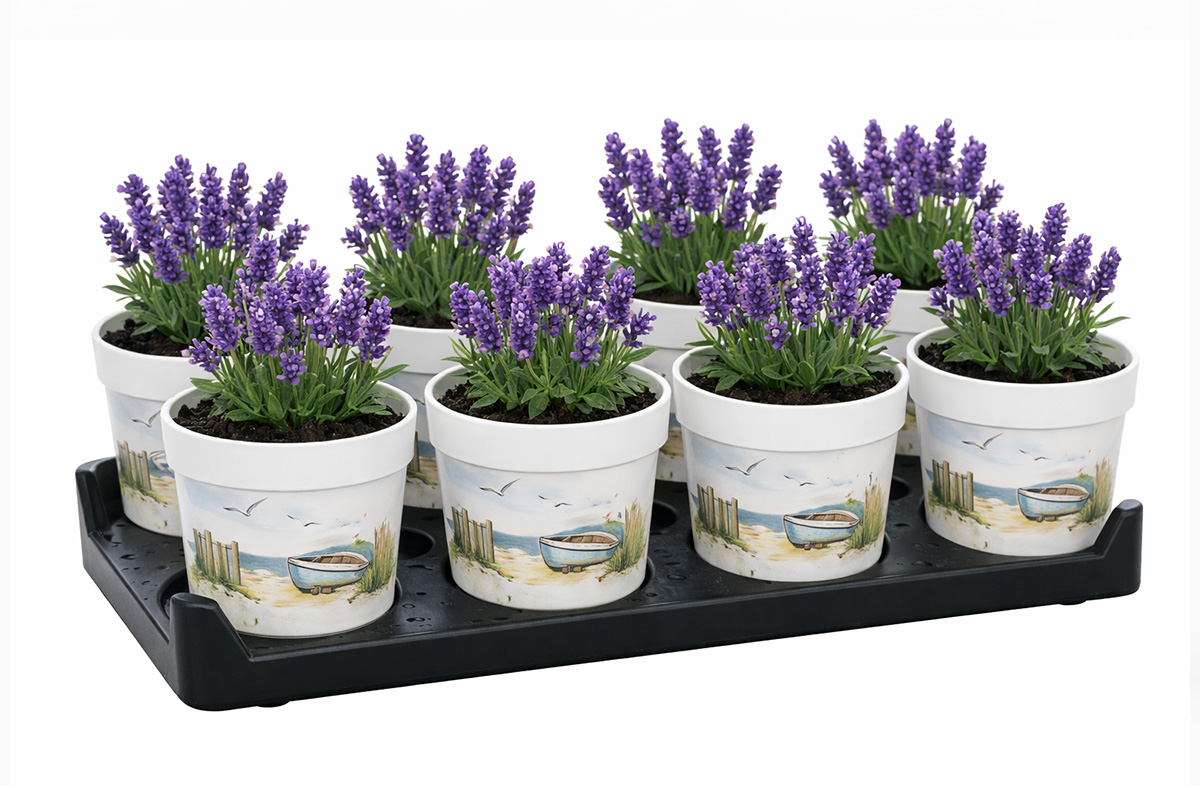
Stone, Wood Grain, Ceramic – Motek In-Mold Labels Customize Any Texture You Want
Plastic flower pots are lightweight, durable, and low‑cost, but they often lack the “texture” that premium gardening products demand. When consumers browse shelves, they instinctively reach out to touch – they want the roughness of stone, the warmth of wood, the gloss of ceramic. The smooth, shiny surface of ordinary plastic often signals “cheap.”
Motek’s in‑mold labeling technology, for the first time, gives plastic flower pots a realistic look and feel that rivals natural materials. We don’t just print high‑definition patterns of stone, wood grain, or ceramic – we can also simulate true tactile sensations such as matte, sandblasted, rough, or silky finishes using special films and surface treatments. Whatever texture you want, Motek can custom‑make it for you.
What Is “Texture Customization”?
Traditional printing can only “draw” a texture visually – but one touch reveals the truth. Motek’s IML texture customization addresses three dimensions:
| Dimension | Technical Implementation | Effect |
|---|---|---|
| Visual texture | High‑precision gravure/screen printing, 8 colors | Stone speckles, wood grain pores, ceramic crazing – indistinguishable from real materials |
| Tactile texture | Special matte films, spot varnish, embossing | Rough, raised, or silky feel – matches the real material |
| Optical texture | Matte/gloss/semi‑gloss coatings | Stone absorbs light, ceramic reflects, wood diffuses – changes with lighting angle |
Customizable Texture Types (Partial Examples)
1. Stone textures
Marble (white/black/grey, natural veining)
Granite (rich speckles)
Slate (layered flakes)
Terrazzo (colored chip inlay)
Cement / raw concrete (industrial, matte rough)
2. Wood grain textures
Oak (bold straight grain)
Walnut (dark curved grain)
Teak (golden stripes)
Bamboo (fine parallel lines)
Weathered wood (worn, distressed)
3. Ceramic textures
Blue‑and‑white porcelain (white base with blue, high gloss)
Terracotta (reddish‑brown, matte granular)
Glazed ceramic (high‑shine, mirror reflection)
Crackled glaze (crazing lines)
Earthenware (orange‑red, absorbent feel)
4. Other special textures
Fabric/linen (woven pattern)
Leather (pebbled grain, soft‑touch)
Brushed metal (silver/copper/titanium grey)
Fluorescent / glow‑in‑the‑dark (special effects)
Core Technology for Texture Customization
Motek uses a multi‑layer composite in‑mold label structure (top to bottom):
Protective topcoat – High‑hardness UV coating, scratch‑resistant, anti‑aging
Texture embossing layer – Tactile feel via embossing or special films
Printing layer – 8‑color high‑precision printing for color and pattern
Base layer – Uniform background color, enhances opacity
Bonding layer – Fuses with molten plastic, never peels
This structure ensures that texture and pattern are integrated. Neither long‑term use nor repeated touching will wear away the pattern or diminish the tactile feel.
Why Choose Motek for Texture Customization?
1. Massive texture library – free matching
Motek has a digital library of over 500 stone, wood, and ceramic textures. Just provide a reference photo (e.g., “I want the look of Carrara white marble”), and we’ll match the closest texture from our library and output a sample.
2. Quantifiable tactile feel
We can adjust surface roughness (Ra value range 0.5–5.0μm) to your requirements and provide physical tactile sample boards for your approval. What you feel is what you get in mass production.
3. No compromise on weather resistance
Even rough surfaces that mimic natural materials retain UV resistance, waterproofing, and scratch resistance. No fading or peeling after 3‑5 years outdoors.
4. Much lower cost than real materials
Real stone pots: heavy, brittle, high shipping cost – retail typically >$20
Real wood pots: vulnerable to water, cracking, require regular maintenance
Real ceramic pots: fragile, high energy consumption in firing
Motek texture‑simulated pots: lightweight, durable, stackable – retail is only 1/5 to 1/10 of real materials, with huge profit margins.
Texture Customization Process
| Step | Action | Lead Time |
|---|---|---|
| 1. Texture requirement | Provide reference image or target material name (e.g., “walnut,” “Italian travertine”), or choose from Motek’s texture library ID | 1 day |
| 2. Mock‑up creation | Motek produces high‑fidelity visual mock‑up; optional physical tactile sample board | 2–3 days |
| 3. Sampling & trial | Produce 50–100 texture labels, ship to you or your injection molder for trial | 5–7 days |
| 4. Sample approval | Confirm visual and tactile results; fine‑tune texture depth or gloss if needed | 2 days |
| 5. Mass production | Produce texture labels per order quantity, pack and ship | 7–15 days |
For first‑time clients: Motek offers free sample comparison of 3 different textures to help you choose the best solution.
Application Case
Case: Nordic‑style flower pot brand
The client wanted pots with both “raw cement roughness” and “warm oak wood grain” for indoor plant styling. Motek developed a composite texture label: light grey cement base color with partial embossed oak grain and a semi‑matte finish. First sample passed. The brand’s unique “cement‑wood” pot gained significant organic exposure on Instagram, with monthly sales exceeding 50,000 units.
Which Products Are Suitable for Texture Customization?
Indoor decorative pots – complement Nordic, Japanese, industrial home styles
Balcony / patio pots – need weather resistance plus aesthetics
Commercial plant rental – elevate the ambiance of spaces
Gift pots – holiday gift boxes, corporate customizations
Plant e‑commerce pots – add product value
Make Your Plastic Pots “Look Nothing Like Plastic”
Consumers won’t pay a premium for “plastic,” but they will pay for “a pot that looks like stone.” Motek IML texture customization lifts your product out of low‑price competition and into the high‑value designer brand space.
Tell us which material you want to imitate – leave the rest to Motek.
Stone, Wood Grain, Ceramic – Motek In-Mold Labels Customize Any Texture You Want


