
Colored Coating, Matte Soft-Touch, Partial Holographic Effects – How Do These Special Finishes Enhance the Premium Value of Storage Containers?
Colored Coating, Matte Soft-Touch, Partial Holographic Effects – How Do These Special Finishes Enhance the Premium Value of Storage Containers?
Have you ever seen storage containers on e-commerce platforms that are the same size, made of the same material, yet one sells for 39 yuan while another dares to price itself at 139 yuan – and still sells well?
That extra 100 yuan isn't for "holding two more pieces of clothing." Consumers are paying for visual pleasure, tactile sophistication, and the satisfaction of sharing photos on social media.
In a product category as homogenized as storage containers, aesthetics equal pricing power. The special surface finishes enabled by IML in-mold labeling technology – colored coating, matte soft-touch, and partial holographic effects – are precisely the key tools that transform an "ordinary plastic box" into a "high-end home essential."
📖 Table of Contents
- 1. First Understand: Why Can IML Achieve These Special Effects?
- 2. Colored Coating: Say Goodbye to the "Cheap Plastic Look"
- 3. Matte Soft-Touch: Dual Sophistication of Touch and Sight
- 4. Partial Holographic Effects: Instant "Wow Factor" Under Light
- 5. How Do Special Finishes Translate into Product Premium?
- 6. FAQ
1. First Understand: Why Can IML Achieve These Special Effects?
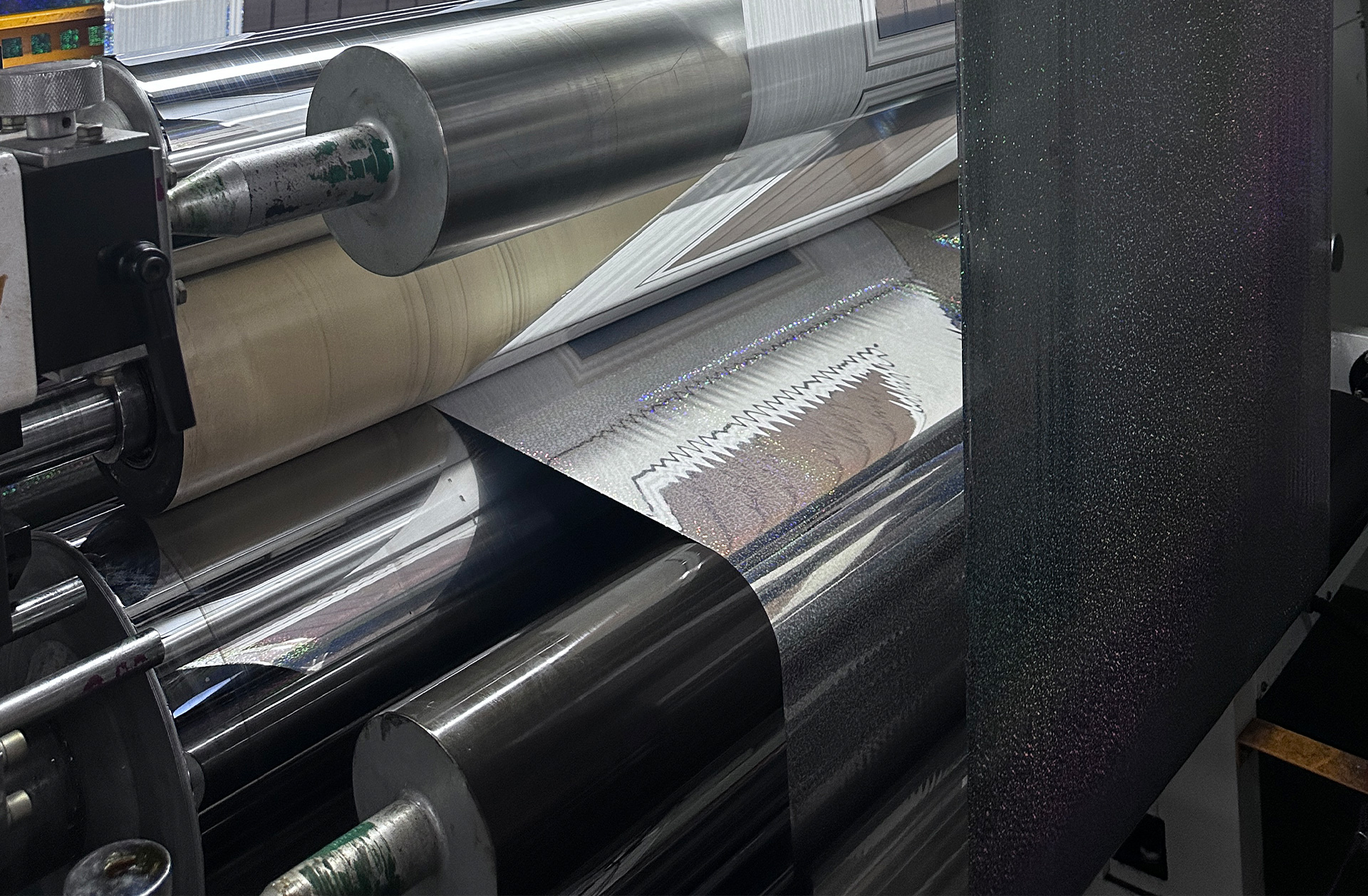
Before discussing specific techniques, we need to understand a core question: why can IML labels achieve special effects that ordinary stickers and screen printing cannot?
The answer lies in IML's three-layer structure.
The surface of an IML label is a hardened transparent film (typically PET or PC), with a printed pattern layer in the middle, and a plastic layer on the back that fuses with the container body during molding.
┌──────────────────────────────────────────────────┐
│  Hardened transparent film (gloss/matte/orange-peel) │  ← Direct contact with outside; determines surface texture
├──────────────────────────────────────────────────┤
│  Printed pattern layer (color/metallic/holographic)  │  ← Ink sandwiched in the middle; never fades
├──────────────────────────────────────────────────┤
│  Plastic substrate (fused with container body)       │  ← Fuses during molding; never peels off
└──────────────────────────────────────────────────┘
The brilliance of this structure lies in three aspects:
First, the ink never contacts the outside world. The ink is sandwiched between the film and the plastic – it will not oxidize, fade, or wear. Ordinary screen-printed patterns become scratched and worn after a few months; IML patterns remain as vivid as new for years.
Second, the surface film can "customize texture." This transparent film is not one-size-fits-all – it can be high-gloss, matte, frosted, orange-peel textured, or even holographic. Different surface finishes determine the first visual impression and the tactile psychological experience for the consumer.
Third, patterns can be "infinitely complex." Because the ink is on the inner layer of the film, printing is not constrained by the surface protective layer. This enables high-precision color patterns, metallic inks, pearlescent inks, and even holographic effects.
It is this combination of three layers that makes IML the ideal carrier for achieving high-aesthetic surface effects on storage containers.
2. Colored Coating: Say Goodbye to the "Cheap Plastic Look"
What is the biggest culprit behind the "cheap look" of ordinary storage containers? Not the material – it's the color.
Storage containers injection-molded from plain PP material have monotonous colors, uneven gloss, and visible flow marks on the surface – you can tell at a glance that they are "plastic products." Colored coating technology completely changes this.
What is colored coating?
Colored coating uses high-precision printing on the surface film of an IML label to achieve full, uniform, and high-saturation color coverage. Unlike injection-molded colors directly in the plastic, colored coating colors are printed on the inner layer of the film, unaffected by the plastic substrate color, resulting in purer and more stable color expression.
Three common colored coating effects:
- Glossy white-base composite film – vibrant colors with strong gloss, suitable for youth-oriented brands seeking "eye-catching" appeal.
- Matte white-base composite film – soft colors with a warm texture, suitable for brands pursuing a "premium" aesthetic.
- Special-effect composite film – can incorporate pearlescent, metallic, gradient, and other effects, making the storage container look "unlike plastic."
Why does colored coating enhance premium value?
Consumers are extremely sensitive to "color quality." Take a white storage container – an ordinary injection-molded part appears greyish and dull, while a colored-coated white is pure, uniform, and refined – placed side by side, consumers are willing to pay 30%-50% more for the latter.
The Italian brand KIS's Alphabet Series storage containers are a classic example. This series uses IML technology, maintaining bright, unfading colors over time, with surfaces that resist scratching. It is this "never looks old" color quality that allows it to command a higher price among similar products.
3. Matte Soft-Touch: Dual Sophistication of Touch and Sight
If colored coating conquers the eyes, then matte soft-touch conquers the fingertips.
What is the matte soft-touch effect?
Matte effects are achieved through sandblasting or chemical etching of the mold surface, creating micro-diffuse reflective structures on the IML label's surface film. When light hits the surface, it does not reflect specularly but scatters in all directions, visually presenting a soft, non-glare, misty texture.
Three key values of matte soft-touch:
First, visual sophistication. Matte surfaces inherently carry a "restrained, understated, low-key" quality that aligns perfectly with home aesthetics like "light luxury," "minimalism," and "Nordic style." A white storage container – glossy looks like "household goods," matte looks like "home decor."
Second, tactile comfort. Matte surfaces have a fine damping feel when touched – not cold and slippery like glossy surfaces, nor rough like sandblasted surfaces. This "warm" tactile sensation subconsciously makes people think, "this product is good quality."
Third, fingerprint and scratch resistance. Matte surfaces effectively hide fingerprints and minor scratches. For storage containers that are moved around daily, this means staying clean and new even after extended use – while glossy containers show fingerprints after just a few days and look worn very quickly.
How matte effects are achieved in IML:
According to supplier classifications, IML matte effects come in standard matte and transparent matte variants. Standard matte presents a uniform misty texture, suitable for large-area application; transparent matte retains some translucency, creating a "semi-transparent mist" hazy aesthetic.
Additionally, orange-peel effect is a special matte variant – the surface has fine orange-peel texture, offering richer tactile sensation and greater visual depth.
4. Partial Holographic Effects: Instant "Wow Factor" Under Light
If colored coating and matte soft-touch are "understated sophistication," then partial holographic effects are "bold and stunning."
What are partial holographic effects?
Partial holographic effects apply holographic or metallic sheen to specific areas of the IML label (such as the brand logo, decorative lines, or localized pattern elements), causing these areas to display dynamically changing rainbow colors or metallic luster when viewed from different angles under light.
How partial holographic effects are achieved:
IML labels can achieve holographic effects through holographic flexo cold stamping. This process integrates holographic effects directly into the in-mold label, adding three-dimensional dynamic qualities to the pattern and greatly enhancing visual appeal.
Holographic effects can be applied not only to the entire label but also partially – only on the brand logo, key patterns, or decorative trims, while other areas remain matte or glossy. This "accent" approach controls costs while creating visual focal points.
Why do partial holographic effects enhance premium value?
First, creating "delight." When a consumer picks up a storage container, rotates it under light, and suddenly sees rainbow-like luster flash on the logo or pattern – this "unexpected discovery" generates strong positive emotional feedback.
Second, signaling "quality." Holographic effects require high-precision printing and embossing processes that ordinary cheap products simply cannot achieve. Consumers seeing holographic effects instinctively think, "this product has complex craftsmanship, high cost, and good quality."
Third, enhancing "shareability." In the age of social media, a storage container that "changes color under light" naturally has the appeal to be photographed and shared. This organic word-of-mouth exposure is something no advertisement can buy.
5. How Do Special Finishes Translate into Product Premium?
Special finishes do not automatically command a higher price just by being applied – they require a complete value delivery chain.
Level 1: Visual differentiation – making the product "look different"
The biggest problem in the storage container market is homogenization. Walk into any supermarket or browse any e-commerce platform, and the storage containers all look almost identical – white or transparent plastic boxes with a few pressure-sensitive stickers slapped on.
IML special finishes break this homogenization. Colored coating makes colors purer, matte soft-touch makes textures more refined, partial holographic effects make details more stunning – each finish pulls the product further away visually from competitors.
Level 2: Tactile differentiation – making the product "feel different"
Consumers judge products not only with their eyes but also with their fingers. The warm tactile sensation of matte soft-touch surfaces, the fine granular feel of orange-peel texture, the smoothness of glossy coated surfaces – these tactile experiences directly influence consumer perception of "quality."
A storage container that feels good to the touch will be perceived by consumers as having "better materials and finer craftsmanship" – even if it uses the exact same PP material as ordinary containers.
Level 3: Durability endorsement – "never looks old" is itself a premium justification
IML special finishes are not just "good-looking" – they are "good-looking for a long time." Ordinary screen-printed and sticker patterns fade, scratch, and peel after a few months. IML label ink, sandwiched between film and plastic, never fades and never wears.
"Still looks like new after three years" – this selling point alone is worth an extra 50 yuan.
Level 4: Brand recognition – making consumers "recognize" your brand
When your storage container has distinctive surface effects – such as signature matte texture or an exclusive holographic logo – consumers can recognize your brand at a glance on the shelf. This recognition is the ultimate source of brand premium.
Data from JD.com shows that in the jewelry storage category, the premium tier above 238 yuan accounts for 79.5% of revenue, with per-unit premium reaching 30 times that of the low end. While this data comes from jewelry storage, the logic is the same – consumers are willing to pay more for products with superior aesthetics and quality.
6. FAQ
Colored coating ink is sandwiched between film and plastic, never fading or wearing. Spray paint color is exposed on the surface and will scratch and peel with use. Moreover, IML colored coating is formed in one step during injection molding, requiring no secondary spraying and being more environmentally friendly.
No. Matte surfaces reduce light reflection through diffuse reflection, effectively hiding fingerprints and minor scratches. Compared to glossy surfaces, matte surfaces are more "dirt-resistant" – fingerprints are very obvious on glossy surfaces but almost invisible on matte surfaces.
No. Holographic effects are integrated into the label through holographic flexo cold stamping, and like the IML ink layer, they are sandwiched between film and plastic. They do not contact air or UV rays, so they will not fade.
They do add cost, but the added cost is for "visible value." The cost of colored coating, matte soft-touch, and partial holographic effects is mainly reflected in film materials, printing precision, and mold surface treatment. The exact increase varies depending on process complexity and area coverage, but compared to the premium these finishes can command, the cost increase is well worth the investment.
Yes. IML supports small-batch customization, and digital printing enables plate-free rapid sampling and flexible design changes. However, special effects (especially partial holographic) require certain process capabilities – it is advisable to work with an experienced IML supplier.
Colored coating suits youth-oriented, vibrant brands; matte soft-touch suits minimalist, Nordic, wabi-sabi styles pursuing "sophistication"; partial holographic suits light luxury, trendy, and gift-positioned products. They can be used in combination based on brand positioning – for example, matte soft-touch as the main finish with partial holographic highlighting the logo.
Contact Us
Name*
Telephone*
Region*
Please fill in your request*


