
Outdoor Plastic Tables and Chairs Fade Easily in Sun and Rain? How IML In-Mold Labels Resist UV and Aging – Principle Explained
Outdoor Plastic Tables and Chairs Fade Easily in Sun and Rain? How IML In-Mold Labels Resist UV and Aging – Principle Explained
After a year in the garden, are the patterns on your plastic tables and chairs still clear? Can you still recognize the logo on the folding chair you take camping?
If your answer is no, then you have definitely experienced the frustration of "sun-faded, blurry patterns." Pressure-sensitive stickers turn white and curl up, screen-printed patterns shed powder at a touch – these are the most common "aging symptoms" of outdoor plastic products.
But if you see a set of outdoor tables and chairs that have been used for two or three years and still have bright, vivid colors with crisp edges, chances are they use IML (In-Mold Labeling) technology.
Why doesn't IML fear the sun? This article breaks down the secret of IML's "years without fading" in outdoor environments from three dimensions: UV-resistant inks, substrate formulations, and structural protection.
📖 Table of Contents
- 1. The Number One Enemy of Outdoor Plastic Products: UV Radiation
- 2. IML's Three-Layer Structure: Protecting the Graphics
- 3. UV-Resistant Inks: Resisting Photoaging at the Source
- 4. Substrate Selection: The Natural Advantages of BOPP Film
- 5. IML vs. Screen Printing vs. Pressure-Sensitive Labels: Outdoor Exposure Comparison
- 6. Why Are IML Labels Ideal for Outdoor Tables and Chairs?
- 7. FAQ
1. The Number One Enemy of Outdoor Plastic Products: UV Radiation
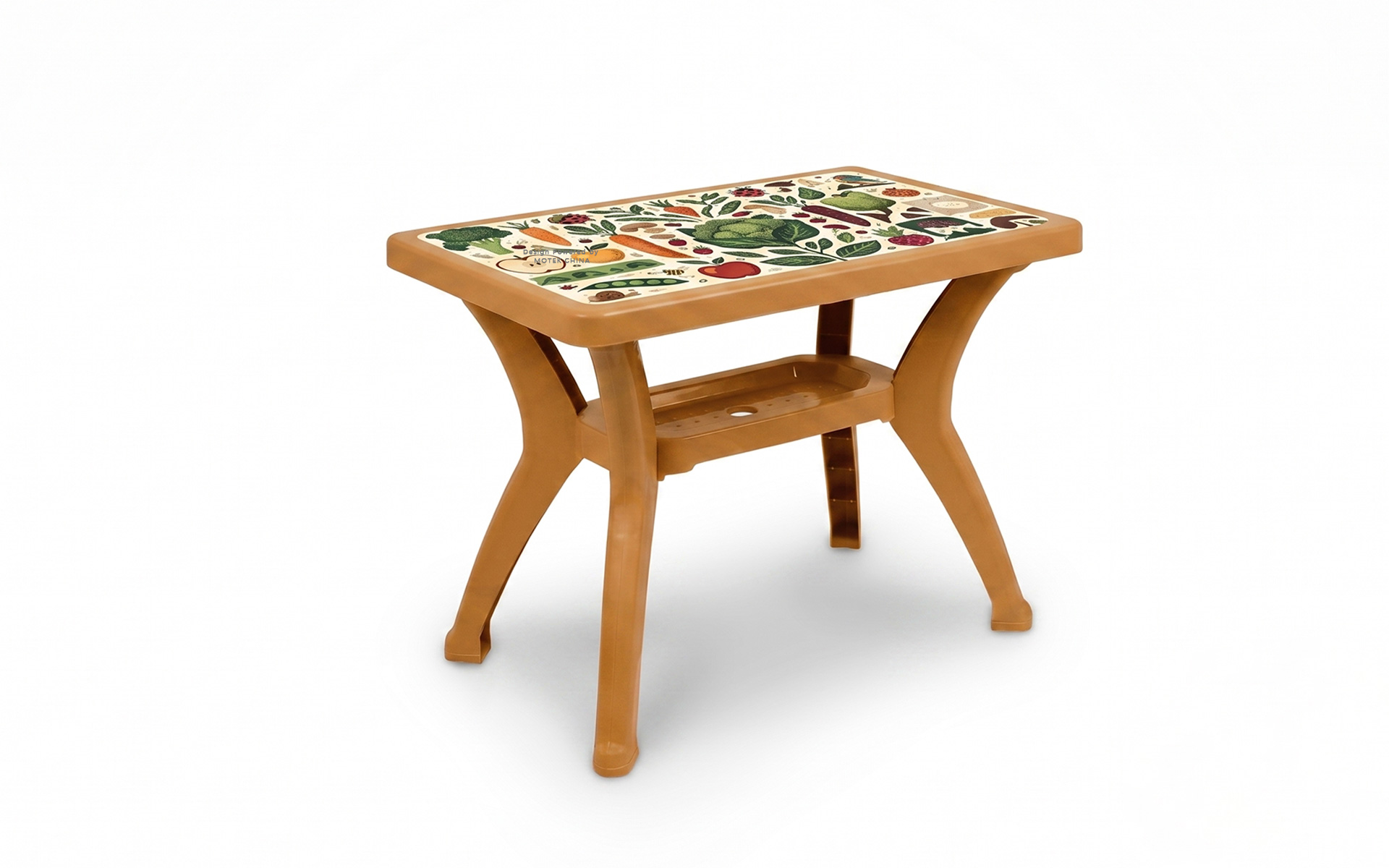
Outdoor plastic tables and chairs, camping folding chairs, garden flower pots, beer crates… these products have one thing in common: they are exposed to sunlight for long periods.
Ultraviolet (UV) radiation in sunlight is the "number one enemy" of surface decoration on plastic products. UV breaks the molecular chains of organic pigments, causing colors to gradually fade, turn white, or darken. At the same time, UV accelerates the aging of the plastic surface itself, making it brittle and chalky.
For traditional pressure-sensitive labels, the problem is even worse – the ink on pressure-sensitive labels is exposed on the surface, and UV directly hits the ink layer. Within months to a year, bright patterns turn into "faded shadows."
Screen printing, although the ink adheres to the plastic surface, also lacks a protective layer. UV, moisture, and friction work together, and the pattern quickly becomes blurry and peels off.
IML is completely different.
2. IML's Three-Layer Structure: Protecting the Graphics
The UV resistance secret of IML (In-Mold Labeling) first comes from its three-layer structure.
First layer: Surface protective film
The outermost layer of an IML label is a transparent protective film (typically BOPP material). This film acts as a "UV shield" for the graphics – UV must penetrate this film before it can reach the ink.
Second layer: Printed ink layer
The ink is printed on the back of the film, not on the surface. The ink does not directly contact air, UV radiation, rain, or friction.
Third layer: Plastic substrate (fused with the product)
During injection molding, the label fuses with the molten plastic, becoming an inseparable part of the product. The label is not "stuck on" – it is "grown into" the product.
┌──────────────────────────────────────────────────────┐
│  Transparent protective film (BOPP)                  │  ← First UV defense line
├──────────────────────────────────────────────────────┤
│  Printed ink layer (UV-resistant ink)                │  ← Protected inside, no UV contact
├──────────────────────────────────────────────────────┤
│  Plastic substrate (fused with product)              │  ← Never peels, never curls
└──────────────────────────────────────────────────────┘
The core logic of this structure is: if the ink does not contact the outside world, outside damage cannot reach the ink. UV must first penetrate the protective film to reach the ink layer – and professional IML films inherently have excellent UV resistance.
3. UV-Resistant Inks: Resisting Photoaging at the Source
A protective film alone is not enough – the ink in IML is also optimized with UV-resistant formulations.
Ordinary inks undergo photochemical reactions when pigment molecules are exposed to UV radiation – molecular chains break, and colors gradually fade. This is an irreversible chemical process – once pigment molecules are damaged, the color cannot be restored.
IML-specific UV-resistant inks incorporate UV absorbers and light stabilizers into the formulation. These additives serve several functions:
- Absorb UV radiation: before UV reaches the pigment molecules, it absorbs the energy and converts it into harmless heat
- Quench excited states: if pigment molecules are excited by UV, light stabilizers quickly "quench" this excited state, preventing molecular chain breakage
- Delay aging: significantly extend the color retention time of the ink in outdoor environments
Some IML suppliers have noted that UV protection can be directly integrated into the label structure, ensuring colors remain vivid and saturated even under prolonged sun exposure.
Test standards: high-quality outdoor IML labels undergo accelerated aging tests, such as DIN EN ISO 4892-2 and other standards, simulating performance changes under long-term outdoor light exposure to ensure color stability and surface aging meet requirements.
4. Substrate Selection: The Natural Advantages of BOPP Film
The protective film of IML labels is not just any plastic film. For outdoor products, IML labels typically use BOPP (Biaxially Oriented Polypropylene) film.
Why is BOPP suitable for outdoor use?
- UV blocking: BOPP film inherently has some UV blocking capability. Some IML labels can also incorporate a light-blocking layer, reducing UV transmittance to below 1%.
- Strong weather resistance: BOPP withstands high temperatures, low temperatures, and humidity changes without deformation.
- Good chemical stability: BOPP resists oils, acids, alkalis, and solvents, and is not corroded by pollutants in outdoor environments.
- High transparency: does not affect the color expression of the ink, keeping patterns always clear and vivid.
More importantly, BOPP film can further enhance UV resistance through surface lamination or protective coating. The lamination layer provides additional protection for the label – resisting scratches, UV, and moisture.
5. IML vs. Screen Printing vs. Pressure-Sensitive Labels: Outdoor Exposure Comparison
| Comparison Dimension | IML In-Mold Label | Screen Printing | Pressure-Sensitive Label |
|---|---|---|---|
| Ink position | Sandwiched between film and plastic | Exposed on surface | Exposed on surface |
| UV direct exposure to ink? | ❌ Blocked by film | ✅ Direct exposure | ✅ Direct exposure |
| UV protection | Film + UV-resistant ink | None | None |
| Outdoor fading speed | Extremely slow (years unchanged) | Fast (months to fade) | Very fast (weeks to months) |
| Curling/peeling? | Never (fused as one) | May peel | Inevitably curls |
| Water/moisture resistance | ⭐⭐⭐⭐⭐ | ⭐⭐ | ⭐⭐ |
| Scratch resistance | ⭐⭐⭐⭐⭐ (film protected) | ⭐ (easily scratched) | ⭐⭐ |
| Suitability for outdoor products | ⭐⭐⭐⭐⭐ Highly recommended | ⭐⭐ Not recommended | ⭐ Not recommended |
5.1 Why Screen Printing Fails Outdoors
The ink is printed directly on the plastic surface with no protective layer. UV, rain, and friction deliver a triple blow – the pattern becomes completely unrecognizable within months.
5.2 Why Pressure-Sensitive Labels Perform Even Worse
Beyond ink exposure, pressure-sensitive labels also face adhesive aging. Outdoor heat, cold, and moisture cause the adhesive to fail – curling, edge lifting, and peeling are inevitable outcomes.
5.3 Why IML Works Outdoors
The ink is "hidden" inside by the protective film, so UV cannot reach it; the label is fused with the product, so curling and peeling don't exist. This is the fundamental reason IML stays vivid for years.
6. Why Are IML Labels Ideal for Outdoor Tables and Chairs?
Outdoor plastic tables and chairs, camping folding chairs, garden flower pots, beer crates, and similar products are ideal application scenarios for IML technology.
Reason 1: Long-term outdoor exposure
These products are placed outdoors year-round, exposed to sun and rain as a matter of course. IML's UV resistance and weather resistance perfectly meet the long-term usage requirements of outdoor products.
Reason 2: High frequency use, frequent handling
Outdoor tables and chairs are frequently moved, stacked, and subjected to friction. IML labels fuse with the product – they will not peel or scratch from friction. The surface protective film also resists scratches and impacts.
Reason 3: Brand identity needs to last
One of the core assets of outdoor furniture brands is brand recognition. If the logo fades and becomes blurry after a few months, the brand image suffers significantly. IML's "years without fading" characteristic is exactly what brands need most.
Reason 4: Easy cleaning and maintenance
Outdoor tables and chairs need regular cleaning. IML labels are waterproof, oil-proof, and mold-proof – they can be wiped with a damp cloth or mild detergent, with no worry about damaging the label.
7. FAQ
Under normal outdoor use conditions, the color life of IML labels matches the product itself – until the product is discarded. High-quality IML labels undergo UV stabilization treatment and can withstand long-term sun exposure without fading.
Three layers of protection: protective film blocks UV + UV-resistant ink formulation absorbs remaining UV + ink is hidden inside and does not directly contact UV. Some IML labels can also incorporate a light-blocking layer, reducing UV transmittance to below 1%.
Screen-printed patterns are exposed on the surface with no protective layer. In outdoor environments, noticeable fading begins within 3-6 months, and they become mostly blurry after a year.
Because the adhesive ages and fails under alternating heat, cold, and moisture. At the same time, the label edges curl up, and rainwater penetration accelerates peeling.
BOPP is biaxially oriented polypropylene film, offering excellent weather resistance, chemical stability, and UV blocking capability. It protects the inner ink layer from UV and environmental erosion, making it the ideal substrate for outdoor IML labels.
Wipe with a damp cloth and mild detergent. IML labels themselves are waterproof, oil-proof, mold-proof, and abrasion-resistant – no need to worry about damaging the label during cleaning.
Contact Us
Name*
Telephone*
Region*
Please fill in your request*


