
Plastic Drawer Cabinets in Humid Kitchen and Bathroom Areas – What Is the Principle Behind IML In-Mold Labels' Moisture and Mold Resistance?
Plastic Drawer Cabinets in Humid Kitchen and Bathroom Areas – What Is the Principle Behind IML In-Mold Labels' Moisture and Mold Resistance?
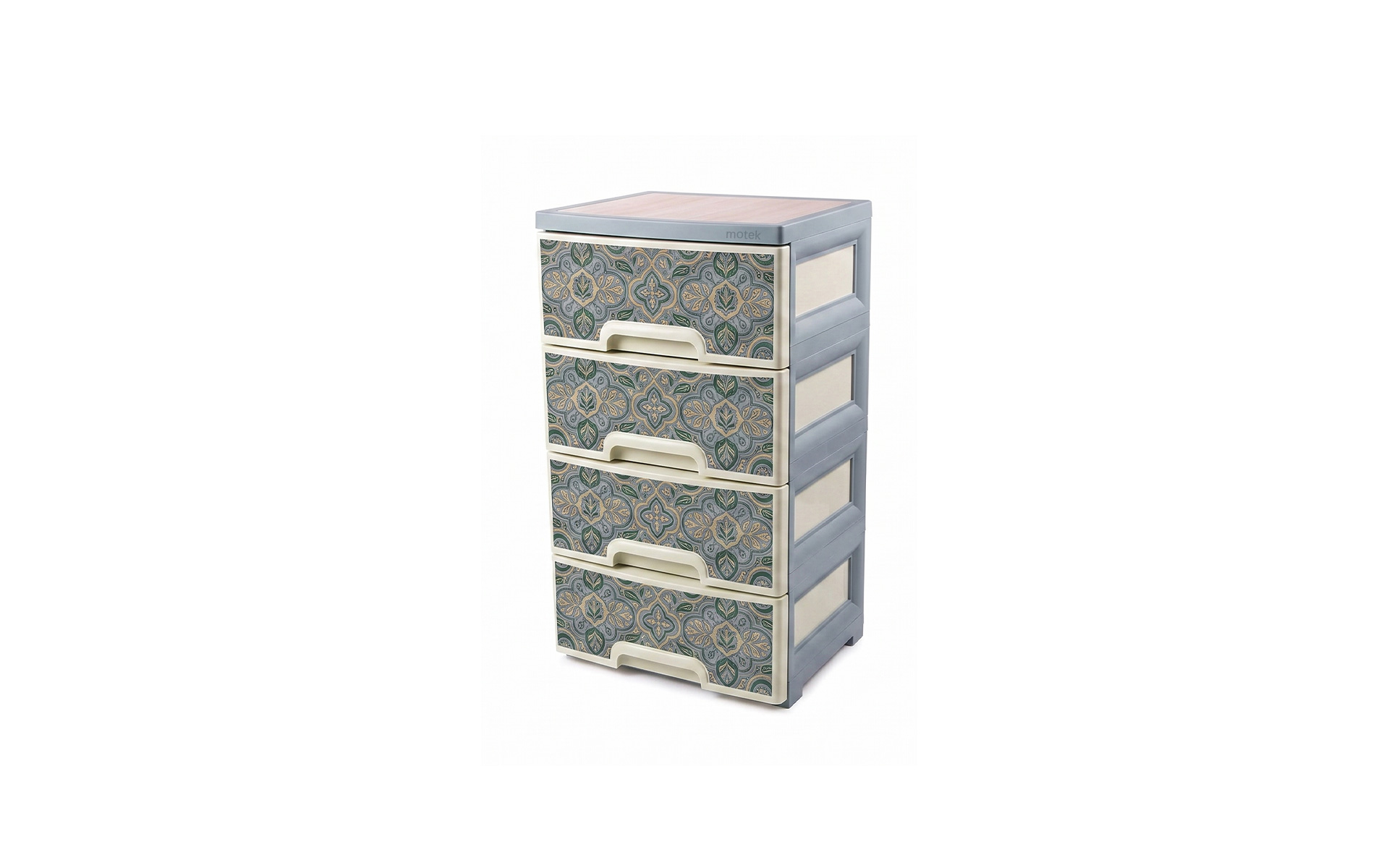
Steam from showers, oil smoke from cooking – these are the two most humid areas in any home. A plastic drawer cabinet placed in the bathroom is constantly "steamed" by shower vapor every day; placed in the kitchen, it faces cooking steam, splashing water, and repeated wiping with cleaning agents. Under these conditions, ordinary sticker labels will turn black at the edges, become moldy from moisture, and curl up and peel off entirely within just a few months.
But if your drawer cabinet uses IML (In-Mold Labeling) labels, the situation is completely different – after years of use, the label remains crisp and clear, with flat edges, as if fresh from the factory.
Why? The answer lies not on the surface, but in the structure.
📖 Table of Contents
- 1. First Understand: The Fundamental Difference Between IML Labels and Ordinary Stickers
- 2. Integrated Sealed Structure: The "Physical Barrier" Against Moisture
- 3. Same Material PP: Naturally "Waterproof" from the Ground Up
- 4. Ink Encapsulated: A "No-Food Zone" for Mold
- 5. IML vs Ordinary Stickers: Real-World Performance in Humid Environments
- 6. FAQ
1. First Understand: The Fundamental Difference Between IML Labels and Ordinary Stickers
To understand why IML is not afraid of moisture, you first need to understand the fundamental difference between IML and ordinary stickers.
Ordinary pressure-sensitive stickers are "stuck on" – the label has adhesive on the back and relies on glue to attach to the drawer cabinet surface. The label itself is a separate item, distinct from the drawer cabinet – they are two separate things. Moisture can seep in from the label edges; the adhesive layer loses its stickiness when damp, causing the label to curl and peel. Damp environments also encourage mold growth, forming black mildew spots on the back and edges of the label.
IML in-mold labels are completely different. The IML process is: the pattern is first printed on a film, the film is placed into the injection mold, and then molten plastic is injected. Under high temperature and pressure, the film fuses with the plastic. The label is not "stuck on" – it is "grown out" together with the drawer cabinet at the same time.
This fundamental difference determines their completely different performance in humid environments.
2. Integrated Sealed Structure: The "Physical Barrier" Against Moisture
The thing ordinary stickers fear most is moisture seeping in from the edges – the gaps at the label edges are entry points for moisture. Once moisture penetrates, the adhesive layer becomes damp, the label curls, and mold finds a breeding ground.
IML labels have no such "gap."
Because IML labels fuse with the plastic drawer cabinet as one piece during injection molding, the label edges are completely encased in plastic, with no gaps whatsoever. Moisture has no entry point – there is no interface between the label and the drawer cabinet, so moisture cannot get in.
This is like casting an object in concrete – water and air cannot enter, so it will not become damp or moldy.
In-mold labels "can withstand damp and cold environments without bulging or developing mildew, allowing in-mold labels to maintain integrity and aesthetics for a long time." This integrated molded structure is the first line of defense against moisture and mold for IML.
3. Same Material PP: Naturally "Waterproof" from the Ground Up
Another key feature of IML labels is that the label and the drawer cabinet use the same material.
The vast majority of IML drawer cabinets use polypropylene (PP) for both the label and the cabinet body. PP itself has excellent resistance to water, oil, and moisture – it is not just "not afraid of water," but inherently non-absorbent.
The label and the cabinet are both PP, identical in material, with no weak point at the "junction of two different materials." Moisture has no opportunity to exploit any weakness.
"Labels themselves are waterproof, oil-proof, mold-proof, moisture-proof, abrasion-resistant, and acid/alkali-resistant." In damp and cold environments, IML labels "will not bulge or develop mildew." At the material level, IML has already minimized the possibility of "mold growth."
4. Ink Encapsulated: A "No-Food Zone" for Mold
Ordinary stickers have another fatal problem: the ink is exposed on the surface. The organic components in the ink can become a "food source" for mold in damp environments. With the right moisture and temperature conditions, mold will grow on the label surface.
IML ink, however, is sandwiched between the transparent film and the plastic substrate, never contacting the outside world. For mold to grow, it needs three conditions: moisture, temperature, and organic matter. IML ink is not exposed, does not contact moisture, and is not contaminated by the outside – mold simply has no "food."
"In-mold labels do not experience ink peeling, and labels will not curl, peel, or become damaged." In humid environments, IML labels can "maintain integrity and aesthetics for a long time."
5. IML vs Ordinary Stickers: Real-World Performance in Humid Environments
| Comparison Dimension | IML In-Mold Label | Ordinary Pressure-Sensitive Sticker |
|---|---|---|
| Label-cabinet relationship | Fused during injection molding | Adhered to the surface with adhesive |
| Gaps | ❌ No gaps, completely sealed | ✅ Gaps at edges |
| Moisture infiltration | ❌ Cannot penetrate | ✅ Can seep in from edges |
| Moisture resistance | ⭐⭐⭐⭐⭐ Integrated sealed | ⭐ Prone to curling from moisture |
| Mold resistance | ⭐⭐⭐⭐⭐ Ink encapsulated | ⭐ Prone to mold and blackening |
| Lifespan in humid environments | Years unchanged | Months to a year |
Ordinary stickers: Moisture seeps in from edges → adhesive layer fails → label curls and peels → edges turn black and moldy.
IML labels: Label and cabinet molded as one → no gaps → moisture cannot enter → ink never contacts the outside → no mold, no curling, no peeling.
6. FAQ
Really, they won't. IML labels are molded as one piece with the plastic drawer cabinet, with no gaps for moisture to penetrate. The labels themselves are waterproof, oil-proof, mold-proof, and moisture-proof. In damp and cold environments, IML labels "will not bulge or develop mildew."
Two core reasons: integrated sealed structure (the label fuses with the cabinet as one piece, no gaps for moisture) and same material PP (both label and cabinet are PP, and PP itself is non-absorbent and moisture-resistant).
In a high-humidity environment like a bathroom, ordinary pressure-sensitive stickers will start to curl, turn black, and develop mold within 3-6 months. Once the edges become damp and the adhesive layer fails, complete peeling is highly likely.
No. IML labels fuse with the drawer cabinet during injection molding, with label edges completely encased in plastic, making curling impossible.
No. IML ink is sandwiched between the film and plastic, never directly contacting damp air. The label itself is "waterproof, oil-proof, mold-proof, and moisture-proof," and can "maintain integrity and aesthetics for a long time" in humid environments.
Very suitable. IML drawer cabinets have labels molded as one piece with the cabinet – no gaps, waterproof, moisture-proof, and mold-proof. In high-humidity environments like bathrooms, IML labels can remain clear and flat for years.
Contact Us
Name*
Telephone*
Region*
Please fill in your request*


