
Multi‑layer Co‑extrusion Process in the Production of In‑Mould Labels
Multi‑layer Co‑extrusion Process in the Production of In‑Mould Labels
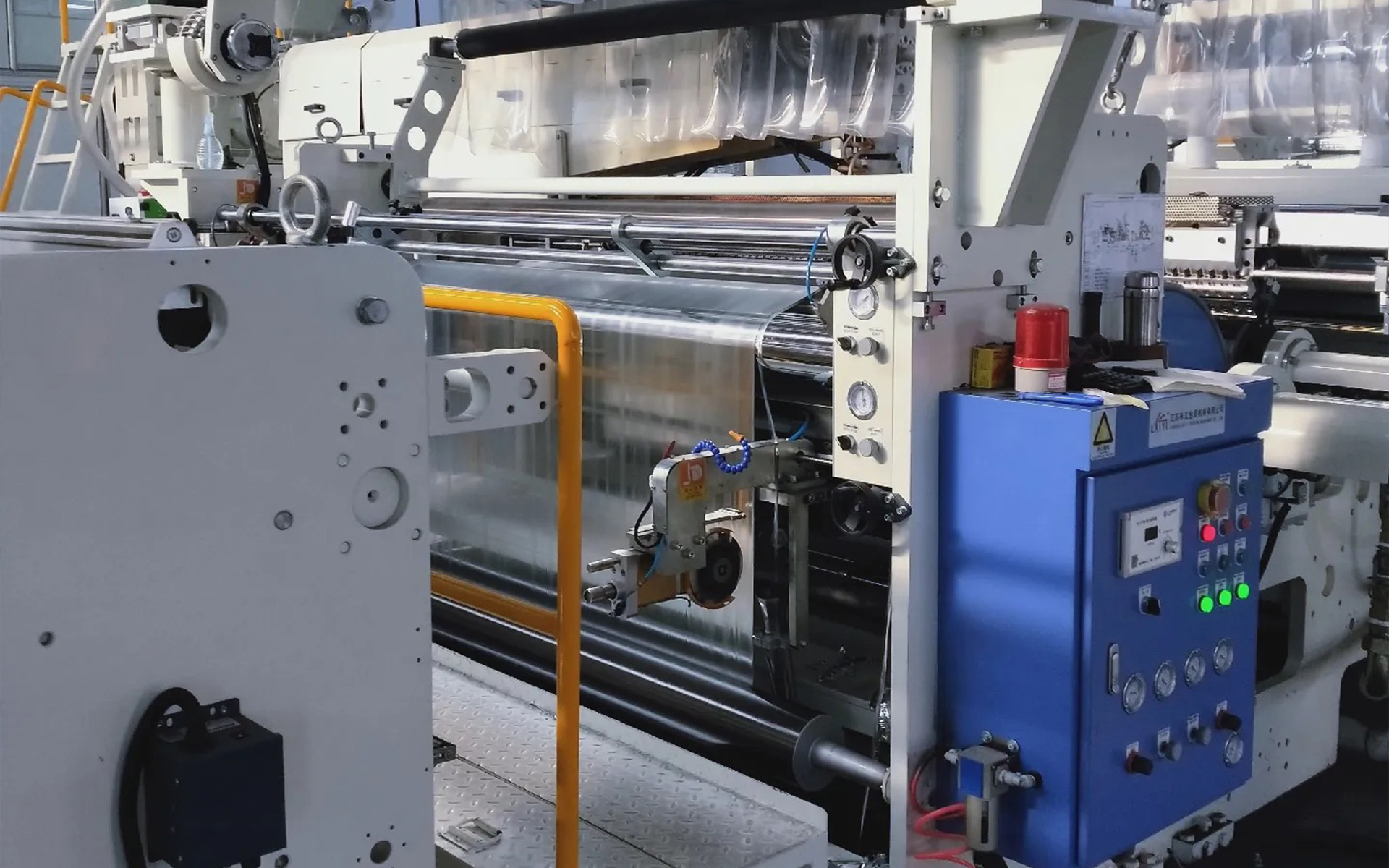
In the manufacturing technology system for in‑mould labels (IML), multi‑layer co‑extrusion is the most core and fundamental lamination technology. Without using adhesives, it directly melts several different functional plastic materials and combines them inside a die, extruding them into a multi‑layer film in one step. This process provides outstanding advantages such as “functional integration, strong interfacial bonding, precise thickness, and environmental recyclability”, and has become the preferred manufacturing method for mainstream products like PE+PP composite labels and BOPP labels. This article systematically introduces the multi‑layer co‑extrusion process, covering its basic principles, equipment, typical layer structures, process parameters, advantages, and common material combinations.
1. Basic Principle and Equipment
1.1 Principle
Multi‑layer co‑extrusion involves feeding two or more different types (or different formulations) of plastic pellets into separate extruders, where they are melted and plasticised by heat and screw shear. The melts flow through independent channels into a co‑extrusion feedblock (or multi‑manifold die), where they are brought together and stacked in a preset layer sequence and thickness ratio, forming an A/B/C (or more layers) laminar flow structure. The multi‑layer melt then exits a flat T‑die and is rapidly cooled and solidified on a chill roll, forming a film of uniform thickness.
The entire process is completed in one step, with layers bonded by heat fusion – no solvents or adhesives.
1.2 Main Equipment
Extruders: Typically single‑screw, one per layer. Screw diameter (45–150 mm) and L/D ratio (25–35) chosen based on output and resin.
Co‑extrusion feedblock: The core component; internal flow channels determine layer arrangement (e.g., A/B/C, A/B/A). Types include single‑manifold, multi‑manifold, and stacked feedblocks.
Flat T‑die: Spreads the multi‑layer melt into a wide, uniform film. Die lip opening adjustable (0.5–2 mm), often with automatic thickness control (e.g., thermal expansion bolts).
Chill roll: Chrome‑plated or ceramic‑coated surface, internally water‑cooled (10–40°C), rapidly quenches the melt to control crystallinity and transparency.
Haul‑off system: Rolls that control film speed and tension.
Winder: Winds the finished film into master rolls for later slitting or printing.
1.3 Process Flow Diagram
Resin A → Extruder A → Feedblock → Die → Chill roll → Haul‑off → Winder
Resin B → Extruder B → Feedblock → (co‑extrude)
Resin C → Extruder C → Feedblock ↗
2. Typical Layer Structures for IML Films
IML films are usually designed with three or five symmetric/asymmetric co‑extruded layers. Taking the most common three‑layer structure:
| Layer | Functional Requirement | Typical Materials | Function |
|---|---|---|---|
| Top layer (printing) | High surface energy, gloss, ink adhesion | PP, BOPP, PET, high‑gloss PE | Carries printed graphics, wear/scuff resistant |
| Middle layer (core/support) | Stiffness, tensile strength, dimensional stability | PP+PE blend, filled PP (with CaCO₃), HDPE | Provides mechanical strength, reduces cost |
| Bottom layer (heat‑seal/adhesive) | Melts under in‑mould heat, bonds to container | PE, EVA, heat‑sealable PP, modified polyolefin | Fuses to HDPE/PP containers |
Typical example: PE+PP composite IML film
Top: PP (good printability, high gloss)
Core: PE+PP blend (adjusts stiffness, controls cost)
Bottom: pure PE (homogeneous fusion to PE container, no orange peel)
Five‑layer structure example (for enhanced barrier or special functions):
Top / sub‑top / core / sub‑bottom / bottom
e.g., PP / recycled layer / filled layer / recycled layer / PE
3. Key Process Parameters and Control Points
| Parameter | Typical Range | Impact |
|---|---|---|
| Extrusion temperatures per layer | PP: 200–250°C; PE: 150–220°C; PET: 260–290°C | Too low: poor melting; too high: degradation |
| Feedblock temperature | Independent control ±5°C | Ensures viscosity matching, prevents interfacial instability |
| Die temperature | Similar to feedblock | Affects thickness uniformity and layer adhesion |
| Chill roll temperature | 15–40°C (quenching) | Controls crystallinity, transparency, stiffness |
| Line speed | 20–150 m/min | Matched to extruder output; affects thickness |
| Layer thickness ratios | Adjustable 5%–80% per layer | Adjusted by screw speeds or feedblock design |
Key control points:
Melt viscosity matching: Viscosities of adjacent layers must be similar; otherwise “interfacial waves” or encapsulation occur. Generally, viscosity ratio should be ≤3:1.
Interfacial stability: Feedblock and die design prevent layer mixing or turbulence.
Cooling uniformity: Uniform chill roll surface temperature and speed prevent thickness variation or warpage.
4. Advantages of Multi‑layer Co‑extrusion
Functional integration: Multiple materials combined in one step – no subsequent adhesive application.
Extremely high interfacial strength: Heat fusion between layers; polymer chains interdiffuse – no delamination.
Precise thickness control: Each layer can be as thin as 1–2 μm, enabling fine functional design.
Environmentally friendly: No solvents or adhesives – zero VOCs, materials recyclable.
Cost optimisation: Low‑cost fillers (e.g., CaCO₃) or recycled material can be added to the core layer.
High productivity: Continuous from feed to finished film – ideal for high‑volume orders.
5. Limitations and Challenges
Material compatibility required: Adjacent resins must be thermodynamically compatible or use a compatibiliser; otherwise poor adhesion.
High equipment investment: Multiple extruders, precision feedblock, automatic thickness control are expensive.
Long changeover time: Cleaning screws and feedblock for material/colour changes is time‑consuming – not suitable for frequent small batches.
Recycling stream impact: Multi‑layer composites (e.g., PP/PE mixed) may be considered contaminants in mono‑material recycling streams.
6. Common Material Combinations
| Application | Top Layer | Core Layer | Bottom Layer |
|---|---|---|---|
| PE container IML (mainstream) | PP | PE+PP blend | PE |
| PP container IML | BOPP | PP | Heat‑seal PP |
| High‑stiffness PE label | HDPE | Filled PE | PE |
| Recyclable all‑PE label | High‑gloss PE | Filled PE | PE |
| Heat‑resistant label (PET container) | PET | PET + masterbatch | Modified PE (with compatibiliser) |
7. Comparison with Other Lamination Processes
| Process | Bonding Method | Environmental | Bond Strength | Material Compatibility | Typical Application |
|---|---|---|---|---|---|
| Multi‑layer co‑extrusion | Heat fusion | Excellent | Very high | Limited by compatibility | PE+PP, BOPP, all‑PE |
| Extrusion lamination | Molten resin adhesion | Excellent | Medium | Wide | Curtain coating, paper/plastic |
| Solventless lamination | 2K PU curing | Excellent | High | Wide | PET/PE, food/pharma |
| Solvent‑based dry lamination | Solvent‑based PU | Poor | Very high | Very wide | Heterogeneous materials (environmentally restricted) |
8. Conclusion
The multi‑layer co‑extrusion process, with its adhesive‑free, strong interfaces, precise thickness, environmental friendliness, and high efficiency, has become the core technology for manufacturing IML films. Whether it is mainstream PE+PP composite labels, BOPP labels, or recyclable all‑PE labels, they all rely on the foundation of multi‑layer co‑extrusion. Correctly designing the layer structure, matching melt viscosities, and controlling cooling uniformity are key to producing high‑quality IML films. As mono‑material packaging (all‑PP, all‑PE) becomes more widespread, multi‑layer co‑extrusion will further promote the recyclable design of IML labels while maintaining functionality.
Contact Us
Name*
Telephone*
Region*
Please fill in your request*


