
Production Process and Quality Control of In-Mold Labels for Plastic Flower Pots
Production Process and Quality Control of In-Mold Labels for Plastic Flower Pots
📖 Table of Contents
1. Key Takeaways
- Careful pre‑production planning is key to avoiding errors and improving efficiency – design, material selection, and mold preparation are all essential.
- Precise label placement during molding determines adhesion quality and surface smoothness.
- Full‑process quality inspections catch problems early and ensure stable finished‑product quality.
- Choosing high‑quality materials (such as PP or PE) significantly improves label durability and service life.
- Advanced inspection equipment (e.g., vision inspection systems) helps maintain high quality standards and reduce scrap rates.
2. Production Steps for IML Flower Pot Labels
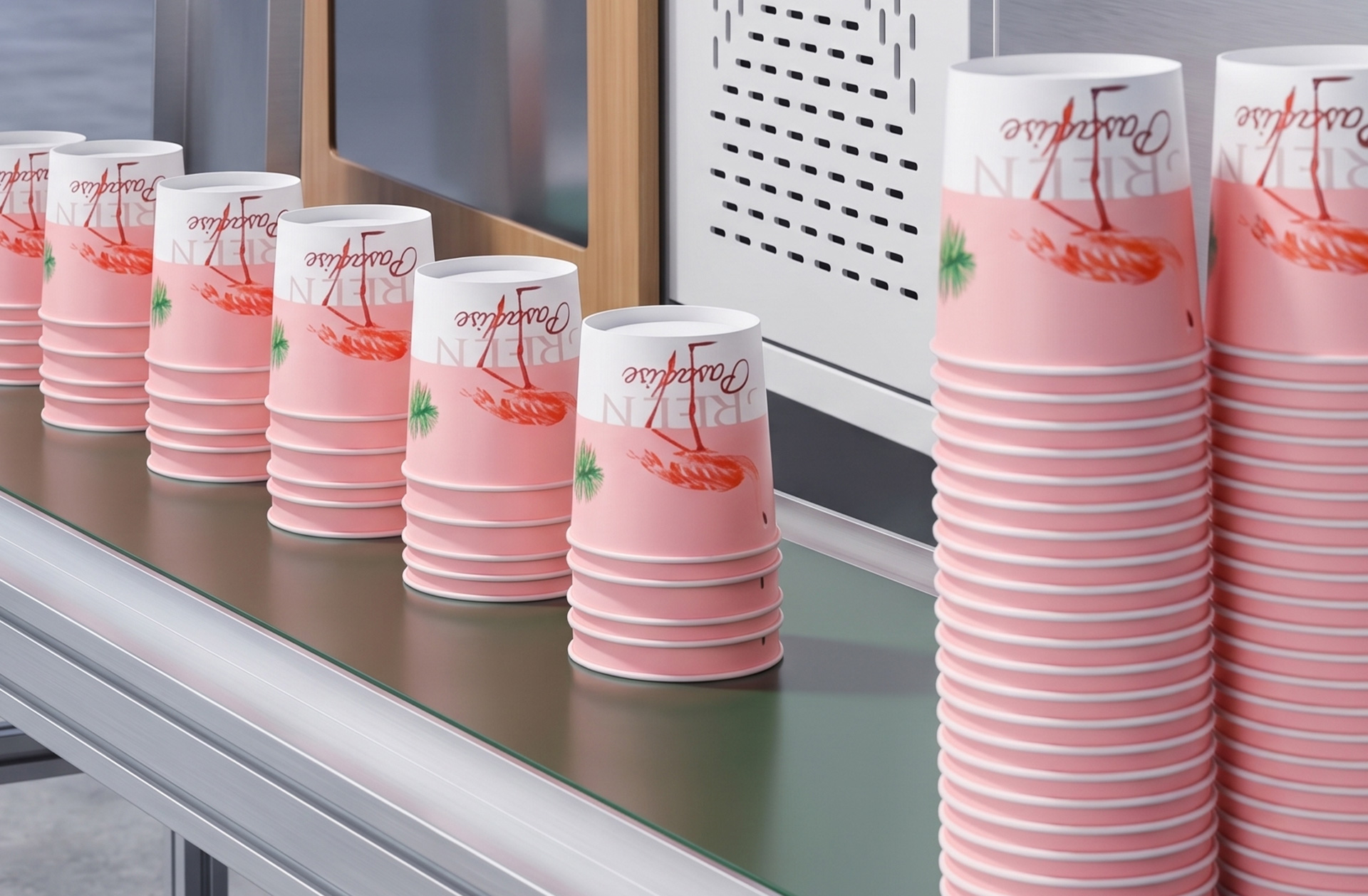
The production of IML flower pot labels is divided into three main stages: pre‑production preparation, in‑mold labeling molding, and post‑production inspection.
2.1 Pre‑production Preparation
Everything starts with careful planning. Before formal production, you need to complete the following key tasks:
Design Confirmation – Determine the label design, including patterns, colors, and text. Check whether the label shape and thickness meet the requirements of the flower pot mold.
Material Selection – Choose the most suitable material for the flower pot labels. Polypropylene (PP) and Polyethylene (PE) are the preferred materials for IML labels because they bond firmly with the pot substrate and are durable. Using the same material for the label and the pot also improves recyclability.
Mold Evaluation – Study the structure of the flower pot mold and determine the gate position – an internal gate offers better decorative effects but requires longer cooling time; an external gate cools faster but may affect pattern integrity. Also confirm the design of the IML positioning feet to ensure the label is accurately positioned inside the mold, preventing molten plastic from flowing underneath the label.
The table below summarises key pre‑production design considerations and their impact:
| Design Consideration | Impact |
|---|---|
| Label shape | Affects production speed and yield rate |
| Label thickness | Affects handling ease and molding speed; enables thinner wall sections |
| Label quality | Affects scrap rate |
| Injection mold requirements | Must meet high speed, rapid cooling, and high strength demands |
| Gate position | Internal gate – better decoration but slower cooling; external gate – faster cooling but may affect graphics |
| IML positioning feet | Secure label position, prevent melt flow under the label |
Tip: Thorough pre‑production planning helps you avoid many problems in later stages.
2.2 In‑Mold Labeling Molding
After pre‑production preparation, the in‑mold labeling molding stage begins. The core of this stage is placing the label into the flower pot mold and bonding it to the pot through injection molding.
Injection Molding is the mainstream process for flower pot IML. A pre‑printed label is placed inside the mold cavity, then molten plastic (PP or PE) is injected. The high heat activates the heat‑sensitive adhesive on the back of the label, permanently bonding it to the pot.
Production Speed – IML flower pot production is very fast – some lines have a cycle time as short as 2.2 seconds. Thin‑wall injection lines typically run at about 5 seconds per cycle.
Precise Positioning – The label must be placed extremely accurately inside the mold. Correct placement ensures strong adhesion and a smooth appearance; any deviation can cause visual defects and reduce label durability.
During molding, the label fuses with the molten plastic to create a smooth surface – the label truly becomes part of the flower pot.
2.3 Post‑production Inspection
After molding, every flower pot label must undergo strict inspection.
Inspection Items:
- Visual inspection – check for warping, bubbles, scratches, etc.
- Position verification – confirm the label is correctly positioned on the pot.
- Adhesion testing – test the bond strength between the label and the pot.
- Durability assessment – evaluate the label's durability and overall appearance.
Tip: Post‑production inspection is the last line of defense for product quality. Before packaging and shipping, every label must be confirmed to meet the required standards.
3. Quality Control for IML Flower Pot Labels
Quality control runs through every step of IML flower pot label production. Below are four key control points.
3.1 Film Incoming Inspection
Before production begins, the label film must be inspected upon receipt.
Inspection Focus:
- Check the film surface for scratches, dust, or burrs.
- Use dedicated inspection equipment to quickly detect defects that are invisible to the naked eye.
Advanced vision inspection systems (such as IMLWatcher) can scan each label sheet and accurately capture various defects. Thorough incoming inspection helps reduce scrap rates and keeps the production line running smoothly.
| Inspection Technology | Function |
|---|---|
| IMLWatcher Vision System | Visual quality control for IML labels |
3.2 Printing Process Inspection
Printing quality directly affects the visual appearance of the flower pot labels, so it must be closely monitored throughout the process.
Key Control Points:
- Registration accuracy – IML packaging demands high registration and die‑cutting precision. If the print and cut positions do not match, patterns will shift.
- Print‑cut consistency – strict control is required to ensure patterns are clear and complete.
- Equipment monitoring – use professional equipment to monitor printing and embossing status in real time, detecting anomalies early.
IML printing delivers better color performance than direct printing on containers, and offers different surface finishes such as satin or gloss to enhance visual appeal.
Common Printing Defects and Solutions:
| Defect Type | Possible Cause | Recommended Solution |
|---|---|---|
| Ink‑related issues | Improper ink formulation | Adjust ink formula |
| Pressure issues | Uneven pressure | Calibrate the printing press |
| Mechanical/registration issues | Misaligned plates | Re‑align plate position |
| Complex combined issues | Multiple factors | Carry out a full system check |
Regular inspection of equipment and materials helps you catch problems early.
3.3 Dimensional and Color Accuracy
Every IML flower pot label must have its dimensions and colors precisely measured and verified.
Dimensional Precision – Label dimensions must exactly match the flower pot mold – too large or too small will affect adhesion. Each batch must be measured to ensure compliance with design specifications.
Color Consistency – Color accuracy is equally important. You want every flower pot label to have the same color, even in large‑volume production.
IML technology uses a simple changeover process and does not require chemicals that may alter colors, thus ensuring consistent print quality and color stability.
IML can achieve solid colors and sharp patterns at a high quality level, helping brands build a unique visual identity.
3.4 Label Application Quality Inspection
The final inspection step verifies the quality of the label applied to the flower pot.
Inspection Standards:
| Inspection Standard | Description |
|---|---|
| Safety standard compliance | Meets UL 969 and CSA C22.2 No. 0.15, etc. |
| Durability | Tests label longevity under various environmental conditions |
| Material compatibility | Confirms compatibility with pot plastic (e.g., PP) |
Check Items – look for bubbles, edge lifting, or tilting; perform rub tests to verify adhesion strength; confirm chemical compatibility between the label and the pot material.
Tip: Thorough quality inspections ensure you deliver a strong, safe, and beautiful product to your customers. Inspections at every stage help you catch problems early and maintain a high level of quality.
4. Common Challenges and Solutions
Various challenges may arise during IML flower pot label production. Below are the common issues and their countermeasures.
4.1 Material Matching Issues
Challenges:
- Some resins (e.g., PC, nylon) have higher melting points and are harder to process than PP or PE.
- Labels need to withstand chemicals and harsh environments.
- Dust and tiny particles can contaminate labels – tools and labels must be kept clean.
- Labels with metallic foil or metallic inks may lose static charge, affecting pick‑and‑place operations.
Solutions:
- Adopt new systems designed for metallic labels that can handle both standard and metallic labels.
- The same robot can be used for both label types and can be adapted to existing old molds.
4.2 Printing Defects
Challenges: Issues such as ink smearing, color deviation, or blurred images may occur during printing. These can stem from incorrect ink formulation, uneven pressure, or misaligned plates.
Solutions:
- Regularly inspect equipment and material conditions.
- Use professional monitoring equipment to track printing quality in real time.
4.3 Label Placement Deviations
Challenges:
- Operators may enter incorrect information into the labeling template, causing positional errors.
- Static electricity and poor label separation are major causes of IML waste, scrapping both labels and products.
- Differences in label batches, storage time, stacking position, and layers can all cause label curling.
Solutions:
- Provide systematic training to operators and use standardized templates.
- Effectively control static electricity and keep labels stacked neatly.
4.4 Adhesion Failure
Challenges:
- Poor printing can cause ink drag.
- Mold design affects label adhesion and durability.
- Inaccurate robot placement leads to waste.
- Improper pot dimensions cause wrinkling or trapped air bubbles.
- Excessive heat or humidity may cause peeling.
- Static from conveyor belts can shift labels.
Solutions:
| Challenge | Cause | Solution |
|---|---|---|
| Label shifting | Inaccurate machine placement | Use 6‑axis robots with vision systems and static pins for higher positioning accuracy |
| Trapped air bubbles | Air trapped between label and plastic | Use vacuum molds, adjust injection speed |
| Adhesion failure | Material mismatch or insufficient temperature | Match materials, apply surface treatments like corona or plasma |
Tip: Careful inspection and quality tools help you avoid most labeling issues.
5. FAQ
IML (In‑Mold Labeling) places a pre‑printed label into the mold cavity before injection molding. When molten plastic is injected, the heat activates the adhesive, permanently fusing the label and the pot. In the finished product, the label and pot are on the same plane, with no visible label edge.
IML labels offer vivid colors, sharp graphics, and never peel or scratch. Labeling and molding are completed in one step, saving production time. The finished pots look professional and high‑quality.
The inspection process includes: incoming film inspection (dust/scratches) → printing quality check (pattern clarity) → dimensional and color measurement → label adhesion testing. Each step helps detect problems early.
IML labels are suitable for most plastics, such as polypropylene (PP) and polyethylene (PE). Some plastics (e.g., polycarbonate) require special treatment. The key is to match the label material with the pot material.
| Problem | Cause | Solution |
|---|---|---|
| Label peeling | Material mismatch | Select compatible materials |
| Position shift | Inaccurate placement | Use robots and sensors for precise positioning |
| Color deviation | Ink issues | Check ink and equipment |
6. Conclusion
The production of IML flower pot labels is a closed‑loop process that runs from careful planning to precise molding and then to strict inspection. Quality control at every step ultimately determines the quality of the finished flower pot.
When you rigorously follow this production and quality management process, you will achieve:
- Vibrant patterns and colors – making your flower pot brand more recognisable.
- Scratch‑resistant and moisture‑proof labels – ensuring long‑lasting durability.
- Consistent, accurate positioning and appearance – building customer trust.
These steps and standards are exactly the secret behind IML flower pot labels that are both beautiful and durable.
Contact Us
Name*
Telephone*
Region*
Please fill in your request*


