
The Environmental Code of Yogurt Cups – How In-Mold Labels Support the Circular Economy
The Environmental Code of Yogurt Cups – How In-Mold Labels Support the Circular Economy
Have you ever wondered where that beautifully decorated yogurt cup goes after you finish your yogurt?
If it has a traditional pressure-sensitive label, recycling workers need to first peel off the label, then remove the residual adhesive, and only then can the cup be sent for shredding and reprocessing. This process is inefficient, costly, and often results in contamination of the entire batch of recycled material because the label cannot be completely removed.
But if it uses an In-Mold Label (IML), the situation is completely different – no peeling required. Just toss it directly into the recycling stream.
📖 Table of Contents
1. The "Material ID" of Yogurt Cups – Why Can IML Be Directly Recycled?
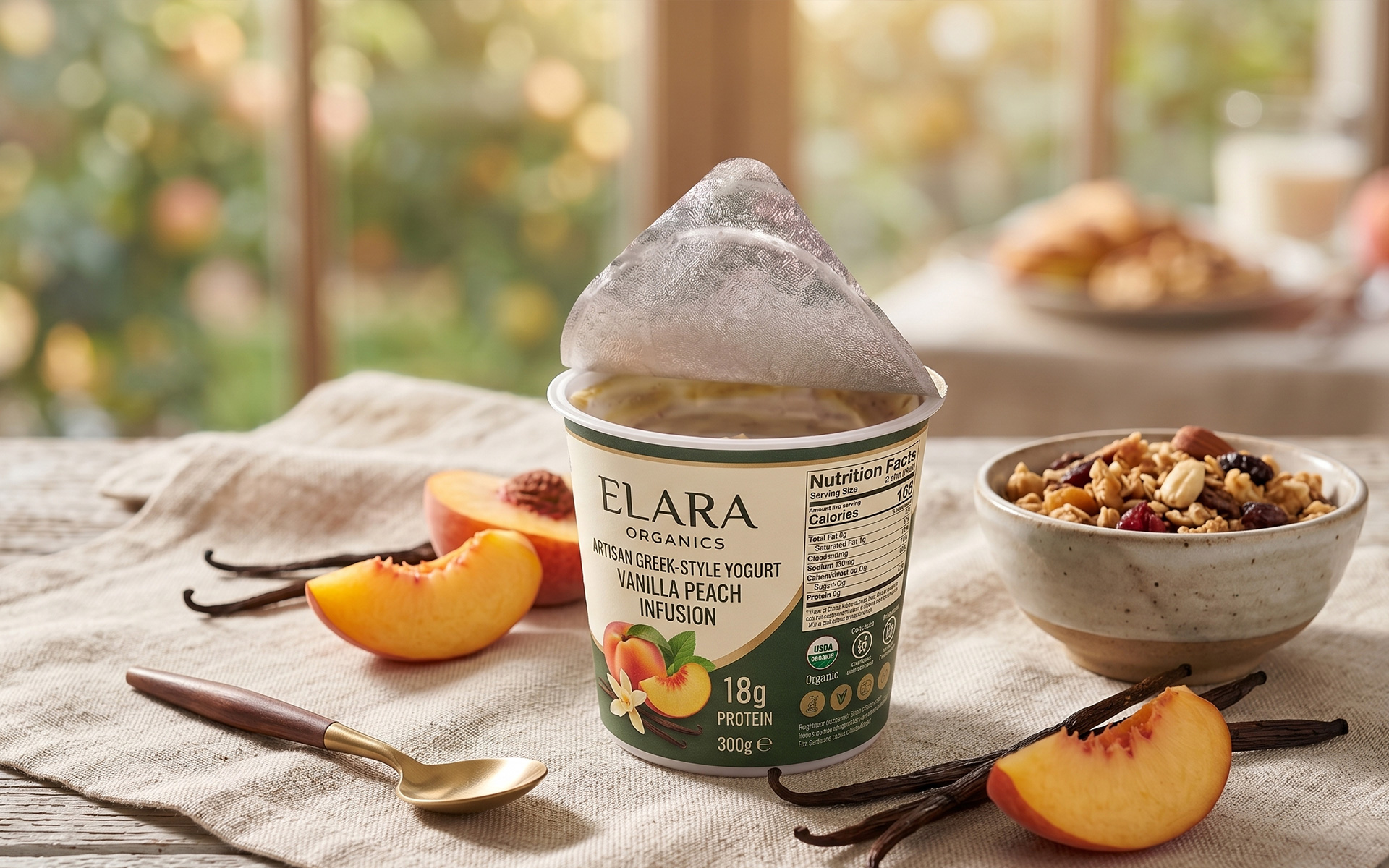
The vast majority of yogurt cup bodies are made of polypropylene (PP). IML labels are also made of the same PP material.
What does this mean? IML labels are not "stuck on" – they are fused with the cup body during injection molding. The label and the cup are "of the same family," not a "tenant and landlord" relationship.
Same-material construction is the fundamental reason why IML can be directly recycled.
A white paper published by the In-Mold Decorating Association (IMDA) clearly states: In-mold label substrates use the same or similar resin types as the finished packaging, so there is no contamination from other resins or different adhesives. During the recycling process, the label is not removed but is mixed together with the recyclable polymer.
In one sentence: IML yogurt cups do not require "label removal" during recycling – because the label is part of the cup itself.
2. The "Recycling Dilemma" of Traditional Pressure-Sensitive Labels
The recycling process for traditional pressure-sensitive labels is a tedious battle of "peel, scrape, and wash":
Step 1: Peel off the label. Recycling workers must manually remove the pressure-sensitive label from each cup. With the enormous volume of yogurt cups, this step consumes significant labor.
Step 2: Remove the adhesive. Even after the label is peeled off, residual adhesive remains on the cup surface. This adhesive must be thoroughly removed; otherwise, it will mix into the recycled plastic during melting and repalletizing, affecting the color and mechanical properties of the recyclate.
Step 3: Wash and separate. Residual adhesive, ink, and label fragments contaminate the recycled material, preventing closed-loop recycling at the same quality level. The recycled PP can only be downcycled, not returned to the original product.
The result: low recycling efficiency, high cost, and poor quality of recycled material.
This is precisely the biggest shortcoming of traditional pressure-sensitive labels in the environmental circular economy.
3. How IML Makes Recycling "One-Step"
The recycling logic for IML yogurt cups is surprisingly simple:
Step 1: Feed the whole cup into the shredder. No label peeling required. No adhesive removal required.
Step 2: Shred into PP flakes. The label and the cup body are shredded together, mixing into uniform PP flakes.
Step 3: Melt and repelletize. Since both the label and the cup body are PP, the mixed recyclate is single-material and has higher purity.
Throughout this process, the label is not an "obstacle" to be removed, but a "resource" to be integrated.
The IML process also completely eliminates adhesives – and adhesives are the primary source of contamination affecting the color and mechanical properties of recyclate. No adhesive means no contamination.
4. What Do Global Authorities Say?
The recycling advantages of IML have received formal recognition from multiple global authoritative organizations:
Association of Plastic Recyclers (APR) – "Preferred" labeling method
APR has recognized IML as a "Preferred" labeling method for polypropylene (PP) and high-density polyethylene (HDPE) containers, provided compatible polymer labels are used, because the label is fused with the package/part wall.
RecyClass – Fully compatible with colored PP recycling
RecyClass, a European authoritative certification body for plastic recycling, systematically tested PP-based printed IML technology. The results show: PP-based IML technology is fully compatible with colored PP recycling streams, provided that the total ink volume does not exceed 1% of the total package weight. RecyClass testing also shows that recycled plastic from IML can be reused in injection molding applications at concentrations up to 50%.
World Packaging Organisation (WPO) – Green "Best Case" rating
The World Packaging Organisation recommends the use of mono-materials in packaging applications and has listed IML and similar labeling processes in the green "Best Case" ranking in its design guidelines.
IMDA White Paper – Eliminating chemical removal processes
The In-Mold Decorating Association (IMDA) white paper notes that IML substrates become an integrated part of the finished packaging, simplifying automated sorting and washing in recycling facilities by eliminating the need for chemical removal of paper or film labels and adhesives.
5. Next-Generation Technology: Detachable IML Labels
Building on conventional IML, the industry has also developed a new generation of detachable IML label technology that further enhances recycling efficiency.
Taking NextCycle IML™ as an example, this label can automatically separate from the container during recycling. During the shredding and air separation stage, label fragments are separated from PP fragments and enter different recycling streams. Testing shows that NextCycle IML achieves a separation rate of over 98%. The separated PP material can be reused in injection molding at concentrations up to 50%.
More importantly, NextCycle IML uses non-migrating inks that do not contaminate washing water. The entire recycling process achieves "zero material loss." This technology fully complies with the European Packaging and Packaging Waste Regulation (PPWR) and RecyClass guidelines.
Conventional IML vs. Detachable IML:
| Comparison Dimension | Conventional IML | Detachable IML (e.g., NextCycle) |
|---|---|---|
| Recycling method | Whole-cup shredding, label mixed with PP | Labels automatically separate after shredding |
| Label destination | Melted and repalletized together with PP | Separated, does not enter PP stream |
| Applicable scenarios | Colored containers, dark-colored containers | White/transparent PP containers |
| Recyclate purity | High (mono-PP) | Extremely high (labels completely separated) |
6. FAQ
No. IML labels are fused with the cup body during injection molding – both are the same material (PP). The entire cup can be directly shredded and recycled without removing the label.
No. IML labels and cup bodies use the same PP material. After shredding, the resulting PP flakes are of uniform composition. As long as the ink volume is within a reasonable range (typically far below 1% of total weight), there is no negative impact on recycled material quality.
Pressure-sensitive labels have adhesive on the back. During recycling, the label must first be peeled off and residual adhesive removed; otherwise, the adhesive contaminates the recycled material. This process is inefficient and costly.
APR is the authoritative body for the U.S. plastic recycling industry. Its "Preferred" label designation means that yogurt cups using PP same-material IML labels can be smoothly processed within the U.S. plastic recycling system.
The total ink volume must not exceed 1% of the total package weight. The ink proportion on yogurt cup labels is typically far below this standard, so the vast majority of IML yogurt cups meet the condition.
The recycled PP flakes are melted and repelletized for use in manufacturing new plastic products. RecyClass testing shows that recycled plastic from IML can be reused in injection molding applications at concentrations up to 50%.
Contact Us
Name*
Telephone*
Region*
Please fill in your request*


