
The Technical Challenges of In-Mold Labeling – The "Trio" of Mold, Robot, and Static Electricity
The Technical Challenges of In-Mold Labeling – The "Trio" of Mold, Robot, and Static Electricity
IML (In-Mold Labeling) sounds simple enough: place a pre-printed label into a mold, inject plastic, and the label fuses with the product. But in practice, there are very few manufacturers that can consistently and efficiently achieve this process.
The reason is that IML is an interlinked precision system – the injection molding machine, mold, robot, and label must work together in close coordination. Behind this lies a "trio" of three core technical challenges – mold design, robotics, and electrostatic adsorption. A deviation in any one component will directly lead to product rejection.
📖 Table of Contents
1. Precision Mold: The "Stage" for IML
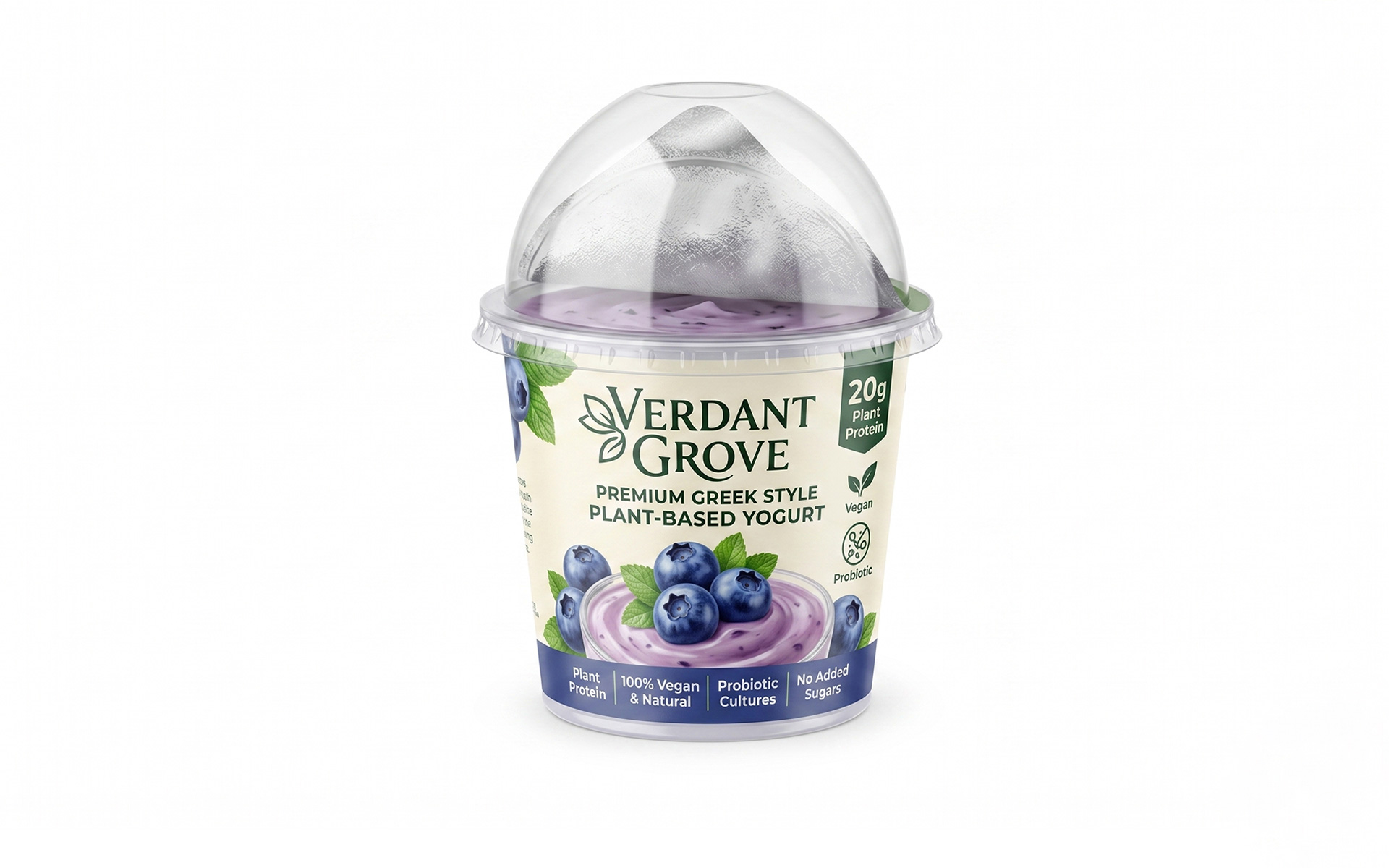
The mold is the core element of the IML production system. Compared to standard injection molds, IML molds have special requirements in several areas:
1.1 Label Fixing System: Vacuum Adsorption vs. Electrostatic Adsorption
IML molds must incorporate a dedicated label fixing device within the cavity to hold the label firmly against the mold wall. This is typically achieved in two ways:
- Vacuum adsorption: Tiny vacuum holes are machined into the mold, and negative pressure holds the label against the cavity wall. This method is mature and cost-effective.
- Electrostatic adsorption: Static charge is used to hold the label against the mold wall.
How to choose between them? It depends on the molding process:
| Molding Method | Adsorption Method | Reason |
|---|---|---|
| Blow Molding | Vacuum adsorption | Lower pressure; vacuum adsorption is sufficient |
| Injection Molding | Electrostatic adsorption | High injection pressure would break through vacuum suction, and melt would clog the vacuum holes |
Injection molding is the dominant IML process (80% of IML in Europe is done via injection molding), making electrostatic adsorption the most widely adopted method today.
1.2 Special Mold Structure Requirements
IML molds differ from standard molds in several other ways:
- Larger draft angle: IML products require larger draft angles than standard injection-molded parts
- Outer contour must have radii: at least R0.2mm
- Lower shrinkage rate: IML products have a shrinkage rate of approximately 0.3%, compared to 1.3-1.7% for standard PP
- Submarine gate is required: to prevent the melt from washing away the label ink during injection
Additionally, the mold material must hold the label securely during electrostatic adsorption and completely eliminate static after adsorption; at the same time, it must not rust during moisture adsorption processes.
2. High-Precision Robot: The "Conductor" of IML
IML production is fully automated. The robot is responsible for picking labels from the magazine and placing them precisely into the mold cavity. This action may seem simple, but the precision required is extremely demanding.
2.1 Extremely High Positioning Accuracy
The robot must be able to position the label accurately in the mold. Industry requirements for robot positioning accuracy typically range from ±0.2mm to ±0.5mm.
What does 0.2mm mean? Roughly the thickness of two sheets of A4 paper. If the label position deviates beyond this range, issues such as label shift, pattern skew, and exposed edges will occur during injection.
2.2 Long-Term Operational Stability Challenges
IML systems face an often-overlooked issue over long-term operation: minor positional deviations can develop between the robot and the mold over time, requiring regular calibration. Even a deviation of just 0.5mm can scrap an entire batch.
Therefore, IML robots typically use servo motor drives and high-rigidity structures to ensure repeatable accuracy and long-term stability.
2.3 The "Double-Pick" Problem in Vacuum Label Pickup
Robots typically pick labels using vacuum suction. If the vacuum suction is too strong or the coefficient of friction between labels is too high, a "double-pick" problem can occur – picking up two or more labels at once. Solving this requires precise adjustment of vacuum suction, effective static elimination, and selection of appropriate varnish.
3. Electrostatic Adsorption: The "Secret Weapon" of IML
Static electricity plays a critical role in IML injection molding. This is also the most difficult technical aspect for outsiders to understand.
3.1 How Electrostatic Adsorption Works
In the injection IML process, the label is not held in the mold by vacuum – because injection pressure is too high, vacuum would be "broken through." The correct approach is:
- The robot picks the label from the magazine using a vacuum suction cup
- The label is transferred to the mold cavity. Upon contact with the mold surface, the suction cup blows air backward
- A static generator applies a short charge to the label through a static discharge head
- The robot retracts, and the charged label is securely held against the mold wall
The static charge on the back of the label makes it "stick" to the mold as if glued, allowing it to be fixed without vacuum.
3.2 Why Vacuum Adsorption Cannot Be Used in Injection Molding
This is a critical point in IML technology:
- Blow molding has lower pressure and can use vacuum adsorption – tiny vacuum holes in the mold generate negative pressure to hold the label against the cavity wall
- Injection molding has extremely high pressure. If vacuum adsorption were used, the label would be broken through by the molten plastic, and the injected resin would clog the vacuum holes, severely affecting production continuity.
3.3 Technical Challenges of Electrostatic Adsorption
Electrostatic adsorption may seem simple, but it presents several technical challenges in practice:
- Static intensity control: Too weak, and the label won't adhere firmly; too strong, and the label may stick to the robot and fail to release
- Static elimination: After molding, the static charge on the mold must be completely eliminated; otherwise, demolding will be affected
- Environmental humidity: High humidity reduces the effectiveness of static charge
- Label material differences: Different label materials (PP, PE, etc.) respond differently to static
4. Why Are There So Few Manufacturers That Can Execute IML Well?
With the three technical challenges outlined above, it's not hard to understand why IML adoption is not faster in the domestic market.
4.1 System Integration Complexity
IML is a "four-in-one" system combining the injection molding machine, mold, robot, and label. These four elements must be highly matched to achieve stable production. A weakness in any one – poor mold design, insufficient robot precision, unsuitable label material – will prevent the entire production line from operating properly.
As industry sources note: "In-mold labeling is an interconnected production system. The injection molding machine, mold structure, mold material, plastic resin, labels, and robot all must work in close coordination to achieve success."
4.2 High Upfront Investment
An IML system requires specialized mold structures, high-precision robots, and supporting electrostatic systems. The equipment is expensive, and "the equipment is primarily supplied by European and American manufacturers; there are currently no domestic manufacturers providing injection-molding IML equipment."
4.3 Immature Label Supply Chain
There are few IML label manufacturers in the market, and label printing technology is not fully mature, resulting in high rejection rates. The label's stiffness, static charge characteristics, and dimensional accuracy all directly affect IML success.
4.4 Insufficient Technical Experience Accumulation
IML requires manufacturers to have accurate sales forecasts for their products – once a container is produced, the label cannot be changed. This "no turning back" characteristic, combined with high technical barriers and significant upfront investment, deters many manufacturers.
5. FAQ
Blow molding uses lower pressure and can use vacuum adsorption; injection molding uses extremely high pressure, which would break through vacuum adsorption and clog the vacuum holes, so electrostatic adsorption is required.
Typically between ±0.2mm and ±0.5mm. Deviation beyond this range will cause label shift, skew, and product rejection.
To prevent the melt from washing away the label ink during injection. If the gate faces the label directly, the high-speed, high-temperature melt will directly impact the label surface, potentially washing away ink, shifting the label, or even burning the label film.
No. Electrostatic adsorption applies a static charge to the back of the label, holding it firmly against the mold wall. During injection, the molten plastic enters through the gate, and the label is pressed against the cavity wall, preventing displacement.
There are four main reasons: ① IML is a "four-in-one" system requiring close integration of injection molding machine, mold, robot, and label; ② high upfront equipment investment; ③ an immature label supply chain with high rejection rates; and ④ insufficient technical expertise and a lack of mature domestic equipment suppliers.
Contact Us
Name*
Telephone*
Region*
Please fill in your request*


