
Plastic Tables and Chairs Frequently Subjected to Heavy Friction and Dragging – Why Will the IML In-Mold Label Logo Never Be Worn Off?
Plastic Tables and Chairs Frequently Subjected to Heavy Friction and Dragging – Why Will the IML In-Mold Label Logo Never Be Worn Off?
In kindergartens and schools, plastic tables and chairs undergo "extreme tests" every day – children drag chairs across the room, tables are pushed and pulled repeatedly, toys, books, and stationery are rubbed across tabletops, and even corners are chewed on.
Under this level of use, ordinary screen-printed patterns become blurry within months, and sticker labels curl at the edges or peel off entirely. But IML (In-Mold Labeling) labels remain as clear as new for years.
Why? The answer lies not on the surface, but in the structure.
📖 Table of Contents
1. IML's "Sandwich" Structure: Hiding the Pattern Inside
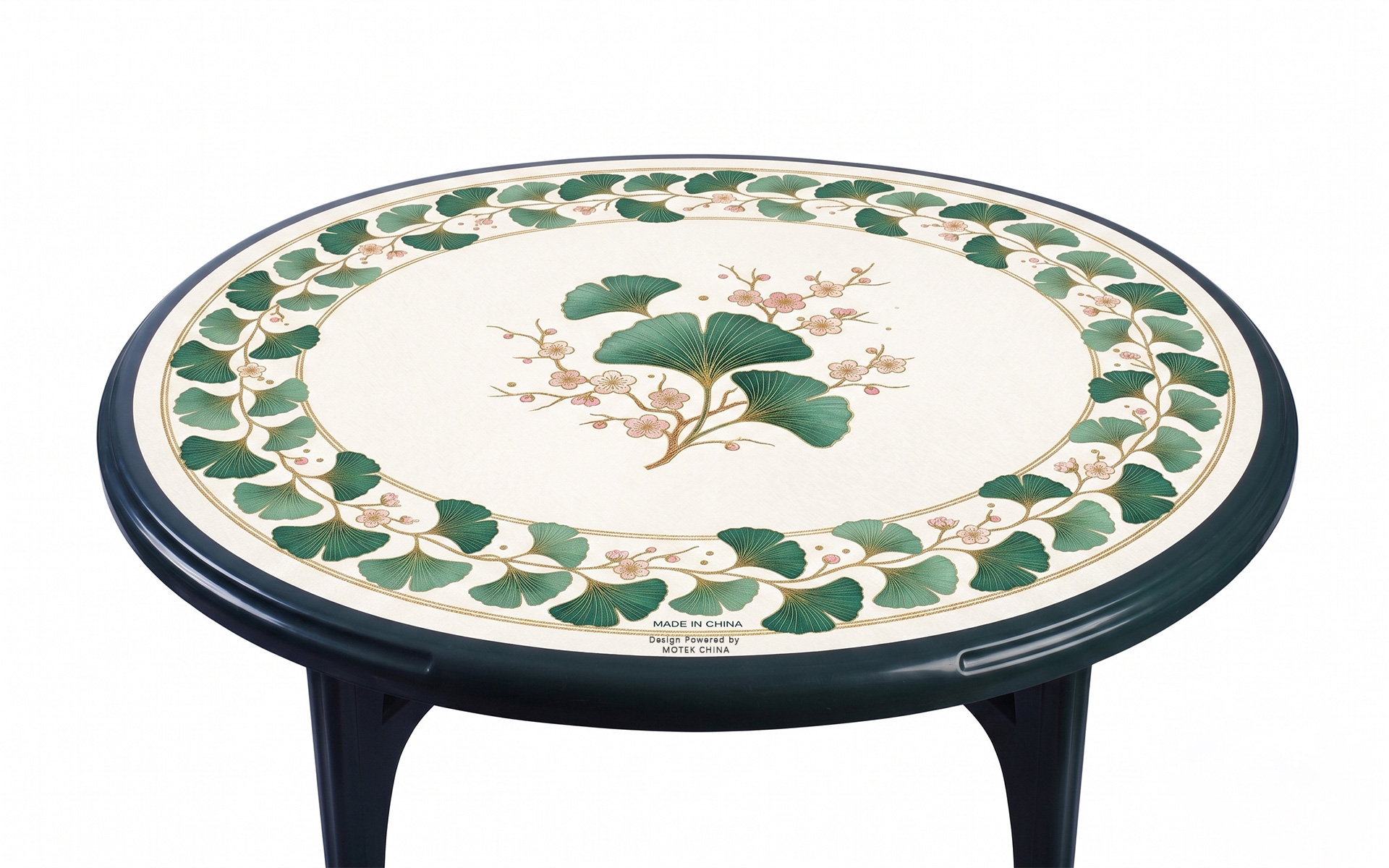
Ordinary screen-printed or sticker patterns are printed on the surface – the ink is directly exposed. Friction, scratches, and chemical cleaners act directly on the pattern, and wear is only a matter of time.
IML is completely different.
The core IML (In-Mold Labeling) process is: the pattern is first printed on the inside of a film, the film is placed into the injection mold, molten plastic is injected, and the film fuses with the plastic under high temperature and pressure.
The final product forms a three-layer "sandwich" structure:
┌────────────────────────────────────────────────────────────────┐
│  Layer 1: Hardened transparent film (PET/PC/PMMA)              │  ← Directly contacts the outside; wear-resistant
├────────────────────────────────────────────────────────────────┤
│  Layer 2: Printed ink layer (LOGO, patterns, text)             │  ← Sandwiched in the middle; never contacts the outside
├────────────────────────────────────────────────────────────────┤
│  Layer 3: Plastic substrate (fused with the table/chair)       │  ← Fuses during molding; never peels off
└────────────────────────────────────────────────────────────────┘
The core logic of this structure is: if the ink never contacts the outside world, outside damage can never reach the ink.
When children drag toys across tabletops, wipe with damp cloths, or scratch with fingernails – all these actions first contact the outermost hardened transparent film, not the ink layer.
2. What Role Does Each of the Three Layers Play?
Layer 1: Hardened transparent film – the "bulletproof vest"
The outermost film is typically made of PET, PC, or PMMA. This film undergoes special hardening treatment, achieving a surface hardness of 2H-3H.
Function: It directly bears all physical friction, scratches, and chemical corrosion. It's like putting a tempered glass screen protector on a phone – if the protector breaks, the screen remains intact. IML's hardened film is the "screen protector" for the pattern.
Layer 2: Printed ink layer – the "protected one"
The LOGO, pattern, and text are all printed on the inside of the film – the side that contacts the injection resin. The ink is sandwiched between the film and the plastic, never directly contacting air, UV radiation, or abrasive surfaces.
Function: It never needs to face external wear. Children's fingernails, dragged toys, and cleaning agents on wet cloths – none of them can reach the ink.
Layer 3: Plastic substrate – the "foundation"
During injection molding, the film bonds tightly with the molten plastic, fusing into one. The label is not "stuck on" – it is "grown into" the table or chair.
Function: The label never peels or curls. Even when the table or chair is discarded, the label remains firmly attached to the surface.
3. Why Do IML Labels Get "Shinier with Use"?
IML labels have another interesting characteristic: they get "shinier with use."
Through repeated light friction and wiping during daily use, the outermost transparent film becomes smoother and more glossy over time. This is not wear – it is polishing.
Ordinary stickers become dull, darkened, and frayed at the edges with prolonged use. IML labels, on the other hand, become increasingly glossy and their colors increasingly vivid.
4. Comparison with Traditional Processes: Why Can't They Withstand the Wear?
| Comparison Dimension | IML In-Mold Label | Screen Printing | Pressure-Sensitive Sticker |
|---|---|---|---|
| Ink position | Sandwiched between film and plastic | Exposed on the surface | Exposed on the surface |
| Protective layer? | ✅ Hardened transparent film | ❌ None | ❌ None (only face paper) |
| Scratch/wear resistance | ⭐⭐⭐⭐⭐ 3H hardness | ⭐ Wears off easily | ⭐⭐ Easily scratched |
| Fading | Never fades | Turns white within months | UV accelerates fading |
| Peeling | Never (fused as one) | May peel | Inevitable curling and peeling |
| Surface gloss | Gets shinier with use | Gets duller with use | Gets older-looking with use |
Screen printing: The ink is printed directly on the plastic surface with no protective layer. A child's fingernail scratches it, and the pattern is damaged; a damp cloth wipes it, and the color comes off.
Pressure-sensitive stickers: The pattern is printed on the sticker surface, and the sticker is adhered to the table or chair with adhesive. Over time, the adhesive ages, edges curl; moisture causes whole-piece peeling; friction directly wears the pattern surface.
IML: The ink is protected by the film – it cannot be worn, scratched, or chewed off.
5. Is There Data to Support IML Label Durability?
Yes. IML products must pass rigorous abrasion tests before leaving the factory.
The industry-standard abrasion test is: an eraser with a 500g load is applied to the product surface and rubbed back and forth at the same position for 300 cycles (one cycle = one back-and-forth movement). The product passes if the surface shows no visible substrate exposure.
This means IML labels remain intact after 300 friction cycles under 500g pressure – the friction, wiping, and dragging encountered in daily use are far less intense than these test conditions.
Additionally, IML products must pass hardness tests (using a 2H-3H pencil with a 500g load at a 45° angle – no obvious scratches on the surface = pass) and temperature tests (57±3°C, 95%-100% humidity for 48 hours – no deformation or discoloration = pass).
6. FAQ
Under normal use conditions, IML label patterns will never be worn off. Because the ink is sandwiched between the hardened transparent film and the plastic substrate, it never directly contacts the outside. Daily friction, scratches, and cleaning will not damage the ink layer.
IML labels can achieve surface hardness of 2H-3H. This means that scraping the surface with a 2H-3H pencil under 500g load at a 45° angle will not leave obvious scratches.
No – they actually get shinier with use. The mild friction from daily use polishes the surface, making the film increasingly smooth and glossy.
Screen-printed ink is directly exposed on the surface with no protective layer. In high-frequency use environments like kindergartens, noticeable wear begins within 3-6 months, and patterns become mostly blurry after a year.
Because stickers rely on adhesive to stick to the surface. The adhesive ages and fails under alternating heat, cold, and moisture. Meanwhile, label edges are easily lifted by children's fingernails, and moisture accelerates peeling.
Yes. The industry standard requires IML products to show no visible substrate exposure after 300 friction cycles under 500g pressure.
Contact Us
Name*
Telephone*
Region*
Please fill in your request*


