
The "Anti-Counterfeiting Armor" for Cold Drink Cups – How IML Protects Tea Beverage Brand Value?
The "Anti-Counterfeiting Armor" for Cold Drink Cups – How IML Protects Tea Beverage Brand Value?
With the rise of new tea beverage brands, the problem of counterfeiting and knockoffs has become increasingly serious. To make matters worse, many counterfeit products now feature QR codes that can successfully scan and display product information – as if they were genuine.
When brands invest heavily in building consumer trust, counterfeiters can undermine it with just a few cheap cups.
In this battle, IML (In-Mold Labeling) technology is becoming a "natural anti-counterfeiting armor" for tea beverage brands.
Table of Contents
1. Tea Beverage Counterfeiting – The Hidden Crisis
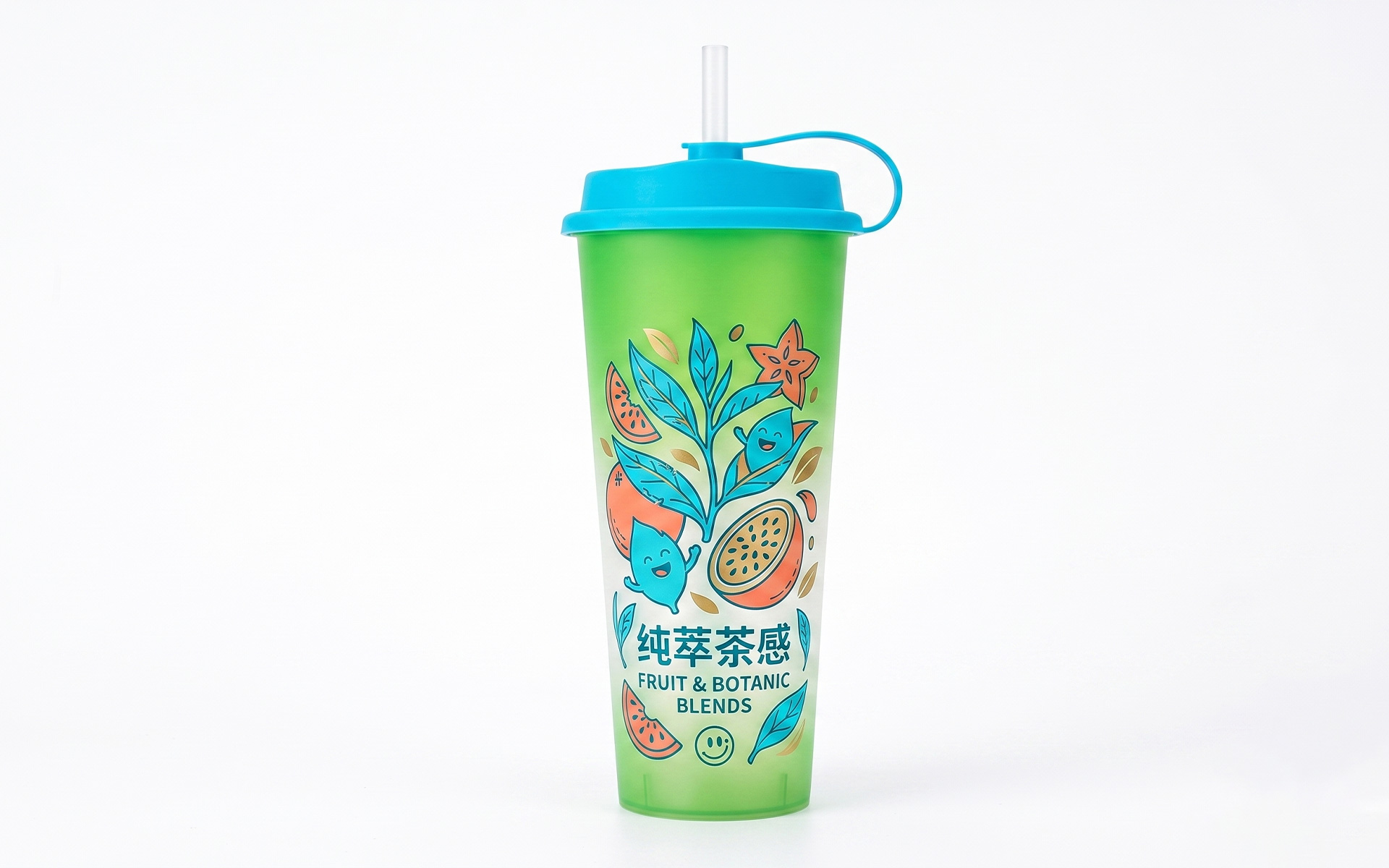
A few years ago, the tea beverage market saw explosive growth, with new brands emerging one after another. This created a new industry – counterfeit tea beverage cups.
Counterfeiters produce cups that look almost identical to genuine ones. They copy the brand's logo, color scheme, and pattern design. Some even use QR codes that, when scanned, display the same product information as the genuine article. When a consumer buys a cup of tea on the street, they may think they are drinking a brand-name product – but the cup itself is a fake, and more importantly, the brand's hard-earned reputation is being drained away.
In response, leading brands like Nayuki have taken legal action against counterfeiters. In one case, Nayuki sued a Shenzhen company that was selling tea beverages in unauthorized cups bearing Nayuki's trademark. The court ordered the infringer to pay 100,000 RMB in damages. However, legal action is always a reactive measure – it can only be taken after the damage has occurred.
The real challenge is prevention.
2. The Three Defense Lines of IML Anti-Counterfeiting
IML's anti-counterfeiting logic is fundamentally different from traditional labels. Traditional pressure-sensitive labels can be peeled off and replaced; IML labels are fused with the cup body during injection molding. This essential difference builds three defense lines that counterfeiters cannot easily breach.
2.1 First Defense Line: Physical Fusion – Labels That Cannot Be Peeled Off
This is IML's core and most insurmountable defense.
IML labels are placed into the mold before injection begins. When molten plastic is injected, the label and the cup body fuse as one under high temperature and pressure. The label and the cup are on the same plane – there is no "edge" that can be lifted, no "interface" that can be separated.
The label has become part of the cup itself. Peeling it off is impossible – you would have to destroy the cup.
For counterfeiters, this means they cannot simply peel off a genuine label and stick it onto a counterfeit cup. They cannot separate the label from the cup at all. This "physical anti-counterfeiting" is the most robust defense – because it operates at the level of the physical object itself.
2.2 Second Defense Line: Capital and Technical Barriers – Counterfeiters "Can't Do It"
Physical fusion alone is not enough – IML also demands significant capital and technical investment.
Capital barrier: IML requires specialized molds, with a single set costing hundreds of thousands of yuan. It also requires precision injection molding machines and automated robotic systems. This is not an investment that small counterfeit operations can easily make.
Technical barrier: IML is a highly complex system involving the precise coordination of injection molding machines, molds, automation robots, and label materials. Stable production demands deep technical expertise and years of process experience. Even if counterfeiters could afford the equipment, without the technical capability to operate it, they cannot produce qualified IML products.
These two barriers – "can't afford it" and "can't do it" – make IML a natural defense against counterfeiting.
2.3 Third Defense Line: Printing Precision – Details That Cannot Be Reproduced
IML uses high-precision printing technology that can reproduce fine details and small text with exceptional clarity. Holographic effects, metallic finishes, micro-text – these can all be integrated into the IML label.
Counterfeiters' printing equipment typically cannot achieve this level of detail. On counterfeit IML cups, fine patterns may be blurry, colors may be inaccurate, and special effects may be entirely absent. Consumers who know what to look for can often spot the difference.
High-precision printing itself is a form of anti-counterfeiting.
3. The Real-World Value of IML Anti-Counterfeiting
The three defense lines – physical fusion, capital/technical barriers, and high-precision printing – together deliver tangible value for tea beverage brands:
Protecting brand reputation: When every cup has an anti-counterfeiting label that cannot be peeled off or copied, consumers can trust that they are buying a genuine product. Every time a consumer picks up a cup, brand trust is reinforced.
Maintaining channel order: Counterfeit cups disrupt pricing systems and damage relationships with legitimate distribution partners. IML anti-counterfeiting makes it significantly harder for counterfeit cups to enter the market, protecting legitimate sales channels and pricing integrity.
Enhancing product quality perception: IML labels are seamlessly integrated, with vivid colors and a smooth touch. The "no-label look" and premium feel convey a sense of quality. When consumers see an IML cup, they feel that "this brand cares about the details."
Supporting environmental compliance: IML labels and cups use the same PP material, so no label separation is required during recycling – the entire cup can be directly shredded and recycled. Brands that choose IML not only get anti-counterfeiting protection but also demonstrate a commitment to sustainability.
4. FAQ
No. IML labels fuse with the cup body during injection molding – they are part of the cup itself. Peeling them off is impossible without destroying the cup.
QR code anti-counterfeiting is "stuck on" – it can be peeled off and copied. IML anti-counterfeiting is "grown into" the cup – it cannot be removed or replaced. The two can be used together – printing QR codes on IML labels provides both the physical security of integrated molding and the convenience of digital verification.
Upfront investment is indeed higher – IML requires specialized molds and precision equipment. However, this investment itself creates a natural barrier to counterfeiting – counterfeiters cannot easily replicate it. For brands, this is a one-time investment with long-term anti-counterfeiting benefits. Moreover, brands like Nayuki have demonstrated that investing in anti-counterfeiting protection is often less costly than the damage caused by counterfeiters.
Yes. IML labels can incorporate holographic effects, metallic finishes, micro-text, invisible ink, optically variable effects, and other advanced anti-counterfeiting features – all of which are difficult for counterfeiters to reproduce.
No. IML labels and cups use the same PP material. During recycling, no label separation is required – the entire cup can be directly shredded and recycled together.
IML is suitable for any injection-molded plastic packaging, especially products where brand image and consumer trust are critical, such as tea beverages, dairy products, ice cream, condiments, and more.
Contact Us
Name*
Telephone*
Region*
Please fill in your request*


