
Advantages of Recyclable Returnable Containers: PP Same-Material IML Labels Require No Removal and Do Not Affect Container Recycling
Advantages of Recyclable Returnable Containers: PP Same-Material IML Labels Require No Removal and Do Not Affect Container Recycling
In factories, warehouses, and logistics centers, returnable containers are used, stacked, and handled repeatedly every day. When they reach the end of their service life and enter the recycling stream, a key question arises: does the label on the container need to be removed?
For ordinary pressure-sensitive labels, the answer is: it must be removed, and it is often difficult to remove completely.
For IML (In-Mold Labeling) labels, the answer is: no removal needed. The entire container can be directly shredded and recycled.
This difference fundamentally distinguishes the two label types in terms of environmental sustainability and circular production.
📖 Table of Contents
- 1. First Understand: Why Are IML Labels "Not Required to Be Removed"?
- 2. The "Recycling Dilemma" of Pressure-Sensitive Labels: Difficult to Remove Completely, Contaminate Recyclate
- 3. IML Labels: Whole-Container Shredding, One-Step Process
- 4. Industry Certifications: APR "Preferred" Label + RecyClass Full Compatibility
- 5. Two Technical Routes: Integrated Recycling vs. Automated Separation
- 6. FAQ
1. First Understand: Why Are IML Labels "Not Required to Be Removed"?
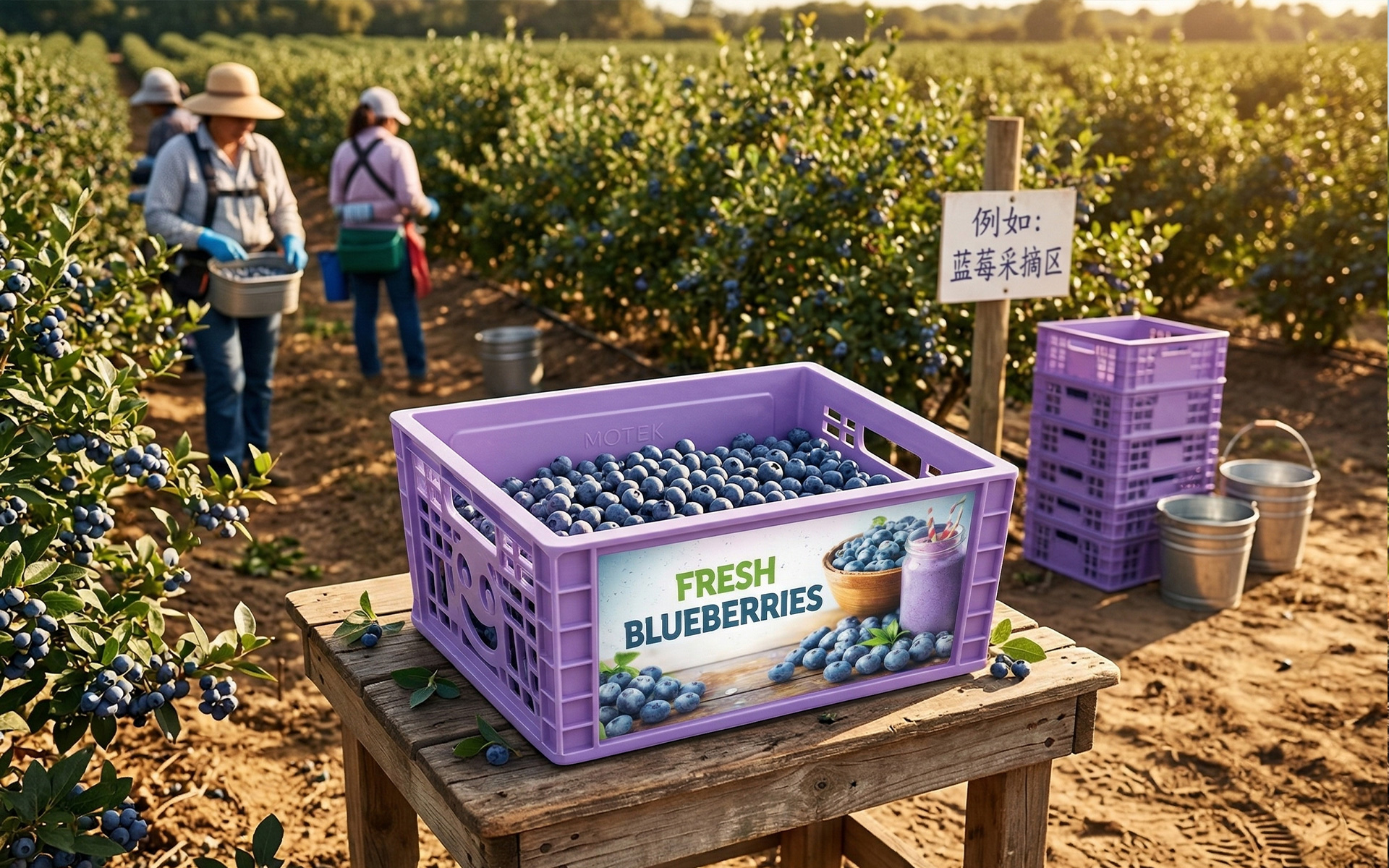
To understand why IML labels do not need to be removed, you first need to understand their structure.
Ordinary pressure-sensitive labels are "stuck on"—the label has adhesive on the back and relies on glue to attach to the container surface. The label and the container are two separate things, and they must be separated during recycling.
IML in-mold labels are completely different. The IML process is: the pattern is first printed on a film, the film is placed into the injection mold, and then molten plastic is injected. Under high temperature and pressure, the film fuses with the plastic. The label is not "stuck on"—it is molded together with the container, and there is no interface between the label and the container.
IML label substrates are formed from the same or similar resin type as the finished packaging, so there is no contamination from other resins or different adhesives. The label is part of the container itself, not an alien object attached to it.
This fundamental difference determines the completely different recycling approach.
2. The "Recycling Dilemma" of Pressure-Sensitive Labels: Difficult to Remove Completely, Contaminate Recyclate
Ordinary pressure-sensitive labels face three challenges during recycling:
Challenge 1: High labor cost for label removal. Recycling facilities must first remove the labels before shredding and reprocessing. This requires manual labor, resulting in low efficiency and high cost.
Challenge 2: Adhesive contamination of recyclate. Even if the label is removed, residual adhesive remains on the container surface. During melting and reprocessing, this adhesive mixes into the recycled plastic, affecting the color and mechanical properties of the recyclate.
Challenge 3: Label fragments mix in. If labels are not completely removed, residual label fragments mix with the PP flakes, lowering the quality grade of the final recycled material.
As a result, the recyclate is contaminated, and closed-loop recycling at the same quality level is not achievable—the recycled PP can only be downcycled, not returned to the same product.
3. IML Labels: Whole-Container Shredding, One-Step Process
IML label recycling is completely different.
Step 1: No removal needed. IML labels are fused with the container during injection molding—both are the same material (PP), and no separation is required.
Step 2: Whole-container shredding. After the container reaches the end of its service life, it is fed directly into a shredder—label and container body are shredded together.
Step 3: Melting and repalletizing. The shredded PP flakes are melted and repelletized for use in manufacturing new plastic products.
Throughout this process, the label is not removed but is mixed together with the recyclable polymer. Since both the label and the container are PP, with identical chemical composition, the mixed recyclate is single-material and has higher purity.
The IML process also eliminates adhesives, which are the primary source of contamination affecting the color and mechanical properties of recyclate. No adhesive means no contamination.
4. Industry Certifications: APR "Preferred" Label + RecyClass Full Compatibility
The recycling advantages of IML labels have received formal recognition from multiple global authoritative organizations.
Association of Plastic Recyclers (APR) – "Preferred" labeling method
The U.S. Association of Plastic Recyclers (APR) has recognized IML as a "Preferred" labeling method for polypropylene (PP) and high-density polyethylene (HDPE) containers, provided compatible polymer labels are used.
APR's recognition covers IML labels with up to 100% coverage on PP containers. This means that even if the label covers nearly the entire container surface, as long as the label material is PP, it fully complies with APR's recyclability design guidelines.
RecyClass – Fully compatible with colored PP recycling
RecyClass, a European authoritative certification body for plastic recycling, systematically tested PP-based printed IML technology. The results show:
PP-based IML technology is fully compatible with colored PP recycling streams, provided that the total ink volume does not exceed 1% of the total package weight.
RecyClass testing also shows that recycled plastic from IML can be reused in injection molding applications at concentrations up to 50%. This means that recycled material from IML containers can return to similar products, achieving true circularity.
World Packaging Organisation (WPO) – Green "Best Case" rating
The World Packaging Organisation has listed IML and similar labeling processes in the green "Best Case" ranking in its design guidelines.
In-Mold Decorating Association (IMDA) White Paper
The IMDA white paper details the recycling advantages of IML, noting that IML substrates become an integrated part of the finished packaging, simplifying automated sorting and washing in recycling facilities by eliminating the need for chemical removal of paper or film labels and adhesives.
5. Two Technical Routes: Integrated Recycling vs. Automated Separation
With the development of IML technology, two technical routes are currently available on the market:
Route 1: Integrated recycling (conventional IML)
Conventional IML labels are fused with the container. During recycling, the whole container is shredded, and the label and PP are mixed and reprocessed together. Since both label and container are PP, the mixed recyclate is single-material and can be directly used in injection molding.
Applicable scenario: colored containers and dark-colored containers. RecyClass certification confirms that conventional IML is fully compatible with colored PP recycling.
Route 2: Automated separation (NextCycle IML and similar)
New-generation detachable IML labels automatically detach from the container during recycling. During the shredding and air separation stage, label fragments are separated from container fragments and enter different recycling streams.
The advantage of this technology is that printed label fragments do not contaminate the PP recycling stream, making it especially suitable for white or transparent PP containers—because ink does not affect the color of the recyclate.
Testing shows that NextCycle IML achieves a separation rate of over 98%, and the recovered PP material can be reused in injection molding at concentrations up to 50%.
How to choose?
| Container Type | Recommended Route | Reason |
|---|---|---|
| Colored containers | Integrated recycling (conventional IML) | Ink has minimal impact on color; lower cost |
| White/transparent containers | Automated separation (NextCycle IML) | Prevents ink contamination; maintains color purity of recyclate |
6. FAQ
No. IML labels are fused with the container during injection molding—both are the same material (PP). The entire container can be directly shredded and recycled without removing the label.
No. IML labels and containers use the same PP material. After shredding, the resulting PP flakes are of uniform composition. As long as the ink volume is within a reasonable range (typically far below 1% of total weight), there is no negative impact on recycled material quality.
Pressure-sensitive labels have adhesive on the back. During recycling, the label must first be peeled off and residual adhesive removed; otherwise, the adhesive contaminates the recycled material. This process is inefficient and costly.
APR is the authoritative body for the U.S. plastic recycling industry. Its "Preferred" label designation means that containers using PP same-material IML labels can be smoothly processed within the U.S. plastic recycling system.
The total ink volume must not exceed 1% of the total package weight. The ink proportion on returnable container labels is typically far below this standard, so the vast majority of IML containers meet the condition.
The recycled PP flakes are melted and repelletized for use in manufacturing new plastic products. RecyClass testing shows that recycled plastic from IML can be reused in injection molding applications at concentrations up to 50%.
Contact Us
Name*
Telephone*
Region*
Please fill in your request*


