
Application of Polyethylene (PE) Film in In-Mould Labeling
Application of Polyethylene (PE) Film in In-Mould Labeling
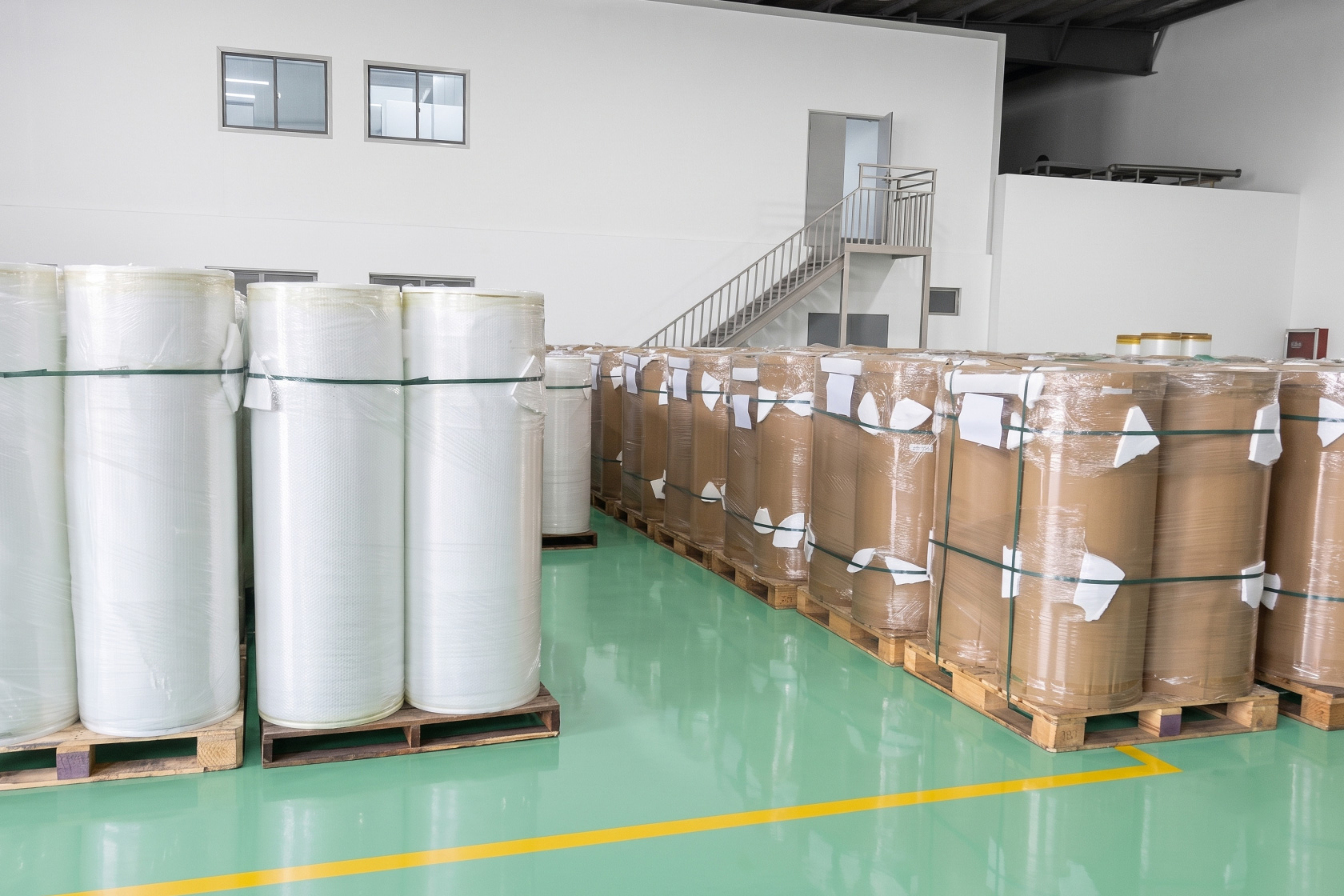
In-mould labelling (IML) is a packaging technology in which a pre-printed label is embedded into a plastic container during blow moulding or injection moulding, fusing seamlessly with the container surface. While film materials have become the mainstream choice for IML, polyethylene (PE) film stands out due to its chemical compatibility with PE containers, offering unique advantages in recycling and sustainability. As a result, PE is one of the most widely used materials in the IML field.
1. Structure of IML Labels and the Role of PE Film
A typical IML label consists of three co-extruded layers:
Printing surface layer (top) – carries the ink and coloured graphics;
Middle layer (support layer) – provides stiffness, allowing the label to maintain its shape under the high temperature and pressure of the printing press, ensuring registration accuracy;
Adhesive layer (bottom) – melts under the high temperature inside the mould, bonding the label firmly to the plastic container.
The printing surface materials for IML labels mainly fall into three categories: PE, BOPP, and PE+PP composites. As the printing surface, PE film carries the ink and presents the graphic information. Because most plastic containers today are made of PE, a PE-based IML label creates a “homogeneous bond” with the container, offering a natural advantage for recyclability.
2. Key Advantages of PE Film in IML
2.1 Homogeneous recycling – outstanding environmental performance
The most significant advantage of PE film IML labels is their recyclability. Since both label and bottle are made of polyolefin materials, they can be ground together without separating the label from the container after use. This eliminates the need to wash off labels and remove residual adhesives, greatly improving recycling efficiency. A container made entirely of PE with a PE IML label achieves full recyclability, meeting the packaging design recommendations of organisations such as Plastic Recyclers Europe. The IML process also eliminates the adhesives used in traditional pressure-sensitive labels, preventing adhesives from affecting the colour and mechanical properties of recycled material. Under the global trend of plastic packaging reduction and circular economy, the homogeneous recyclability of PE film aligns well with increasingly stringent environmental packaging standards.
2.2 Perfect compatibility with PE containers – avoiding appearance defects
Another key advantage of PE film is that its shrinkage rate matches that of PE containers. During blow moulding, both the label and the container cool and shrink simultaneously, maintaining the same dimensional change pattern. This prevents surface defects. In contrast, when PP material (BOPP) is used for the label, the different shrinkage rates often cause an “orange peel” effect on the bottle surface, degrading appearance. PE film applied to PE bottles does not suffer from such deformation, resulting in a smoother, flatter visual effect – especially beneficial for large flat surfaces such as lubricating oil pails.
2.3 Excellent water and oil resistance
Compared to paper-based IML labels, PE film provides good resistance to water, oil, and mildew. Once fused with the container under high temperature inside the mould, the label is not easily detached or damaged, making it suitable for high-humidity environments or packaging where product leakage may occur.
3. Technical Limitations of PE Film and Improvement Directions
3.1 Poor printability
Untreated PE film has a low surface energy, typically around 29–30 mN/m, which makes it difficult for ink to adhere. Therefore, PE film must be corona treated before printing. Corona treatment uses high‑frequency, high‑voltage discharge to activate the plastic surface, generating polar groups such as carboxyl and carbonyl on PE molecular chains, raising the surface tension to about 39–40 dynes/cm, thereby enhancing ink adhesion. For IML applications, specially developed UV flexo inks (e.g., UV Flexo 600 PE series) have been formulated for corona‑treated PE/PP materials, offering high gloss, high colour density, and low odour to meet the high‑speed printing requirements of IML.
However, the effect of corona treatment decays over time. If the corona level is insufficient during printing, ink may flake off – a critical issue to watch for. Additionally, corona treatment generates significant static electricity on the film surface, which may make label release difficult during in‑mould application; appropriate anti‑static measures are required.
3.2 High deformation after hot stamping
Another limitation of PE film is its relatively poor thermal stability. Because PE is an unstretched, flexible film, it tends to deform significantly under the high temperatures of post‑printing processes such as hot stamping, affecting final precision.
3.3 Low stiffness – higher processing difficulty
PE film’s high flexibility means its stiffness is relatively low. While this favours good conformability after labelling, it creates challenges during processing: during printing and die‑cutting, PE film is prone to tension control issues, and internal stress release after die‑cutting can cause the label to shrink back. During automatic labelling, if the pre‑feed length is too long, the soft label may droop, affecting positioning accuracy. To address this, high‑stiffness PE product solutions have been developed. Through optimised material structure design, these PE films provide sufficient mechanical stiffness while maintaining the flexible conformability required for application.
4. Application Fields and Market Outlook for PE Film IML
PE film IML labels are widely used in daily chemicals, food, pharmaceuticals, chemicals, and other industries. Specific applications include:
Daily chemicals: shampoo, body wash, laundry detergent bottles;
Chemical products: large‑area pails for lubricating oil, engine oil;
Food & beverage and pharmaceutical containers.
Notably, driven by growing consumer demand for visually appealing packaging and increasingly stringent environmental standards, the IML market continues to expand. According to industry market research reports, the global IML market was valued at approximately US$2.81 billion in 2025 and is expected to reach US$3.81 billion by 2033, with a compound annual growth rate (CAGR) of about 3.9%. As one of the key material types in the global IML market, PE will continue to benefit from this growth.
Furthermore, material innovations are continuously expanding the boundaries of IML applications. For example, specialty films such as Primax and FasClear have been developed based on PP/PE composites. These combine the softness of PE with the toughness of PP, allowing them to stretch and conform to irregularly shaped bottles, perfectly fitting curved or twisted containers.
Conclusion
With its core advantages of homogeneous compatibility with PE containers and easy recyclability, PE film occupies an irreplaceable position in the IML field. Although challenges remain – such as poor printability and insufficient stiffness – ongoing improvements in corona treatment technology, the development of dedicated inks, and the introduction of high‑stiffness PE solutions are steadily enhancing the applicability and processing efficiency of PE film. As the environmental packaging transition deepens, PE film IML labels, which combine functionality with sustainability, hold promising prospects for future application.
Contact Us
Name*
Telephone*
Region*
Please fill in your request*


