
In-Mold Labeling Technology Principles
Technical Principles of In-Mold Labeling
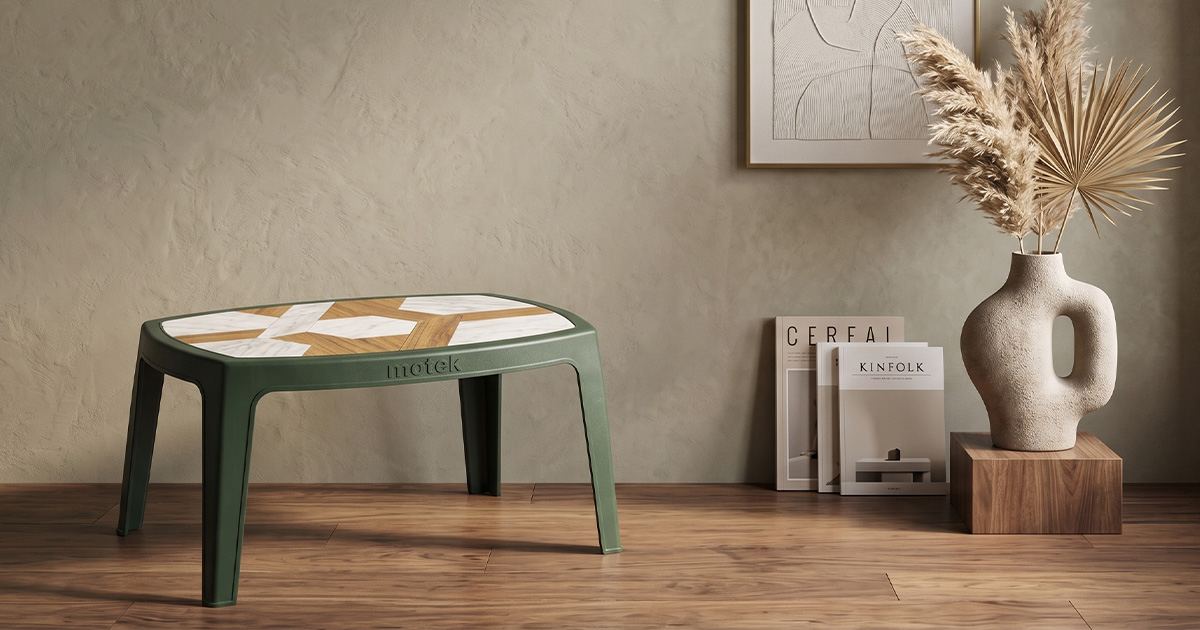
In-Mold Labeling (IML) is a technology that completes the decoration of plastic containers simultaneously with the molding process. Its core principle is: during blow molding or injection molding, a pre-printed label is placed inside the mold cavity. The heat from the molten plastic melts the heat-activated adhesive on the back of the label, causing the label to fuse seamlessly with the container surface. The label and the plastic container lie on the same plane, making the colored graphics appear as if they are printed directly onto the container wall, giving almost no feeling of a "stuck-on label".
The reason why in-mold labels achieve a firm bond under high temperature and high pressure lies in the special design of the label material. An in-mold label typically consists of three layers, each with a distinct function, working together to accomplish this complex integration process.
Printing Layer (Top Layer): The outermost layer that carries the ink and presents the graphics. Since the label contacts the hot mold wall during molding, the printing layer must have good heat resistance and printability. Common top-layer materials include PE (polyethylene), BOPP (biaxially oriented polypropylene), and PE+PP composites.
Middle Layer (Support Layer): Provides stiffness and stability to the label, ensuring it does not deform under printing tension or high temperature, thus maintaining accurate registration. The middle layer can be designed as transparent or opaque according to visual requirements.
Adhesive Layer (Bottom Layer): This is the key technology that achieves integration of the label with the container. The adhesive is solid at room temperature, but melts under the high temperature of the injection or blow molding process, firmly fusing with the container surface. Depending on the label area, the adhesive layer can be designed as a non-embossed smooth structure (suitable for small areas) or an embossed mesh structure (suitable for large areas). The mesh channels in the latter help exhaust air and avoid bubbles. Additionally, the adhesive layer has antistatic and slip properties to facilitate handling during printing and processing.
In-mold labeling can be divided into two types according to the molding method: blow molding IML and injection molding IML. The basic principles are the same for both, but there are clear differences in equipment configuration, label holding method, and label design requirements.
Blow Molding In-Mold Labeling
Blow molding IML is mainly used for hollow containers (e.g., detergent bottles, shampoo bottles).
The process is as follows: First, pre-printed in-mold labels are stacked as single sheets and placed in label magazines on the IML machine. When the mold opens, a robot picks up the front and back labels simultaneously, placing them against the inner walls of the mold with the printed side facing inward and the solid adhesive side facing outward. Vacuum holes in the mold hold the labels firmly against the cavity walls by negative pressure.
At the same time, plastic material is plasticated in an extruder and extruded as a molten tube (parison) downward. When the parison reaches the required length, the mold – with labels already held in place – closes quickly, clamping the parison. Then compressed air is blown into the parison, expanding the molten plastic against the mold cavity walls.
The high temperature inside the mold melts the solid adhesive on the back of the labels, fusing them with the plastic container as it forms. After cooling and solidification, the mold opens, and the plastic container is finished – molded and labeled in one step, with the label and container fused as one.
Injection Molding In-Mold Labeling
Injection molding IML is used for higher-precision containers (e.g., ice cream tubs, butter boxes). In Europe, about 80% of in-mold labeling uses the injection molding process.
Process steps: Before injection, an automated robot places pre-printed labels precisely into the injection mold cavity. Unlike blow molding, injection molding IML typically uses electrostatic adsorption to hold the label against the mold wall. Vacuum holding is not used because the injection pressure of molten plastic is very high (up to several hundred MPa); if vacuum holes were used, the high-pressure plastic flow could puncture the label and block the vacuum holes, disrupting continuous production.
After the label is secured, the mold closes. Molten plastic is injected at high speed through the nozzle into the cavity, filling the space between the label and the mold wall. The high temperature of the melt melts the adhesive layer on the back of the label, and at the same time the molten plastic and label material achieve molecular-level fusion, making the label an integral part of the container wall.
After cooling, the mold opens, and a robot removes the finished part. Injection molded IML products have higher shape accuracy and more uniform wall thickness than blow molded ones, so they are widely used for packaging that requires high durability and high-quality appearance.
From a technical standpoint, the core mechanisms by which in-mold labeling achieves "molding and labeling in a single step" can be understood from the following four aspects:
Simultaneous Molding: Label integration and container formation are completed in the same mold cycle, eliminating a separate post-molding labeling step and achieving process integration.
Heat-Seal Adhesion: The pre-coated heat-activated adhesive on the back of the label melts under the high temperature inside the mold, firmly bonding the label to the plastic container wall without extra glue or adhesives.
Same-Material Matching: The label substrate and the container are made from the same type of plastic (e.g., PP label with PP container, PE label with PE container). Under high temperature, the molecular chains of the two materials interpenetrate and bond, creating a strong fused interface and also facilitating complete recycling of the whole package.
Precise Positioning: The label is accurately fixed at a predetermined location on the mold cavity wall by either vacuum suction or electrostatic adsorption, ensuring that the label does not shift during molten plastic filling, thus guaranteeing accurate graphic position on the finished product.
Understanding the technical principles of in-mold labeling is fundamental to understanding its material selection, process control, and defect analysis. The next article will detail the material system and printing processes for in-mold labels. If you need to discuss technical details or commission an actual project, please feel free to contact the Motek technical team.
Contact Us
Name*
Telephone*
Region*
Please fill in your request*


