
Gravure Printing in In-Mold Labeling: High-Saturation, Long-Run Durable Solution
Gravure Printing in In-Mold Labeling: High-Saturation, Long-Run Durable Solution
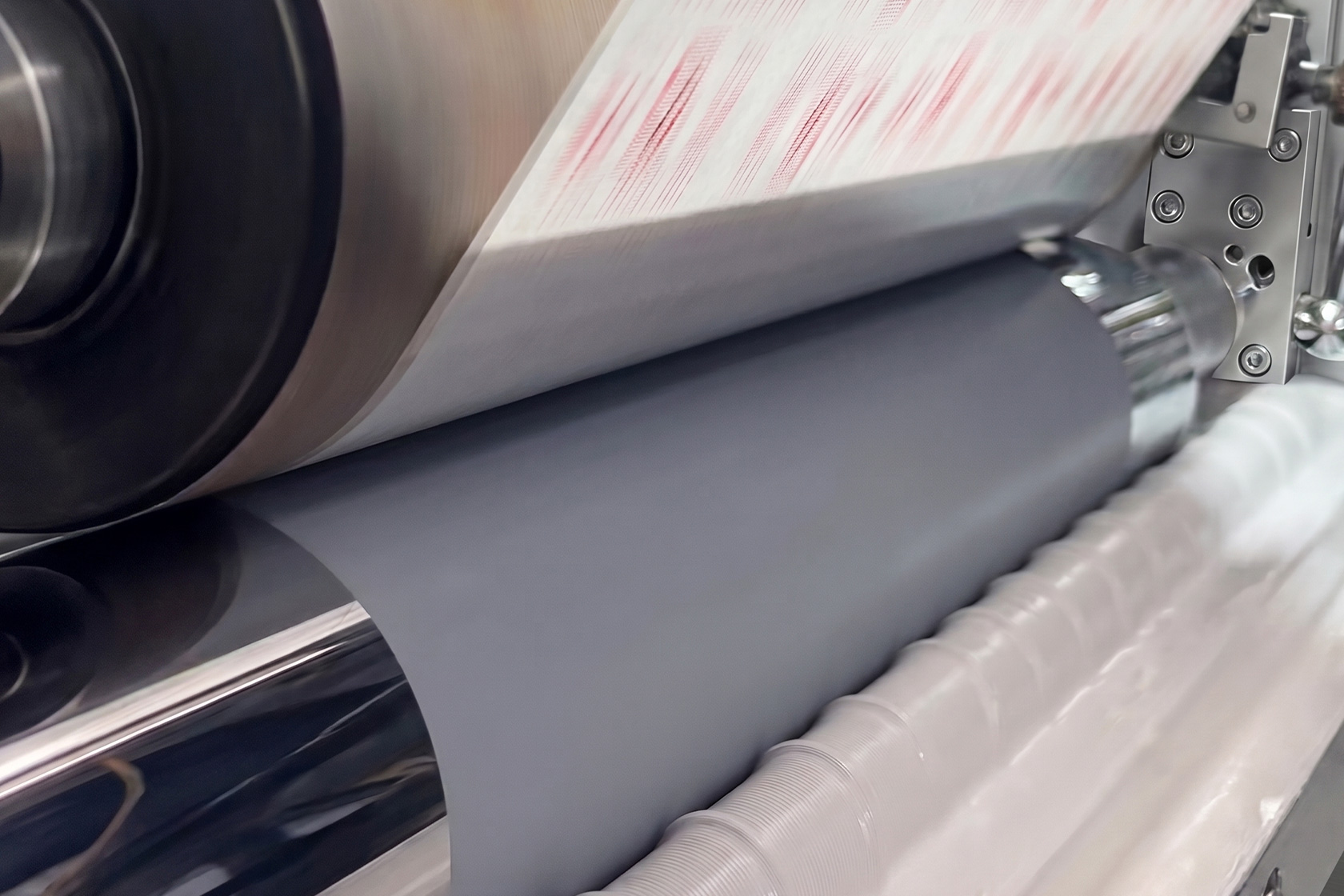
Among the various printing methods for in-mold labeling (IML), gravure printing (often called “gravure” or “rotogravure”) stands out for its thick ink layer, high color saturation, long plate life, and cost advantage in high-volume production. It is an ideal choice for premium, long-run IML applications. For brand packaging that demands extreme color expression and long-term durability, gravure is often the best solution.
This article explains the technical principles of gravure printing and analyzes its process characteristics, core advantages, application scenarios, and comparisons with other printing methods for IML.
1. Technical Principle of Gravure Printing
Gravure is a direct printing method. The printing plate is a metal cylinder engraved with millions of tiny recessed “cells” (or “gravure wells”). The depth and area of these cells vary according to the lightness or darkness of the image – dark tones have deep, large cells that hold more ink; highlight tones have shallow, small cells that hold less ink.
Printing process:
The gravure cylinder rotates, dipping into or being coated by an inking system, filling all cells with ink.
A doctor blade scrapes excess ink from the cylinder surface, leaving ink only in the cells.
The substrate (IML label film) contacts the gravure cylinder under pressure from an impression cylinder, and the ink transfers from the cells to the film.
The ink is dried (hot air or UV curing), fixing the printed image onto the film.
The ink layer thickness in gravure is typically 5–15 μm, much higher than flexo (2–4 μm) and offset (1–2 μm), resulting in outstanding color saturation, opacity, and scratch resistance.
2. Process Characteristics of Gravure Printing for IML
2.1 Plate Making
Gravure cylinders are typically engraved using electronic engraving or laser engraving directly onto a copper layer, then chrome‑plated for wear resistance. Plate making costs are high (several thousand to tens of thousands of yuan per cylinder), but plate life is extremely long (millions of impressions), making gravure suitable for ultra‑long runs.
2.2 Ink Systems
Two main ink types are used for IML gravure:
Solvent‑based gravure inks: Fast drying, good adhesion, but require solvent recovery systems to meet environmental regulations.
UV gravure inks: Solvent‑free, instant curing, suitable for VOC‑sensitive production environments, but with higher equipment cost.
Inks must have the following properties:
Heat resistance (no decomposition or color change at 160–240°C during in‑mold molding)
Scratch resistance (graphics remain intact during product use)
Good adhesion and flexibility to label substrates (BOPP, PE, etc.) to withstand blow molding stretching
2.3 Inline vs. Offline Production
Gravure is typically offline: wide‑web gravure presses print the entire roll of film at high speed, followed by subsequent steps such as varnishing, adhesive coating, and die‑cutting. Gravure presses are very fast (200–400 m/min), making them ideal for high‑volume pre‑printing.
Some high‑end lines integrate gravure units with IML label finishing lines, but this is less common.
3. Core Advantages of Gravure Printing for IML
3.1 Excellent Color Saturation and Texture
Gravure produces a thick ink layer, yielding rich, full colors – especially suitable for large solid areas, metallic colors (gold/silver), and dark tones. The printed result has a photographic quality and strong visual impact, significantly enhancing packaging grade.
3.2 Superior Scratch and Abrasion Resistance
The thicker ink layer means the label surface is more wear‑resistant. On products such as shampoo bottles and oil containers that are frequently handled and rubbed, gravure‑printed labels retain their graphics much better than flexo or offset. The thick ink layer also provides better UV and chemical resistance.
3.3 Cost‑effective for High‑Volume Production
Although gravure plate making costs are high, once in production, the printing speed is very fast, waste is low, and plate life is extremely long. For annual IML volumes above 10 million labels, the unit cost of gravure is often lower than flexo or offset.
3.4 Excellent Color Consistency
Gravure uses engraved cylinders – a single batch of plates ensures very high repeatability. For brand primary colors (e.g., corporate red or blue), gravure achieves almost no batch‑to‑batch color variation, which is very beneficial for global supply chain uniformity.
3.5 Suitable for Large Format and Multi‑Color Printing
Modern gravure presses can be equipped with 8–12 color units and can integrate reverse printing, cold foil stamping, varnishing, etc. Web widths can reach 800–1200 mm, allowing multiple label layouts per pass for very high efficiency.
4. Limitations of Gravure Printing for IML
4.1 High Plate Cost and Long Lead Time
A set of gravure cylinders can cost tens of thousands to over a hundred thousand yuan (depending on number of colors, size, and engraving precision), and the plate making lead time is typically 2–4 weeks. This makes gravure completely unsuitable for small batches, high‑mix products, or frequent design changes.
4.2 Not Ideal for Smooth Gradients and Very Fine Dots
Although modern engraving technology has greatly improved, gravure still cannot reproduce smooth gradient transitions (e.g., from 100% to 0%) or extremely fine dots (e.g., below 1%) as naturally as offset. The cell structure imposes a minimum dot size, which can result in “stepped” transitions.
4.3 Environmental Pressure
Traditional solvent‑based gravure inks contain VOCs (volatile organic compounds) and require exhaust treatment equipment. In some regions, strict environmental regulations may restrict the use of solvent‑based gravure. UV gravure avoids this issue but requires higher investment.
4.4 Long Changeover Time and High Material Waste
Changing a gravure job requires replacing the entire set of cylinders, cleaning the ink system, and adjusting registration – typically taking 2–4 hours and generating hundreds of meters of setup waste. Therefore, gravure is not suitable for short runs or frequent changeovers.
5. Typical Process Flow for Gravure‑Printed IML Labels
Design separation: Separate the design file into C/M/Y/K and spot color channels, applying curve compensation for gravure cell characteristics.
Cylinder engraving: Produce gravure cylinders using electronic or laser engraving.
Gravure printing: Print the label top layer on a high‑speed gravure press, followed by drying.
Varnishing / protective coating (optional): Apply matte or gloss protective lacquer to enhance scratch resistance.
Adhesive coating: Apply or laminate a heat‑seal adhesive onto the back of the printed film (embossed or plain pattern).
Die‑cutting and rewinding: Die‑cut the printed/adhesive‑coated web into single labels or rewind into rolls (for automatic robot pick‑and‑place).
Quality inspection: Inspect registration, color deviation, and defects via online or offline inspection systems.
6. Suitable Applications for Gravure‑Printed IML Labels
| Application Category | Typical Products | Why Gravure |
|---|---|---|
| Premium personal care | Branded shampoo bottles, shower gel bottles (large volume) | High color saturation, batch‑to‑batch consistency, water/scratch resistance, enhanced shelf appeal |
| Food packaging | Ice cream tubs, butter boxes (major brands) | Large brand color areas need consistency, high gloss, low‑temperature resistance |
| Lubricant / motor oil bottles | 1L/4L oil containers | Thick ink layer resists scratching, oil/heat resistance, no fading during outdoor storage |
| Agrochemical products | Pesticide bottles, herbicide containers | Chemical resistance, label never peels, safe and compliant |
| Promotional / limited editions | Special edition packaging | Can produce special metallic effects (gold, silver, copper), enhancing collectible value |
7. Gravure vs. Flexo vs. Offset for IML
| Aspect | Gravure | Flexo | Offset |
|---|---|---|---|
| Print quality | Thick ink, saturated colors, strong texture | Good (significantly improved with UV inks) | Excellent detail and gradients, but thin ink layer |
| Scratch resistance | Excellent (thick ink) | Good | Fair |
| High‑volume cost | Lowest (millions+ per year) | Medium | Medium‑high |
| Low‑volume cost | Very high (plate cost) | Medium | Low |
| Plate lead time | 2–4 weeks | ~1 week | 1–3 days |
| Changeover flexibility | Poor | Good | Excellent |
| Environmental impact | Solvent‑based: VOC; UV: none | Water/UV, relatively green | Dampening solution + inks, more complex |
| Recommended annual volume | ≥ 5 million labels | 500k – 5 million labels | ≤ 2 million labels (flexible) |
| Typical speed | 200–400 m/min | 100–200 m/min | 50–100 m/min (multi‑color) |
8. Motek’s Gravure IML Solutions
Motek provides one‑stop technical support for customers using gravure‑printed IML labels:
Material matching: Recommend top‑layer materials (high‑surface‑energy BOPP, PE) with best compatibility for gravure inks to ensure adhesion.
Custom adhesive layer: Design embossed or plain adhesive patterns based on gravure label thickness, area, and molding process to ensure strong fusion and proper venting.
Antistatic treatment: Gravure films tend to generate static electricity, affecting robot pick‑and‑place. Motek provides specialty antistatic coatings to control surface resistance between 10⁹ and 10¹¹ Ω.
Process optimization: Pre‑compensate for shrinkage and heat resistance of gravure‑printed labels during injection or blow molding to reduce mold trial cycles.
Quality inspection: Implement inline colorimeters and defect detection systems to ensure batch‑to‑batch color consistency and freedom from spots or scratches.
9. Future Trends: Eco‑Friendly Gravure and Digital Gravure
Water‑based gravure inks: Recent breakthroughs in water‑based gravure inks significantly reduce VOC emissions and are beginning to see small‑scale application.
Solvent‑free UV gravure: UV‑cured gravure is already mature and suitable for food packaging with strict environmental requirements.
Digital gravure engraving: New laser engraving equipment can produce small‑batch gravure cylinders quickly, reducing lead time and cost, gradually making gravure accessible for medium volumes.
Hybrid printing: Gravure for large solid areas + digital printing for variable data – combining the consistency of long‑run gravure base layers with personalization.
10. Conclusion
Gravure printing, with its thick ink layer, high color saturation, long plate life, and low cost at high volume, occupies an important position in the premium, long‑run segment of IML. For brand packaging that pursues maximum visual impact and durability, gravure is often an irreplaceable choice.
Of course, gravure is not suitable for every scenario. When selecting a printing method, companies should consider order volume, product positioning, changeover frequency, and environmental requirements. Motek can provide professional gravure IML solution assessments and sample trials based on your product needs and capacity planning.
For more technical details on gravure IML or to request samples, please contact the Motek technical team.
Contact Us
Name*
Telephone*
Region*
Please fill in your request*


