
Co-extrusion Orientation Composite Process in the Production of In-Mould Labels
Co-extrusion Orientation Composite Process in the Production of In-Mould Labels
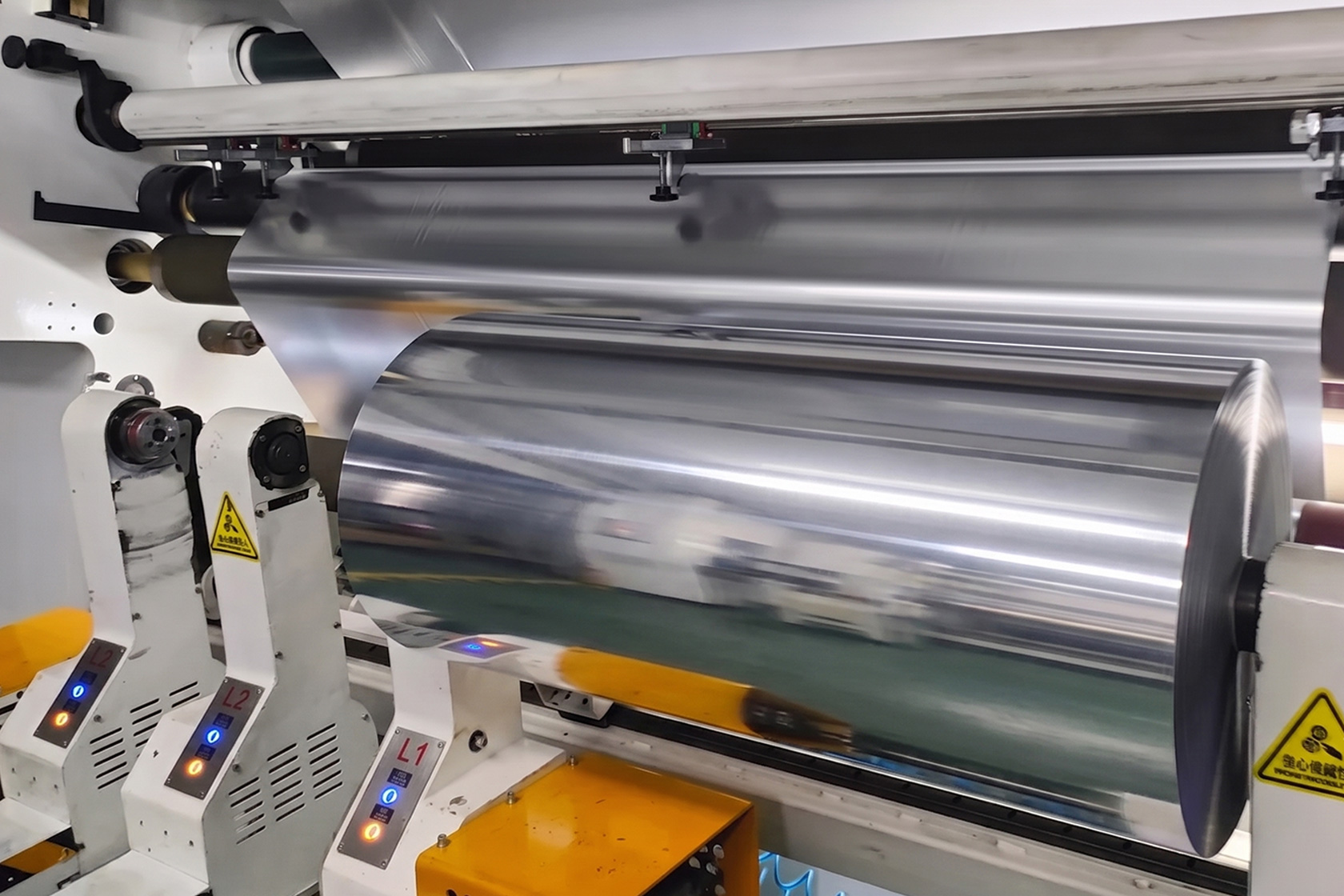
In the manufacturing process of in‑mould labels (IML), multi‑layer co‑extrusion is only the first step. The co‑extruded thick sheet or cast film often does not yet achieve ideal mechanical properties – insufficient stiffness, low strength, poor dimensional stability. Therefore, orientation stretching becomes a key step to enhance film performance. When stretching is combined with co‑extrusion, a more advanced composite process emerges – the co‑extrusion orientation composite process. This process can impart excellent mechanical and optical properties to the film while maintaining a multi‑layer functional structure. It is the core technology for producing high‑performance IML film materials such as BOPP, BOPET, and MDO PE+PP. This article systematically introduces the two main processes – co‑extrusion biaxial orientation and co‑extrusion uniaxial orientation – covering their principles, process flows, parameters, applications, advantages, and limitations.
1. Basic Principle of Co‑extrusion Orientation Process
Orientation stretching is carried out between the glass transition temperature (Tg) and the melting temperature (Tm) of the polymer. An external force is applied along one or two directions to orient the polymer chains in the stretching direction(s), followed by heat setting under tension to fix the oriented structure. After stretching, the film’s tensile strength, modulus, transparency, and barrier properties are significantly improved.
Depending on the stretching direction, co‑extrusion orientation is divided into biaxial orientation and uniaxial orientation.
2. Co‑extrusion Biaxial Orientation Process
Co‑extrusion biaxial orientation means that a multi‑layer co‑extruded thick sheet (cast sheet) is stretched simultaneously or sequentially in the machine direction (MD) and transverse direction (TD), orienting the molecular chains in both directions, followed by heat setting. The most typical products of this process are BOPP (biaxially oriented polypropylene) and BOPET (biaxially oriented polyethylene terephthalate) films.
2.1 Process Flow
A typical sequential biaxial orientation line consists of the following steps:
Multi‑layer co‑extrusion casting: Resins with different functions (e.g., surface layer – printing grade PP, core layer – filled PP, bottom layer – heat‑sealable PP) are co‑extruded through multiple extruders, extruded through a T‑die, and formed into a thick sheet (cast sheet) on a chill roll. The thickness is typically 0.5–2 mm.
Machine direction orientation (MDO): The cast sheet passes through two sets of rolls running at different speeds (slow roll → fast roll) to achieve longitudinal stretching. The stretch ratio is typically 4–6 times. The roll temperature is controlled above the Tg of PP (approx. 100–130°C).
Transverse direction orientation (TDO): The MD‑stretched film enters a tenter frame, where clips on both edges grip the film and gradually move outward to stretch it transversely. The stretch ratio is typically 8–10 times. The tenter frame has multiple temperature zones.
Heat setting: The film is heat‑treated at a temperature above the stretching temperature but below the melting point (approx. 150–160°C) to relieve internal stress and stabilise the oriented structure.
Cooling and winding: The film is cooled to room temperature in a cooling zone, then passed through a thickness gauge and corona treatment unit before winding.
2.2 Key Process Parameters
| Parameter | Typical Range | Impact |
|---|---|---|
| Cast sheet thickness | 0.5–2 mm | Affects final thickness distribution |
| MD stretch ratio | 4–6× | Affects MD strength and stiffness |
| TD stretch ratio | 8–10× | Affects TD strength and shrinkage |
| Stretching temperature | 100–150°C (depending on material) | Too high → breakage; too low → film tear |
| Heat setting temperature | 150–160°C | Affects thermal shrinkage and dimensional stability |
| Corona treatment | 40–42 dyn/cm | Increases surface tension for printability |
2.3 Application in IML
Co‑extrusion biaxially oriented films are mainly used as the printing surface layer of IML labels:
BOPP film: High transparency, high gloss, high stiffness, excellent printability. Widely used for IML labels on PP containers (e.g., yogurt cups, ice cream tubs). Because its shrinkage rate matches that of PP containers, no orange peel effect occurs. Co‑extrusion BOPP can also integrate multiple functions in one step, e.g., layer A (printing) / layer B (UV barrier) / layer C (heat seal).
BOPET film: Higher heat resistance (continuous use up to 150°C), higher mechanical strength, and excellent transparency. Suitable for IML labels requiring high heat resistance or hot‑fill applications (e.g., PET trays, microwaveable containers). BOPET is often combined with PE via dry lamination, but co‑extrusion biaxially oriented functional PET can also be used as a surface layer.
2.4 Advantages and Limitations
| Advantages | Limitations |
|---|---|
| High mechanical strength and stiffness | Very high equipment investment (tens to hundreds of millions CNY) |
| Excellent optical properties (high transparency, high gloss) | Complex process, high energy consumption |
| Good dimensional stability, precise print registration | Suitable only for large‑scale continuous production; long changeover time |
| Enables multi‑layer functional integration | Not suitable for ultra‑thin or special structures (e.g., MDO) |
| High productivity (300–500 m/min) | Mainly applicable to crystallisable polymers like PP, PET |
3. Co‑extrusion Uniaxial Orientation (MDO) Process
MDO (Machine Direction Orientation) refers to stretching only in the machine direction, with no forced stretching (only minimal natural contraction) in the transverse direction. This process is commonly used to produce PE+PP composite IML films to balance printing stiffness and curved‑surface conformability.
3.1 Process Flow
MDO can be in‑line with the co‑extrusion line, forming an integrated co‑extrusion → stretching → annealing → winding line; it can also be done off‑line. A typical MDO process consists of:
Preheating: The unstretched co‑extruded film (typically a three‑layer PE+PP structure) enters a set of preheating rolls and is gradually heated to the stretching temperature (PE: about 80–100°C, PP: about 100–120°C).
Stretching: The film passes between two sets of rolls running at different speeds (the speed ratio between fast and slow rolls is the stretch ratio) and is stretched longitudinally. The stretch ratio is typically 3–8 times. During stretching, molecular chains orient in the MD, crystallinity increases, and stiffness is significantly enhanced.
Annealing (heat setting) : The stretched film is annealed at a temperature slightly lower than the stretching temperature to relieve some internal stress and control thermal shrinkage.
Cooling: The film is cooled to room temperature on cooling rolls to fix the oriented structure.
Winding: Corona treatment can be added if needed, followed by winding.
3.2 Key Differences from Biaxial Orientation
| Feature | Biaxial Orientation | MDO Uniaxial Orientation |
|---|---|---|
| Stretching directions | MD + TD | MD only |
| Transverse properties | Strengthened, high stiffness | Not strengthened, retains flexibility |
| Typical materials | PP, PET | PE, PP/PE blends |
| Application | Rigid surface layers | Composite labels requiring curved conformability |
| Equipment complexity | High (needs tenter frame) | Lower (only multiple roll stands) |
3.3 Application in IML
The most classic IML application of the MDO process is PE+PP composite film (i.e., PP/PE co‑extruded uniaxially oriented film). Its typical structure is: surface layer (PP or BOPP, providing printability) + core layer (PE+PP blend, adjusting stiffness) + bottom layer (PE, providing heat sealability to PE containers). After MDO:
MD direction: Film stiffness is greatly improved. Die‑cut labels feed smoothly during high‑speed automatic labeling – no drooping, no curling.
CD direction: Because no forced stretching is applied, the film retains the flexibility of PE. It can deform and conform to curved or irregular PE containers without causing orange peel effect or edge lifting.
In addition, the MDO process can also be used for uniaxially oriented single PE films to increase stiffness while maintaining recyclability, suitable for low‑to‑mid‑end PE container IML labels where printing requirements are not high.
3.4 Key Process Parameters
| Parameter | Typical Range | Impact |
|---|---|---|
| Preheating temperature | 80–120°C (depending on material) | Below Tg: cannot stretch; too high: sticking |
| Stretch ratio | 3–8× | Higher ratio → greater MD stiffness, but also higher TD shrinkage |
| Stretching temperature | 90–110°C | Affects orientation efficiency and film uniformity |
| Annealing temperature | 80–100°C | Controls thermal shrinkage (target <3% @120°C) |
| Line speed | 50–200 m/min | In‑line MDO must match extrusion speed |
3.5 Advantages and Limitations
| Advantages | Limitations |
|---|---|
| Lower equipment investment (can be off‑line retrofit) | CD strength not improved, tear resistance moderate |
| Retains CD flexibility – perfect for curved surfaces | Cannot achieve the high transparency and gloss of biaxial orientation |
| Can be integrated in‑line for one‑step production | High stretch ratios cause excessive TD shrinkage, affecting dimensions |
| Suitable for PE‑based materials, compatible with mainstream containers | Difficult to control for very thin films (<30 μm) |
4. Advantages of Integrated Co‑extrusion Orientation Lines
Modern IML film production lines increasingly adopt integrated co‑extrusion → orientation → post‑treatment designs. For example:
BOPP line: From feeding, co‑extrusion, casting, MDO, TDO, heat setting, corona treatment to winding – fully continuous and automated, with thickness tolerance controlled within ±1%.
In‑line MDO: The melt from the co‑extruder is fed directly into the MDO unit, achieving “extrude and stretch” – eliminating intermediate winding and reheating, saving energy and improving efficiency.
Integrated line advantages:
Energy saving: Utilises residual heat from co‑extrusion, no need to reheat the film to stretching temperature.
Improved product quality: Avoids dust, wrinkles, or thickness variation introduced during intermediate steps.
Lower production cost: Reduces floor space and manual handling.
Easy process traceability: Real‑time monitoring of all process data.
5. Conclusion
The co‑extrusion orientation composite process is the bridge connecting “co‑extrusion” and “high‑performance film”. Among them:
Co‑extrusion biaxial orientation (BOPP, BOPET) excels in high stiffness, high transparency, and dimensional stability. It is the preferred solution for IML printing surface layers, especially for PP and PET containers.
Co‑extrusion uniaxial orientation (MDO) , with its unique “stiff in MD, flexible in CD” characteristic, perfectly resolves the conflict between high‑speed labeling and curved‑surface conformability for PE+PP composite labels, and has become the mainstream process route for PE container IML labels.
The two processes have different focuses and are not interchangeable. Label manufacturers should choose the appropriate co‑extrusion orientation technology based on target container material, printing requirements, labeling speed, and cost budget. As equipment precision continues to improve and material formulations are optimised, the co‑extrusion orientation composite process will play an increasingly important role in high‑performance, lightweight, and recyclable IML label designs.
Contact Us
Name*
Telephone*
Region*
Please fill in your request*


