
Multi-Layer Plastic Drawer Cabinets with Frequent Pulling and Friction – Why Don't IML Labels Wear Out?
Multi-Layer Plastic Drawer Cabinets with Frequent Pulling and Friction – Why Don't IML Labels Wear Out?
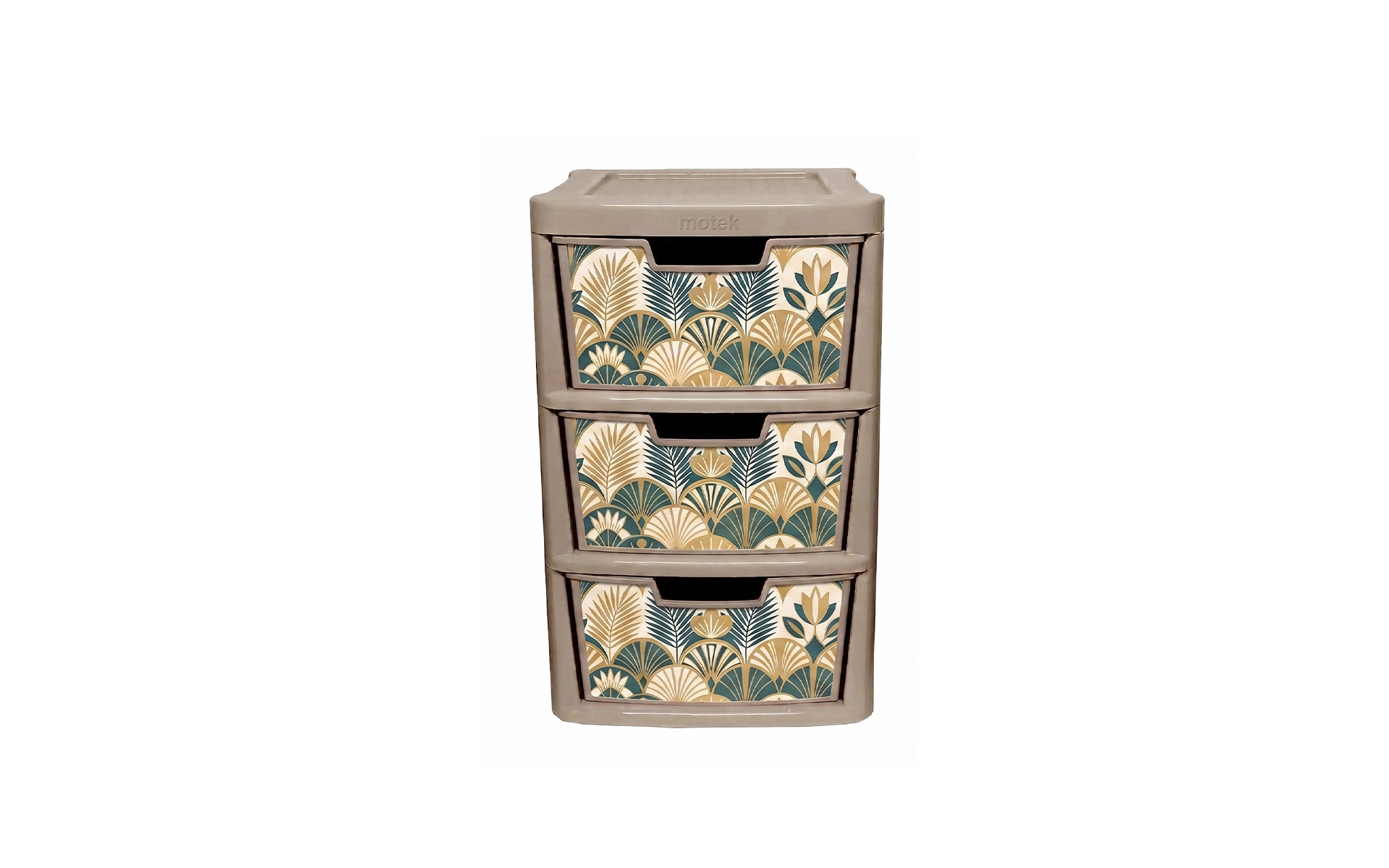
The drawers in home storage cabinets are pushed and pulled every day. The classification labels on cabinet doors, the storage text on drawers, the brand logo on handles – every pull is a friction, every item retrieval is a scratch.
Under this level of use, ordinary sticker labels will wear white, curl at the edges, and become blurry within a short time. But IML (In-Mold Labeling) labels remain crisp and clear, with flat edges, even after years of use.
Why? The answer lies not on the surface, but in the structure.
📖 Table of Contents
1. IML's "Embedded Molding": Labels Are "Grown In," Not "Stuck On"
To understand why IML labels don't wear out, you first need to understand the fundamental difference between IML and ordinary stickers.
Ordinary pressure-sensitive stickers are "stuck on" – the label has adhesive on the back and relies on glue to attach to the drawer cabinet surface. The label is a separate item, distinct from the drawer cabinet – they are two separate things. Every pull and friction acts directly on the label surface. Over time, the adhesive layer ages, edges curl, and text wears – an inevitable outcome.
IML in-mold labels are completely different. The core IML process is: the pattern is first printed on a film, the film is placed into the injection mold, and then molten plastic is injected. Under high temperature and pressure, the film fuses with the plastic. IML labels are "grown out" together with the drawer cabinet during injection molding – they are not "stuck on."
During the molding process, the label becomes one with the substrate material, embedded in the surface of the plastic part. The label is not "stuck on" – it is embedded inside the plastic board material.
2. Three-Layer "Sandwich" Structure: Hiding the Text Inside
The reason IML labels never wear out lies in their three-layer "sandwich" structure:
┌────────────────────────────────────────────────────────────────┐
│  Layer 1: Hardened transparent film (PET/PC/PMMA)              │  ← Directly contacts the outside; wear-resistant
├────────────────────────────────────────────────────────────────┤
│  Layer 2: Printed ink layer (LOGO, text, patterns)             │  ← Sandwiched in the middle; never contacts the outside
├────────────────────────────────────────────────────────────────┤
│  Layer 3: Plastic substrate (fused with the drawer cabinet)    │  ← Fuses during molding; never peels off
└────────────────────────────────────────────────────────────────┘
Layer 1: Hardened transparent film – The outermost layer is a hardened transparent film (commonly PET, PC, or PMMA), with surface hardness reaching 3H. It directly bears all friction and scratches – like a tempered glass screen protector on a phone. The film gets worn, but the text remains intact.
Layer 2: Printed ink layer – The LOGO, text, and classification labels are all printed on the inside of the film. The ink is sandwiched between the film and the plastic. When drawers are repeatedly pulled and items are rubbed back and forth, the hardened film takes the friction first – not the ink. Since the ink never directly contacts the outside world, it can never be worn off.
Layer 3: Plastic substrate – During injection molding, the film bonds tightly with the molten plastic, fusing into one. The label is not "stuck on," so there is no such thing as "curling" or "peeling."
The dual-layer composite structure further "seals" the printed ink between two layers of film, completely preventing any contact between the ink and the outside environment. Even if the label experiences friction during transport or use, the printing remains completely undamaged.
3. Comparison with Pressure-Sensitive Stickers: Why One Withstands Friction and the Other Doesn't
| Comparison Dimension | IML In-Mold Label | Ordinary Pressure-Sensitive Sticker |
|---|---|---|
| Label-cabinet relationship | Fused during injection molding, embedded inside | Adhered to the surface with adhesive |
| Ink position | Sandwiched between film and plastic | Exposed on the surface |
| During pull and friction | Friction hits the hardened film, not the ink | Direct wear on ink and face paper |
| Curling | ❌ Never curls | ✅ Inevitably curls |
| Text wear | ❌ Never wears | ✅ Inevitably wears and turns white |
| Service life | As long as the drawer cabinet | Months to a year or two |
Why can't pressure-sensitive stickers withstand the wear?
The text on pressure-sensitive stickers is printed directly on the surface – every pull and friction wears the text. The adhesive layer ages and fails under repeated friction and temperature/humidity changes, causing the label edges to curl. Once the edges curl, each pull "lifts" the label further, eventually peeling it off entirely.
Why can IML withstand the wear?
IML labels are molded as one piece with the drawer cabinet – there is no "edge" to curl. The ink is protected inside the film, so the text can never be worn. The labels themselves are waterproof, oil-proof, mold-proof, moisture-proof, abrasion-resistant, and acid/alkali-resistant. No matter how much pulling and friction, the text inside remains unharmed.
4. Is There Data to Support IML Label Durability?
Yes. IML label durability is supported by multiple industry standards:
Label lasts as long as the product
IML labels are molded directly into the plastic product. This integration improves resistance to wear, moisture, and extreme temperatures, making the label more durable and long-lasting.
Surface hardness 3H
IML surfaces form a hard shielding layer with hardness reaching 3H. They can withstand frequent friction from media of ordinary hardness on the surface without scratching or fading.
Withstands repeated pulling without damage
Products with IML labels can withstand stacking, transport, and repeated handling without label damage. This aligns perfectly with the daily use scenario of multi-layer drawer cabinets – daily pulling and item friction – IML labels remain intact.
Maintains bright colors long-term
Because the ink is sandwiched in the middle, IML labels can maintain bright colors for a long time without fading. The patterns do not wear, peel, or come off.
5. FAQ
Under normal use conditions, IML label text and patterns will never wear off. Because the ink is sandwiched between the hardened transparent film and the plastic substrate, it never directly contacts the outside. Even with repeated drawer pulling and item friction, the hardened film takes the impact – not the ink.
No. IML labels fuse with the drawer cabinet during injection molding, with label edges completely encased in plastic, making curling impossible.
On frequently pulled drawer cabinets, ordinary pressure-sensitive stickers will start to wear white and curl within 3-6 months. Once the edges become damp or worn and the adhesive layer fails, complete peeling is highly likely.
IML surfaces have a hardened transparent film with hardness reaching 3H. Frequent friction from media of ordinary hardness will not scratch them. Daily pulling and item retrieval are well within the tolerance range.
Very suitable. Storage classification labels need to remain clear and legible long-term. IML labels have text that never wears and never fades – making them the ideal choice for storage classification labels.
Contact Us
Name*
Telephone*
Region*
Please fill in your request*


