
The Next Frontier of IML Packaging – The Intersection of Smart Labels and the Circular Economy
The Next Frontier of IML Packaging – The Intersection of Smart Labels and the Circular Economy
The future of cheese box packaging is quietly being rewritten.
In the past, the mission of packaging was simple: protect the product, showcase the brand, and convey information. But today, consumers want to know "where this cheese came from," brands want to know "where my packaging went," and regulators require that "packaging must be recyclable." These new demands are pushing packaging in a completely new direction.
And In-Mold Labeling (IML) technology happens to stand at the crossroads of this direction.
Table of Contents
1. Smart Packaging: When IML Labels Have a "Brain"
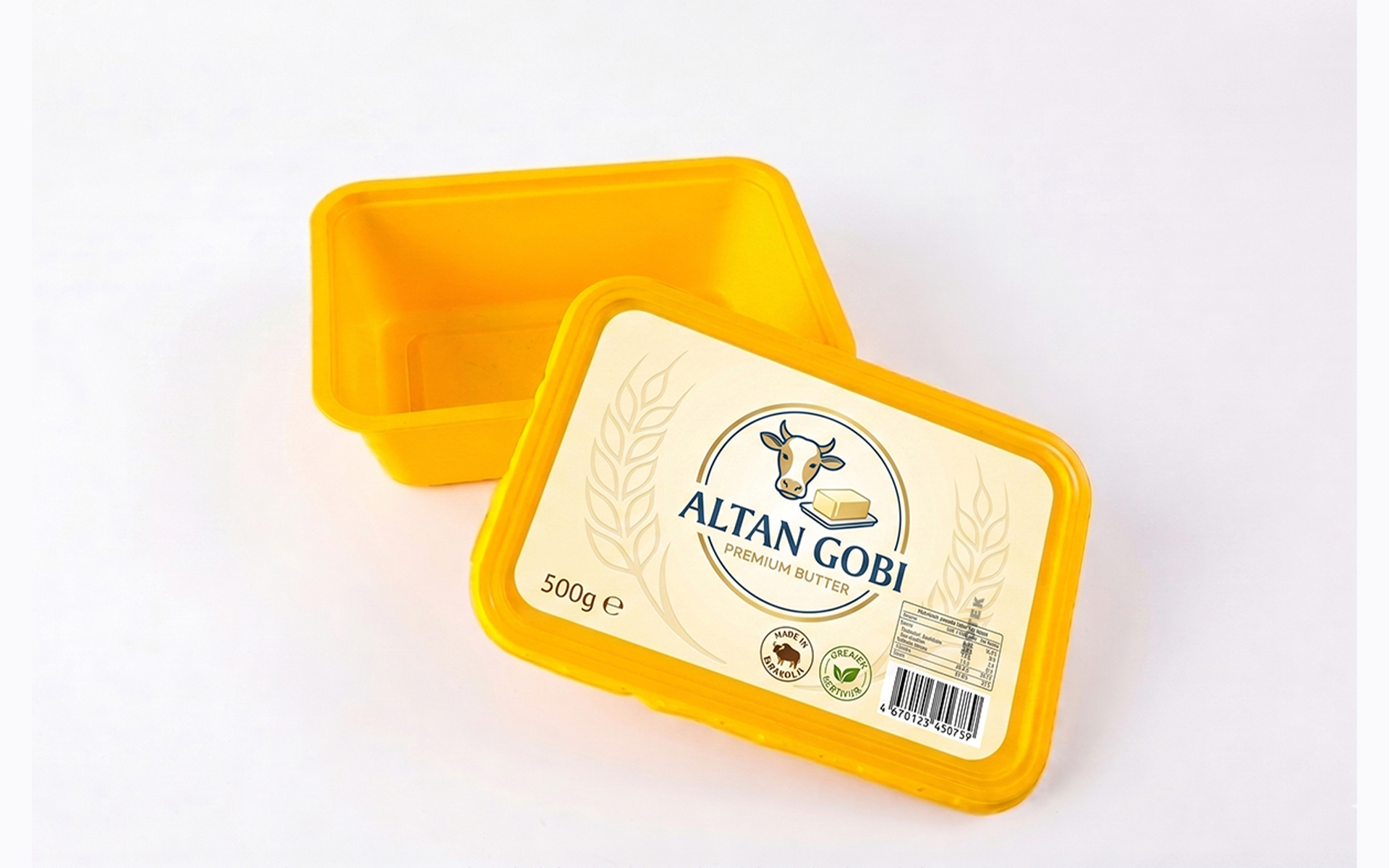
The mission of traditional IML labels is to "look good" – beautiful graphics, vibrant colors, never peeling. But the new generation of IML labels is doing something even cooler: making packaging "think."
1.1 RFID Embedded in IML: Packaging Gets a "Digital ID"
In July 2025, global materials science giant Avery Dennison officially launched its RFID smart in-mold label (IML) product portfolio. This solution embeds RFID chips directly inside IML labels, fusing them with the plastic product during the injection molding process.
This means that from the moment a cheese box is born, it has a "digital ID."
Avery Dennison introduced three RFID IML solutions for different scenarios:
| Product Model | Application Scenario | Key Features |
|---|---|---|
| AD Anchor U9 IML | General industrial, supply chain, logistics | Tracks assets such as plastic pallets, transport boxes, and waste containers |
| AD Line U9XE IML | Industrial container tracking | Thinner label structure, suitable for containers and waste management systems |
| AD Spiral U9 IML | Consumer-facing reuse systems | Reusable cups and plates for hospitality, catering, and events; wash-resistant; supports cycle counting; EU food contact certified |
1.2 Three Core Values of RFID IML
First, full lifecycle tracking. Each RFID‑embedded IML label has a digital twin, enabling end-to-end supply chain transparency. From factory to warehouse, from shelf to recycling – the "whereabouts" of every cheese box can be clearly traced.
Second, high durability. Traditional RFID labels are stuck on the surface and are prone to falling off or being damaged. IML, however, embeds the RFID chip inside the plastic product, able to withstand the high temperatures and pressures of the injection molding process, as well as washing, chemical cleaners, and UV exposure. Inotec's RFID in-mold labels can even perform batch scans of up to 1,000 containers from a distance of 15 meters, without requiring line‑of‑sight.
Third, support for the circular economy. Avery Dennison explicitly stated that the RFID IML product portfolio "helps reduce waste and drive the development of more sustainable closed‑loop systems." By precisely tracking reusable transport containers (RTIs), brands can reduce asset loss, optimise inventory management, and achieve more accurate billing.
1.3 Real‑World Case Study: EPT's Smart Pallets
European Plant Tray company EPT partnered with Inotec to embed RFID in‑mold labels into reusable plant trays. In Europe, over 95% of trays are still single‑use, generating approximately 40,000 tonnes of plastic waste annually. EPT's new solution gives each tray an RFID "ID card," enabling real‑time tracking, inventory management, and cross‑border reuse. The labels are flush with the tray surface, waterproof, UV‑resistant, and resistant to chemical cleaners and mechanical impact – the "indestructible" property of RFID IML in action.
2. Sustainability: When IML Films Can "Return to Nature"
If RFID makes IML "smart," then sustainable materials make IML "green." These two tracks are accelerating toward each other.
2.1 Detachable IML Technology: Recycling with "Zero Burden"
Traditional IML labels fuse with the container – while this is an advantage for durability, it presents a challenge during recycling: the label and container are difficult to separate, potentially affecting the purity of the recycled material.
NextCycle IML™ technology solves this problem. This revolutionary IML technology allows the label to automatically detach from the container during the mechanical recycling process, allowing pure PP flakes to move to the extrusion stage, maximising the value of recycled polypropylene (rPP).
In October 2025, NextCycle IML™ for HDPE bottles officially received RecyClass certification. This certification proves that IML technology can make recycling simpler without compromising design or performance. The JOZO brand has already upgraded its salt shaker packaging from standard IML to NextCycle IML™, achieving a closed loop of "white rPP to white rPP."
2.2 Industrially Compostable IML: When Packaging Returns to the Soil
For products that cannot enter traditional recycling streams, IML offers another green path – industrial composting.
MCC Global IML's SelfEco Stadium Cup won the "Sustainable Use of In‑Mold Decorating" award at the 2025 IMDA Awards. This cup combines IML technology, industrially compostable plastic, and PLA resin labels to create a durable, attractive, and fully compostable solution.
To ensure that both the cup and the label are 100% industrially compostable, every element – including inks and coatings – was carefully selected. For regions with well‑developed composting infrastructure, this offers brands a pathway away from fossil‑based resins.
2.3 Bio‑Based and Recyclable Materials
On the materials front, greener choices are becoming mainstream. Companies such as UPM Raflatac and Avery Dennison are developing IML solutions using bio‑based resins and recyclable polypropylene. SABIC has also launched an IML solution based on certified renewable PP resin, where both the label and the injection‑moulded part use renewable PP, and the finished product can be recycled in existing rigid PP recycling streams.
Taghleef Industries launched a detachable IML film in September 2025, specifically designed to improve the recyclability of rigid PP packaging. These innovations show that IML is shifting from a "durable but hard‑to‑recycle" image to a "durable and easy‑to‑recycle" sustainable packaging solution.
3. The Intersection: A Packaging Future That Is Both "Smart" and "Green"
Smart and sustainable are not parallel lines – they are accelerating toward each other on the IML platform.
3.1 RFID + Recyclable = Traceable Circular Economy
When RFID IML labels meet recyclable IML materials, cheese box packaging simultaneously gains a "digital brain" and "green genes."
Brands can track where every cheese box goes – where it was sold, whether it was recycled, and which recycling stream it entered. Recyclers can optimise sorting processes using RFID data. Regulators can verify that packaging has genuinely entered the circular system. Consumers can scan a code and know "where this box came from and where it went."
This is exactly what Avery Dennison means by "supporting longer product life and full visibility, helping to reduce waste and drive more sustainable closed‑loop systems."
3.2 Continued Market Growth
The growth of the IML market confirms this trend. The global IML market was valued at $2.6 billion in 2023 and is projected to reach $3.67 billion by 2032, with a compound annual growth rate of 3.9%. The core driver of this growth is the demand for sustainable packaging solutions – consumers and businesses are increasingly favouring solutions that are recyclable and reduce waste.
3.3 From "Packaging" to "Platform"
The future of IML packaging is no longer "a box with a label on it." It is becoming a smart platform that integrates decoration, protection, tracking, and recycling:
- Decoration: photo‑quality high‑definition printing, 360° full coverage – IML's "basic skill"
- Protection: waterproof, moisture‑proof, cold‑resistant, scratch‑resistant – IML's "core strength"
- Tracking: RFID embedding, full lifecycle traceability, digital management – IML's "new capability"
- Recycling: detachable labels, compostable materials, closed‑loop recycling – IML's "ultimate mission"
4. FAQ
Ordinary RFID labels are stuck on the surface and are prone to falling off or being damaged. RFID IML labels are embedded inside the plastic product during injection molding, fusing with the container. They can withstand the high temperatures and pressures of molding, as well as washing, chemical cleaners, and UV exposure, with a service life far exceeding that of surface‑applied labels.
Yes. Avery Dennison's AD Spiral U9 IML has passed EU food contact safety certification, complying with the Plastics Regulation (EU 10/2011) and Regulation (EC) 1935/2004.
NextCycle IML labels automatically detach from the container during the shredding and air‑separation stage of mechanical recycling. Label fragments are diverted to the flexible plastics stream, while pure PP flakes move to the extrusion stage. JOZO's application has demonstrated that white containers yield white rPP, and transparent containers yield transparent rPP.
Recyclable IML is suitable for regions with PP recycling infrastructure – the label and container are of the same material and can be processed in existing recycling streams. Industrially compostable IML is suitable for regions with industrial composting facilities – the entire package (including label, inks, and coatings) can degrade into compost under industrial composting conditions. The two are suited for different end‑of‑life scenarios.
RFID IML has a higher upfront cost than standard IML. However, for scenarios requiring asset tracking, inventory management, and loss prevention – such as reusable transport containers and catering returnable cups and plates – the operational efficiency gains and reduced asset loss from RFID often quickly offset the initial investment.
Beyond RFID and sustainable materials, IML is also exploring oxygen‑barrier IML (to extend food freshness), high‑temperature retort IML (for products requiring sterilisation), and more. Digital printing IML is also advancing rapidly, supporting small‑batch, high‑variety customisation.
Contact Us
Name*
Telephone*
Region*
Please fill in your request*


