
The "Three-Layer Structure" of In-Mold Labels – Printing Layer, Support Layer, and Adhesive Layer
The "Three-Layer Structure" of In-Mold Labels – Printing Layer, Support Layer, and Adhesive Layer
When you pick up a plastic package with an in-mold label (IML), the colorful patterns appear sharp and clear, yet you cannot feel the label's presence at all when you touch the surface. Behind this "seamless" visual effect lies the sophisticated three-layer structure of the in-mold label.
An in-mold label is not a simple printed film. It is a composite material system composed of a printing layer, a middle support layer, and an adhesive layer. Each of these three layers has its own specific role, working together to deliver the outstanding performance of IML labels in terms of aesthetics, durability, and environmental friendliness.
📖 Table of Contents
- 1. Why Does an In-Mold Label Have a "Three-Layer Structure"?
- 2. Printing Layer – The "Canvas" That Carries Colorful Graphics
- 3. Middle Support Layer – The "Backbone" Under High Temperature and Pressure
- 4. Adhesive Layer – The Bridge That Makes the Label and Container "Fuse as One"
- 5. Synergy of the Three Layers
- 6. FAQ
1. Why Does an In-Mold Label Have a "Three-Layer Structure"?
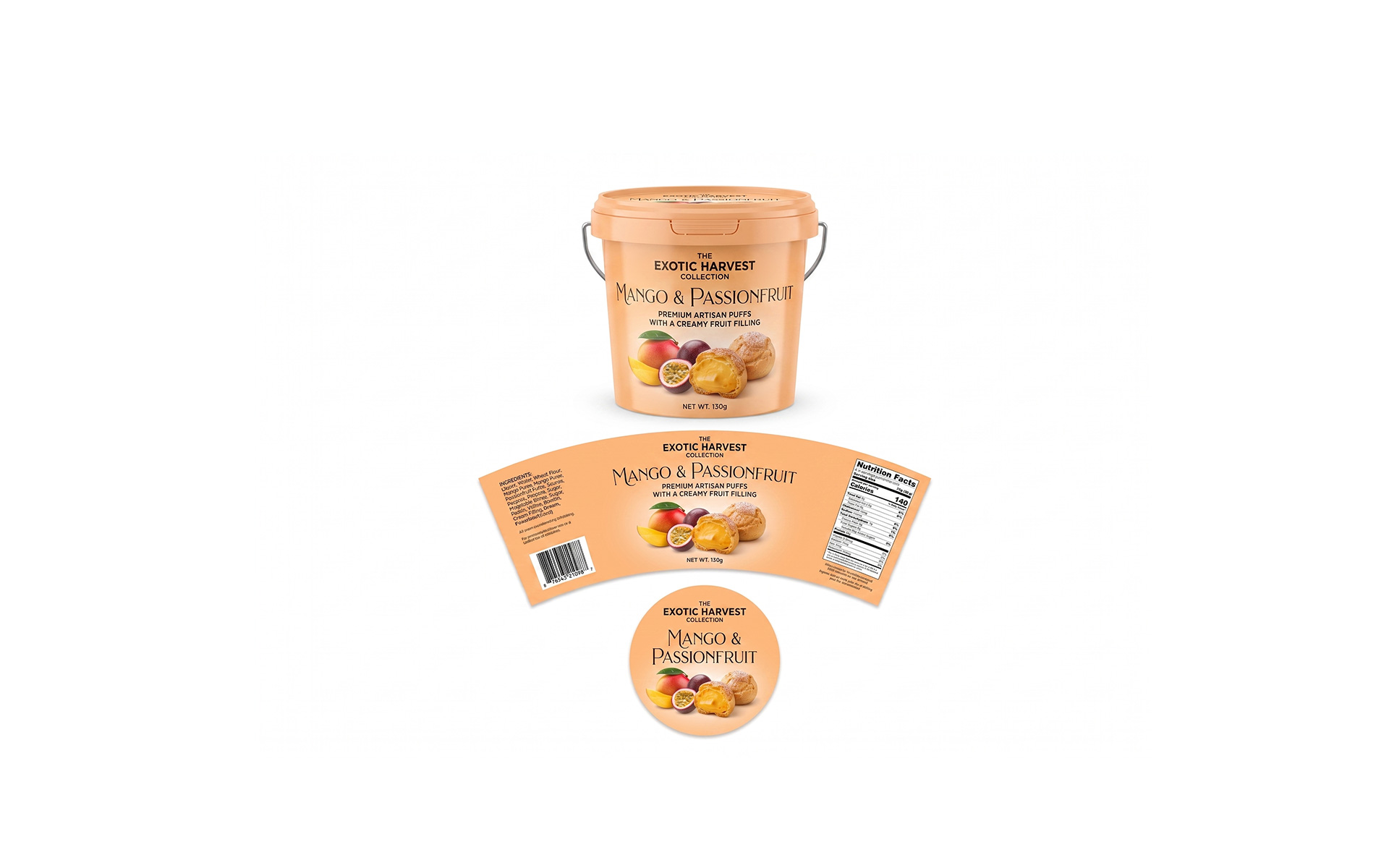
In-mold labels must fuse as one with the molten plastic during the injection molding process. This requires the label material to simultaneously possess three seemingly contradictory characteristics:
- It must be printable – capable of carrying fine, colorful graphics
- It must maintain stiffness – able to withstand the high temperature and pressure of the printing press without deforming
- It must be bondable – able to firmly bond with the plastic at injection molding temperatures
No single material can satisfy all three requirements at once. Therefore, in-mold labels adopt a "three-layer composite" design: each layer is responsible for one core function, and the three layers work together to achieve the final result of "integral molding of label and container."
2. Printing Layer – The "Canvas" That Carries Colorful Graphics
The printing layer is the outermost layer of the in-mold label. Its primary function is to carry the ink and form the corresponding color graphics. The brand logo, product information, and decorative patterns you see are all printed on this layer.
2.1 Material Selection for the Printing Layer
Printing layer materials generally fall into three categories: PE, BOPP, and PE+PP composites.
| Material Type | Characteristics | Suitable Applications |
|---|---|---|
| PE (Polyethylene) | Same material as most plastic containers; beneficial for recycling | Containers made of PE |
| BOPP (Biaxially Oriented Polypropylene) | Special coating on the surface; excellent printability | Applications requiring high-precision printing |
| PE+PP Composite | Combines the properties of both materials | Products with comprehensive performance requirements |
Why are film materials preferred?
In-mold label materials fall into two categories: paper and film. Although paper does not have static interference issues, it deforms easily when exposed to moisture, has low surface smoothness, and is not suitable for high-quality color printing.
Film materials, on the other hand, offer excellent stretchability – materials like Primax and FasClear can stretch and deform to conform to the container's shape, without wrinkling. At the same time, film-printed labels offer vivid colors, strong three-dimensionality, and significantly better color performance than paper-based materials.
2.2 The Environmental Logic of Material Matching
The material selection for the printing layer follows a core principle: match the container material.
Since most plastic containers currently use PE or PP materials, choosing the same material for the in-mold label is more conducive to recycling. The label and the bottle can be melted and recycled together, without the need for the additional removal step required for traditional pressure-sensitive labels.
3. Middle Support Layer – The "Backbone" Under High Temperature and Pressure
The middle support layer (also called the intermediate layer) is the "skeleton" of the in-mold label. Its primary function is to support the printing layer and provide sufficient stiffness to the material.
3.1 Why Is the Support Layer Indispensable?
In-mold labels must withstand multiple challenges during the printing and injection molding processes:
- Printing stage: The label runs at high speed through the printing press, subject to certain tension and pressure
- Injection molding stage: After being placed in the mold, the label must withstand the high temperature (200-280°C) and high pressure of the molten plastic
Without the middle support layer, the printing layer film would soften and deform under high temperature and pressure, causing pattern distortion and registration errors. The role of the middle support layer is to keep the label in its original shape under the high temperature and pressure of the printing press, ensuring registration accuracy.
3.2 Material Properties of the Support Layer
The middle support layer typically uses a film material compatible with the printing layer, requiring:
- Sufficient stiffness: Prevents the label from curling and deforming during processing and injection molding
- Good transparency: Does not affect the color presentation of the printing layer
- High-temperature resistance: Maintains shape stability at injection molding temperatures
In the IML industry, commonly used support layer materials include stretchable films such as Primax and FasClear. These materials provide sufficient support while also stretching and contracting to conform to the container's shape, ensuring the label perfectly adheres to the container.
4. Adhesive Layer – The Bridge That Makes the Label and Container "Fuse as One"
The adhesive layer is the "unsung hero" of the in-mold label – it is responsible for firmly bonding the label to the container during the injection molding process.
4.1 How the Adhesive Layer Works
The adhesive layer is located on the bottommost layer of the label (the side that contacts the mold wall) and is coated with a hot-melt adhesive.
During the injection molding process:
- The robot places the label into the mold, with the printed side facing inward and the adhesive side facing outward
- Molten plastic (200-280°C) is injected into the mold
- The residual heat of the plastic melts the hot-melt adhesive on the back of the label
- The label and the molten plastic bond tightly and fuse as one under high temperature and pressure
After the product is ejected, the label and the container are on the same plane, and the colorful graphics appear as if printed directly onto the container surface.
4.2 Two Surface Structures of the Adhesive Layer
The adhesive layer comes in two surface structures:
| Surface Structure | Characteristics | Suitable Applications |
|---|---|---|
| Smooth (non-embossed) | Direct contact with the preform; large contact area | Small-area labels |
| Embossed (mesh pattern) | Embossed pattern on the surface; allows air to escape | Large-area labels, preventing air bubbles |
The adhesive layer also has good slip properties, ensuring that labels can be easily separated during robotic handling and positioning in the mold without sticking to each other.
5. Synergy of the Three Layers
The three-layer structure of an in-mold label is not a simple stack – it is a synergistic system:
- The printing layer delivers the aesthetic visual effect
- The middle support layer ensures dimensional stability during processing and injection molding
- The adhesive layer completes the "last mile" of bonding during injection molding
More importantly, all three layers are made of the same or compatible materials. This allows the in-mold label, once fused with the container, to be recycled as a single unit.
Key Parameter Overview
| Parameter | Typical Value | Description |
|---|---|---|
| Total label thickness | 65-80μm | Typical thickness range for IML labels |
| Surface hardness | 3H | Hardness of the surface wear-resistant layer |
| Anti-static performance | Required | Prevents "double-pick" issues during robotic label handling |
6. FAQ
Because in-mold labels must fuse with the molten plastic during injection molding. No single material can simultaneously satisfy the three requirements of "printable, stiff, and bondable." The three-layer structure allows each layer to focus on one core function – the printing layer for graphics, the support layer for stiffness, and the adhesive layer for bonding.
Paper deforms easily when exposed to moisture, has low surface smoothness, and is unsuitable for high-quality color printing. Film materials offer excellent stretchability, conform to container shapes without wrinkling, and deliver more vivid, three-dimensional color effects.
BOPP (Biaxially Oriented Polypropylene) has a special coating on its surface for good printability. However, if the container is PE and the label is BOPP, the different shrinkage rates can cause an "orange peel effect" on the label surface. Therefore, the label material should match the container material.
65-80μm is the typical thickness range for IML labels. This thickness provides sufficient stiffness to prevent deformation during processing and injection molding, while not being so thick as to affect the injection molding results.
Labels generate static electricity from friction during printing and transportation. If static builds up, automatic robots may experience "double-pick" or "multi-pick" issues – picking up multiple labels at once, wasting both labels and products. Therefore, in-mold labels must have anti-static properties.
The adhesive layer is coated with a hot-melt adhesive. During injection molding, the heat from the molten plastic (200-280°C) melts this adhesive, allowing the label and the molten plastic to bond as one inside the mold.
Contact Us
Name*
Telephone*
Region*
Please fill in your request*


