
Digital Printing in In-Mold Labeling: The Future for Personalization, Short Runs, and Zero Inventory
Digital Printing in In-Mold Labeling: The Future for Personalization, Short Runs, and Zero Inventory
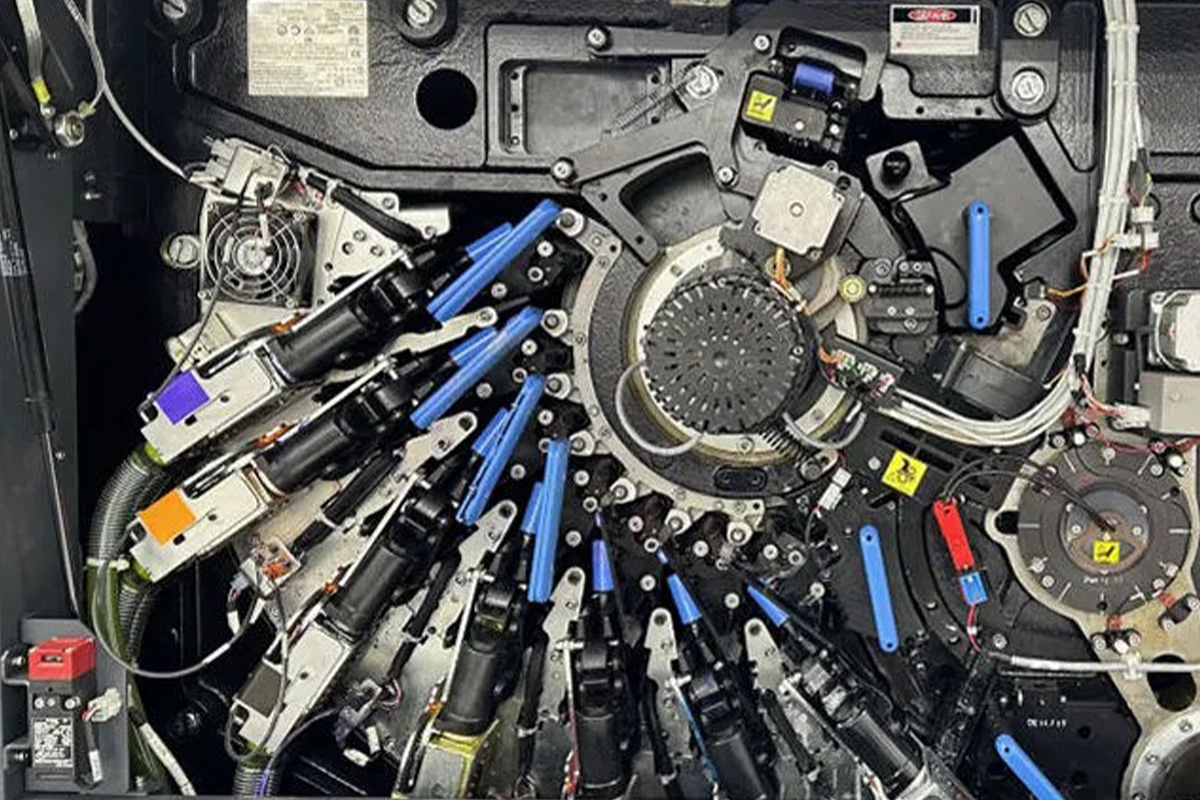
Among in-mold labeling (IML) printing methods, digital printing is the youngest and fastest‑growing technology. It bypasses traditional plate‑making steps, printing digital files directly onto IML film – achieving no plates, print from one copy, variable data, and rapid turnaround. Although digital printing still accounts for a small share of total IML volume, it is demonstrating irreplaceable value in personalized packaging, short‑run prototyping, customized marketing, and fast response to market changes.
This article explains the technical principles of digital printing and analyzes its process characteristics, core advantages, limitations, applications, and comparisons with conventional printing methods.
1. Technical Principle of Digital Printing
Digital printing means directly transferring a digital image file to a printing device without any static plate (gravure cylinder, flexo plate, offset PS plate, screen). It uses inkjet or electrophotography (toner‑based) to form images on the substrate.
Inkjet digital printing:
Principle: Tiny ink droplets are ejected from nozzles onto the film, forming images on‑demand.
Types: Aqueous inkjet, UV inkjet, solvent inkjet. For IML, UV inkjet is the main choice (instant curing, good adhesion, heat‑resistant).
Resolution: up to 1200×1200 dpi or higher, comparable to offset.
Electrophotography (toner‑based):
Principle: Charged photoreceptor drum → laser exposure creates latent image → charged toner attracted → transferred to film → heat/pressure fusing.
Characteristics: Toner layer is thicker (approx. 5-10 μm), good scratch resistance, but color saturation slightly lower than inkjet.
For IML, UV inkjet is currently the mainstream because it requires no heat drying (avoiding film distortion), cures instantly, and the ink’s heat resistance meets in‑mold requirements.
2. Process Characteristics of Digital Printing for IML
2.1 No Plates, Zero Setup Time
Digital printing prints directly from design files – no plates, cylinders, or screens. Changing artwork is just a file change, with zero plate cost or lead time. This makes print‑from‑one a reality.
2.2 Variable Data Printing (VDP)
A core advantage: every label can have different content – serial numbers, QR codes, variable text, personalized images, regional information. Essential for anti‑counterfeiting, traceability, promotions, and customized packaging.
2.3 Excellent Short‑Run Economics
For hundreds to a few thousand IML labels, digital printing’s unit cost is far lower than conventional printing (no plate cost to amortize). Ideal for proofing, trial production, limited editions, crowdfunding products, etc.
2.4 Wide Substrate Range
Modern digital presses can print directly on many films: BOPP, PE, PP, PET. Some films require pretreatment (corona or primer) to ensure ink adhesion.
2.5 Typically Offline
Digital printing is usually offline sheet‑fed or roll‑to‑roll. Roll‑to‑roll digital presses can integrate inline adhesive coating and die‑cutting, but many factories use “digital print → offline coat adhesive → die‑cut”.
2.6 Same Finishing as Conventional
After digital printing, the label top layer goes through the same steps: coat/laminate heat‑seal adhesive → die‑cut → finished label – identical to flexo/gravure/offset.
3. Core Advantages of Digital Printing for IML
3.1 No Plates, Zero Entry Barrier, Zero Waste
Zero plate cost – whether one label or ten thousand.
Zero plate lead time – production can start immediately after file approval, enabling 24-48 hour delivery.
No setup waste – conventional printing wastes hundreds of meters for registration; digital prints from the first copy.
3.2 Variable Data – Personalization & Anti‑Counterfeiting
Personalized marketing: Each label prints a different name, greeting, or image – for holiday promotions, gift packaging.
Anti‑counterfeiting & traceability: Variable QR codes or serial numbers; consumers scan to verify authenticity and trace origin.
Regional information: Different languages or barcodes for the same product sold in different regions.
3.3 Best Choice for Short Runs & Proofing
Proofing: Conventional proofing requires plates – high cost, long lead time. Digital printing quickly produces actual labels for design validation and mold trials.
Small‑batch production: New product launches (<5000 units), event samples, crowdfunding, limited editions – economical down to a few hundred pieces.
On‑demand, zero inventory: Produce only when orders come; reduce finished and WIP inventory, free up capital.
3.4 Fast Market Response
From design change to finished labels – digital printing can deliver in 1-2 days. Ideal for emergency restocking, seasonal promotions, sudden market changes.
3.5 Continuously Improving Print Quality
Modern UV inkjet digital presses achieve 1200×1200 dpi with multi‑level grayscale – fine dots, smooth gradients, approaching offset quality. Some high‑end digital presses surpass conventional flexo in color performance.
3.6 Environmental Benefits
No plate‑making chemicals, no wash‑out wastewater.
UV inks: 100% solids, no VOCs.
On‑demand production reduces inventory waste.
No liner (vs. pressure‑sensitive) and no solvents required.
3.7 Easy Multi‑Version Management
For different packaging designs of the same product (e.g., different flavors, different promotional messages), conventional printing needs multiple plate sets and long changeover times; digital printing just switches files seamlessly.
4. Limitations of Digital Printing for IML
4.1 Low Efficiency & High Cost at High Volumes
Speed: Digital presses typically 20-50 m/min (roll‑to‑roll), vs. flexo 100-200 m/min, gravure 200-400 m/min.
Unit cost: As volume increases, conventional printing’s plate cost is amortized – unit cost drops; digital printing’s unit cost remains nearly constant. When volume exceeds 5,000-10,000 labels, conventional printing starts to show cost advantage; above 50,000 labels, digital is far more expensive than flexo/gravure.
4.2 Heat Resistance & Adhesion Still Challenging
In‑mold molding requires inks to withstand 160-240°C. Although UV inkjet inks have improved, some may discolor, decompose, or react with the adhesive layer at extreme temperatures.
Adhesion to low‑surface‑energy materials like PP/PE is still weaker than specialized conventional inks. Typically requires primer or corona treatment.
4.3 Moderate Scratch Resistance
Digital printing ink layer thickness (inkjet ~2-5 μm, toner ~5-10 μm) is between flexo and gravure, but the adhesion mechanism may make it more prone to wear under heavy abrasion. Over‑varnishing can help.
4.4 High Equipment Investment
High‑speed, high‑quality roll‑to‑roll UV inkjet presses are expensive (hundreds of thousands to millions of RMB). Printheads are consumables with significant maintenance cost.
4.5 Limited Web Width & Throughput
Most digital presses have web widths of 330-520 mm (narrow web), while flexo/gravure can be 800-1200 mm. For very large labels or multi‑up layouts, digital is at a clear disadvantage.
4.6 White Ink Opacity & Cost
For dark containers, white underprint is needed. Digital white ink often requires two passes or higher ink coverage to match conventional opacity, slowing speed and increasing cost.
4.7 Some Finishing Still Offline
Although digital presses can integrate some finishing, most factories still do offline adhesive coating and die‑cutting, adding handling steps.
5. Typical Process Flow for Digitally Printed IML Labels
File preparation: Design file (PDF/PS/EPS), embed variable data if applicable.
Digital printing: Roll‑to‑roll or sheet‑fed UV inkjet / electrophotography.
Inline or offline UV curing (for inkjet).
(Optional) Protective varnish: Improve scratch resistance.
Adhesive coating: Coat or laminate heat‑seal adhesive (embossed or plain).
Die‑cutting & finishing: Die‑cut into single labels or rewind into rolls.
Quality inspection: Online or offline (especially verify variable data).
6. Suitable Applications for Digitally Printed IML Labels
| Application Category | Typical Products | Why Digital Printing |
|---|---|---|
| Proofing & trials | New package design validation, mold test labels | No plates, fast, low cost to get physical samples |
| Personalized packaging | Holiday greetings, name‑customized, photo‑grade images | Variable data – each label different; supports QR codes |
| Short‑run commercial | New product launches (<5000 units), event samples, crowdfunding | Extremely low economic minimum, zero inventory |
| Limited / promotional editions | Seasonal limited, co‑branded, anniversary | Quick design change, no multiple plate sets |
| Anti‑counterfeit / traceability | Pharma, nutraceuticals, premium food | Variable QR codes / serial numbers – hard to copy |
| Multi‑SKU, small batches | Different flavors, regions, languages | One workflow for many versions, seamless switching |
| Rapid order fulfillment | Emergency restocking, sudden campaigns | 24-48 hour delivery |
7. Digital vs. Conventional (Flexo/Gravure/Offset) for IML
| Aspect | Digital | Flexo | Gravure | Offset |
|---|---|---|---|---|
| Plates | None | Required | Required | Required |
| Plate cost | 0 | Low‑medium | High | Very low |
| Plate lead time | 0 | 1-3 days | 2-4 weeks | Hours-1 day |
| Minimum run | 1 label | thousands‑tens of thousands | tens‑hundreds of thousands | hundreds‑thousands |
| Unit cost (<500 pcs) | Lowest | Very high | Not practical | High |
| Unit cost (5k-50k pcs) | Medium | Low | High | Medium |
| Unit cost (>100k pcs) | High | Low | Lowest | High |
| Variable data capability | Strong (native) | Weak (needs extra) | Very weak | Weak |
| Printing speed | 20-50 m/min | 100-200 m/min | 200-400 m/min | 50-100 m/min |
| Max web width | 330-520 mm | 800-1200 mm | 800-1200 mm | 1020 mm (sheet) |
| Resolution (dpi/lpi) | 1200+ dpi | 175 lpi | 200-300 lpi | 200-300 lpi |
| Ink layer thickness | 2-10 μm | 2-4 μm | 5-15 μm | 1-2 μm |
| Scratch resistance | Medium (varnish helps) | Good | Excellent | Fair |
| Heat resistance (in‑mold) | Good (UV inkjet) | Good | Excellent | Good |
| Equipment investment | Medium‑high | Medium‑high | High | Medium |
| Job changeover time | 0 (file switch) | 30-60 min | 2-4 hours | 20-40 min |
| Best annual volume | ≤50k labels | 500k – 5M | ≥5M | ≤2M |
8. Hybrid Digital + Conventional Models
In real production, digital and conventional are not “either/or”; they can be combined to leverage each other’s strengths:
Flexo/Gravure main pattern + Digital variable data: Conventional printing prints fixed brand logos, base colors, large‑area patterns (efficient for long runs); digital prints variable QR codes, serial numbers, personalized text at specified positions. This hybrid approach is already widely used in the label industry (e.g., HP Indigo + conventional press inline or offline).
Digital proofing + Conventional mass production: Use digital printing for fast, low‑cost physical samples for client approval and mold testing; then switch to flexo/gravure for mass production.
Digital for short runs + Conventional for long runs: Limited editions, promotional versions use digital (a few hundred to a few thousand); regular versions use flexo/gravure (hundreds of thousands).
Motek’s films and adhesive coatings are compatible with all printing methods, supporting these hybrid models.
9. Motek’s Digital Printing IML Solutions
Motek provides specialized technical support for customers using digitally printed IML labels:
Film selection: Recommend BOPP, PE films suitable for digital printing; provide corona or primer treatment to ensure ink adhesion.
Ink compatibility testing: For customer’s digital press (HP Indigo, Epson, Xeikon, etc.), test ink compatibility with Motek’s adhesive layer – avoid chemical reactions causing poor fusion.
Heat resistance validation: Provide simulated in‑mold high‑temperature testing to verify digital ink stability (color change, adhesion loss) at 160-240°C.
Custom adhesive layer: Based on digital ink layer thickness and surface characteristics, optimize adhesive coating weight and pattern (embossed/plain) for strong fusion.
Antistatic & slip: Digital printing films tend to generate static; Motek provides antistatic coatings to ensure smooth finishing and die‑cutting.
Small‑batch test kits: Provide 500-1000 label samples of film+adhesive for customer’s digital printing and full in‑mold molding trials.
10. Future Trends: Digital Printing in IML
Speed improvement: Next‑gen roll‑to‑roll UV inkjet presses exceed 100 m/min (HP PageWide, Screen Truepress), approaching flexo speeds.
Wider webs: Digital press widths are expanding beyond 650 mm for more labels per pass.
Better white ink: High‑opacity, high‑fluidity white inks reduce need for double passes.
Inline finishing integration: Mature inline digital print + coat + die‑cut lines – “film in, finished labels out”.
Hybrid presses: Flexo unit + digital inkjet unit on one machine – both conventional and variable data in one pass.
Water‑based digital inks: Environmental pressure is driving aqueous inkjet development; possible for food‑contact IML in the future.
AI‑assisted quality control: Inline inspection systems automatically detect digital printing defects (clogged nozzles, color deviation) and compensate in real time.
11. Conclusion
Digital printing brings unprecedented flexibility to in‑mold labeling: no plates, print from one copy, variable data, fast delivery. It perfectly aligns with modern packaging trends of personalization, short runs, and zero inventory. Although digital printing cannot yet challenge flexo/gravure on cost and speed for high volumes, it has become an indispensable tool for proofing, small batches, personalization, anti‑counterfeiting, and multi‑version management.
For brand owners, a sensible strategy is to combine digital printing with flexo/gravure/offset – playing to each method’s strengths. Motek offers films and adhesive solutions compatible with all printing methods, supporting seamless transitions from digital prototyping to mass production.
To evaluate the feasibility of digital printing for your product, request sample testing, or discuss hybrid printing solutions, please contact the Motek technical team.
Contact Us
Name*
Telephone*
Region*
Please fill in your request*


